


Wendy Laursen
Contributing Writer-
06 Mar 2025
More Shipowners Take the LNG Path to 2050
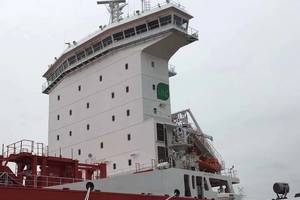
The outcome of MEPC 83 in April could establish the IMO’s mid-term GHG and carbon pricing strategy for achieving net-zero by around 2050. Not everyone is waiting; they have enough confidence in the LNG pathway to order new ships.According to the latest figures from DNV’s Alternative Fuels Insight (AFI) platform, 34 new orders for alternative-fueled vessels were placed in February 2025, 33 of them for…
-
27 Feb 2025
A New Thriller About an Amazing Rescue
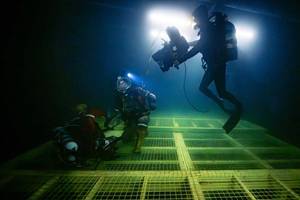
In the early days of dynamic positioning, the 1960s and 70s, commercial deepsea divers soon learned how good their support vessel’s DP footprint was. Their lives depended on it. If a vessel slowly, or worse still, rapidly, moved off position, they would be pulled along with it.Diver safety was an early motivator for developments in DP systems, but risks remained. Chris Lemons survived a worst-case scenario in the North Sea in 2012: “First, the communications cable snapped.
-
27 Feb 2025
Dealing with Hydrogen

This week, the European Commission presented its Clean Industrial Deal which aims to accelerate decarbonization while securing the future of manufacturing in Europe.It was generally well received by European shipowners and ports, and it was generally good news for the hydrogen industry.Blackridge Research & Consulting recently listed the top seven green hydrogen projects globally, noting that the EU…
-
27 Feb 2025
IMO Getting Ready to Seal the Deal on a GHG Emissions Pricing Mechanism

There were no major breakthroughs in the on-going discussions about a universal levy at the IMO's Intersessional Working Group on Reduction of GHG Emissions from Ships (ISWG-GHG 18) last week. Any GHG emissions pricing mechanism is going to mean big change for the industry, and a lot of different sectors within shipping will be impacted.InterManager has pointed out, in a paper submitted to the next meeting of the IMO’s Marine Environment Protection Committee (MEPC83 in April)…
-
20 Feb 2025
Ice Navigation: Every Voyage is Different
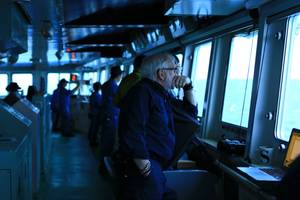
It’s late in the season so Captain Duke Snider, sailing on a resupply voyage from New Zealand to Antarctica, is expecting virtually no sea, just glacial ice.Snider has been an ice navigator for decades, and he has seen the ocean change, not just here in the polar south, but in Arctic waters as well.“Variability is much greater than in the past when we could expect an ice breakup to occur within a calendar week, year after year, whether it was the Arctic or the Antarctic,” he says.
-
20 Feb 2025
Marine Coatings and Breaking with Tradition
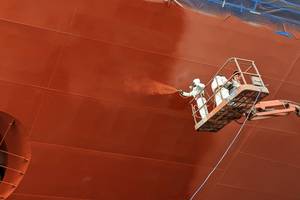
There’s a tendency for owners to stick with the coatings they are familiar with, but environmental concerns, particularly regarding marine biodiversity, are providing fresh opportunities for them to reconsider.Measuring hull coating performance from noon reports yields around 350 data points over a five-year docking cycle after including full loaded sailing days and excluding adverse weather days etc.But…
-
13 Feb 2025
In 2025 AI Won’t Just be a Tool

Some expert thoughts on AI in 2025:“In 2025, AI won’t just be a tool; it will be a collaborator.”“In 2025, the most productive employees will work alongside AI agents.”AI agents are an advance on large language models (LLMs). LLMs at present are popularly used as creative and conversational search engines. They can’t directly interact with external tools or data processing system or autonomously set up systems to monitor and collect ongoing data.
-
06 Feb 2025
Ammonia Advances

Taking a well-to-wake approach to CO2 emissions means that the shipping industry will look beyond emerging engine technologies such as dual-fuel ammonia engines when considering the viability of alternative fuels.Engine manufacturers are optimizing combustion and reducing pilot fuel requirements, but any pilot diesel requirements mean the process is not 100% carbon free.This week, Hanwha Power Systems, Hanwha Ocean and Baker Hughes announced a different concept.
-
30 Jan 2025
The Technology Pathways that Lead to Fuel Cells
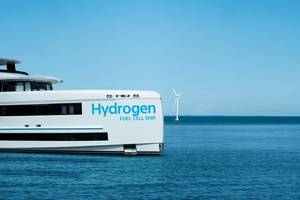
In an article by Rhonda Moniz published this week on MarineLink, Siemens sales executive Ed Schwarz noted the flexibility provided by an electric distribution “backbone” that enables ferry operators to add more batteries, switch to new fuels or become 100% emission free with fuel cells.A string of deliveries reported this week demonstrate that steps are being taken along this pathway for a range of…
-
23 Jan 2025
Doomscrolling

This week at MarineLink…The term doomscrolling was one of the Oxford English Dictionary's words of the year in 2020.“the action of constantly scrolling through and reading depressing news on a news site or on social media, especially on a phone”It rose to prominence during the pandemic, but today’s social, political and economic unrest keeps it current.The behavior is rooted in the part of the brain…
-
16 Jan 2025
A New Use for Old Jackets
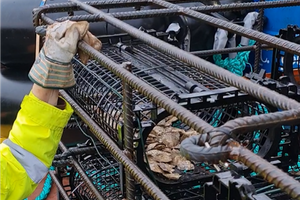
Global aquaculture production has already exceeded wild fisheries production, and space constraints in coastal areas have driven interest in the viability of combining aquaculture with offshore energy installations. New ideas keep coming.An article published in Heliyon this month assessed the potential for growing high-value algae species on decommissioned oil and gas jackets.Algal aquaculture is growing at 8.9% annually and became an $22 billion industry in 2024.
-
09 Jan 2025
Spreading the High-Spec Joy

This week at MarineLink…A noteworthy vessel was introduced to the fixed-bottom offshore wind sector this week. The offshore installation vessel Boreas was delivered to Van Oord by Yantai CIMC Raffles Offshore in China. The vessel will be the largest of its kind once operational, and it is purpose-built for the transport and installation of foundations and turbines up to 20MW capacity turbines.China’s Dongfang Electric is already building 26MW turbines…
-
02 Jan 2025
Ammonia’s Future at a Turning Point in 2025
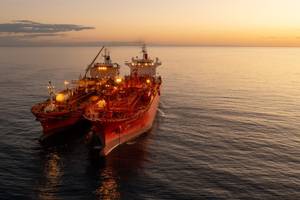
The shipping industry has been watching the dual-fuel engine choices made for newbuildings as an indicator of what many see as an uncertain fuel future.In December, DNV’s Alternative Fuels Insights platform counted 27 ammonia and 322 methanol-fueled vessels currently on the orderbooks.Methanol has raced ahead of ammonia, which currently lags in both engine and regulatory development.As the years tick by…
-
19 Dec 2024
Spotlight on Ro-Ro Safety
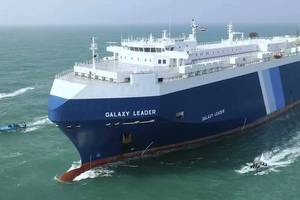
This week at Maritime Reporter...The importance of safety on ro-ro vessels comes under the spotlight.The UK Marine Accident Investigation Branch released its report into the engine room fire on board the ro-ro Stena Europe and concluded that the ship’s crew were insufficiently trained to inspect engine fuel systems and the temperature measuring equipment used by the crew to monitor the engine exhaust…
-
19 Dec 2024
For Those with Saltwater in Their Veins
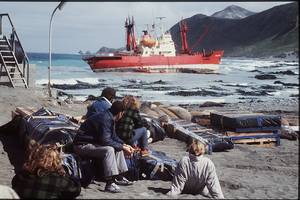
The Scythian philosopher Anacharsis (6th century B.C.) said: “There are three sorts of people: those who are alive, those who are dead and those who are at sea.”Many of those onboard the Nella Dan when she grounded in December 1987 never went to sea again. Such was their passion for the ship.At that time, most of the crew were single, a wild bunch with saltwater in their veins, likely to be found partying…
-
19 Dec 2024
Op/Ed: It’s Human Nature to Have an Opinion – About LNG
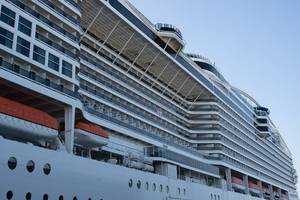
Back in August 2024, in its blog Fact from Fiction: Methane Slip, the industry group SEA-LNG stated: “It’s human nature to have an opinion. And everyone is entitled to one. What’s potentially damaging is when emotive opinions with limited substance are heralded as fact.”This week MSC Cruises had to reconsider what it was saying about LNG.NGO Opportunity Green reports that, following a complaint it made in March 2024…
-
16 Dec 2024
The Bridge and Beyond: AI, AR Revolutionize Maritime Decision Making
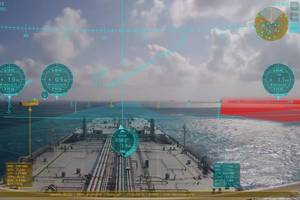
It’s already possible to have smart decision support on the bridge: With Furuno’s technology, live video imagery of the front view from the vessel has navigation information superimposed on it including heading, AIS data, radar target tracking, object identification, route waypoint and chart information.SEA.AI’s bridge support system can identify larger vessels not fitted with AIS up to a range of 7.5 kilometers (nearly five miles)…
-
12 Dec 2024
Weaving the Basket of Solutions
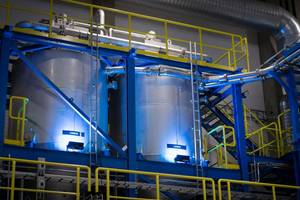
This week at MarineLink…Two reports released this week, one on the upscaling of green hydrogen production, the other on upscaling CCUS, both point to a lack of government initiatives as hindering investment. Without the establishment of regulations and multi-lateral frameworks, big projects are floundering.DNV’s latest Maritime Forecast to 2050 estimates that shipping’s demand for carbon-neutral fuels…
-
05 Dec 2024
A Well-to-Wake-Up Call
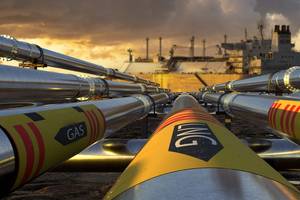
This week at MarineLink…An Australian Prime Minister once famously (infamously) said: “Life wasn’t meant to be easy.”He could have been talking about the maze of IMO and EU regulations relating to new fuels, especially the concept of well-to-wake emissions.It’s not enough to have a clean-burning engine or even an onboard carbon capture system. Well-to-take emissions, upstream and out of the control of ship operators…
-
28 Nov 2024
2050: There’s 9,164 Days to Go

This week at MarineLink…A group of people met at the University of Alaska Fairbanks at the end of October to brainstorm a possible new economy for Alaska and a clean energy source for the world: geologic hydrogen.It’s not that new a concept. Villagers in Bourakébougou, Mali, found a source of geologic hydrogen while unplugging an old water well in 2011. Subsequent scientific research confirmed an extensive hydrogen field in the strata below…


