


Wendy Laursen
Contributing Writer-
15 Dec 2023
The Problem with Reducing Underwater Radiated Noise
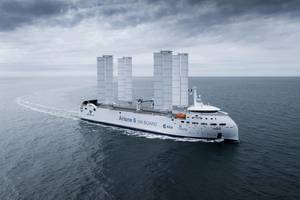
If the global commercial fleet reduced its speed by 10%, it would reduce underwater radiated noise by 40%, but nothing’s ever that simple.The main thing holding the shipping industry back from reducing its underwater radiated noise (URN) is not a lack of appropriate technology. It’s argued that many of the technologies being implemented today to reduce fuel consumption also reduce noise. So, the noise reductions could essentially come at no net cost to the shipowner…
-
04 Dec 2023
New Wave Data Underpins Ship Structural Integrity
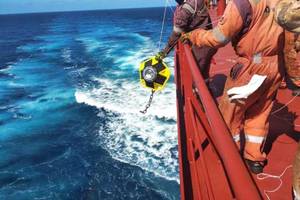
The loss of the Stellar Daisy in 2017 was a tragic reminder of the importance of wave data to ship design and operation. The vessel sank in the South Atlantic Ocean, with 22 of 24 crewmembers lost. The structural failure of the vessel was attributed to several factors including material fatigue and the forces imposed on the hull as a result of the weather conditions.Survey requirements for some vessel types have since been tightened…
-
01 Dec 2023
Gensets: New Fuels but Perennial Goals
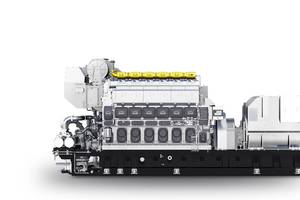
Fuel flexibility may be a key driver for recent developments in gensets, but the perennial goals of lowering CapEx and OpEx remain.Fuel flexibility is one of the pillars of decarbonization that is being embraced by genset OEMs. Fuel efficiency, a second pillar, goes hand in hand with that because new fuels will be more expensive, but these concerns come in addition to the on-going drive to reduce CapEx…
-
20 Oct 2023
The Power of Offshore Molecule Production
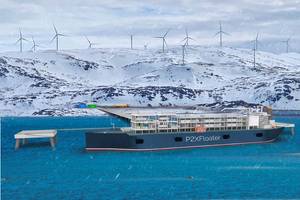
Energy ecosystems are evolving as the value of offshore power-to-X production is being realized.Flexible and delivered in long lengths on reels in a fast-track operation, thermoplastic composite pipeline can transfer up to nine times the amount of energy as a cable and can be used to store hydrogen, increasing the uptime of offshore wind farm generated power.That’s according to Netherlands based supplier Strohm…
-
03 Oct 2023
Enclosed Spaces: Engineering Solutions
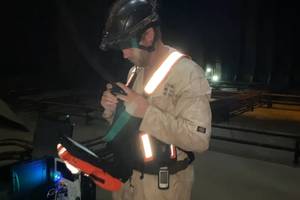
If you think the human element is the only cause of enclosed space deaths, think again.Enclosed space incidents are cited as the largest cause of on-duty fatalities in commercial shipping. The risks can’t simply be engineered out, but there’s a powerful coalition wanting action nonetheless.There’s a tendency to blame failure to follow procedures, they say. Investigations seldom focus on the practicality of those procedures or the influence of the operating environment and vessel design…
-
21 Aug 2023
LPG: Dual-Fuel Engines Prove Their Worth
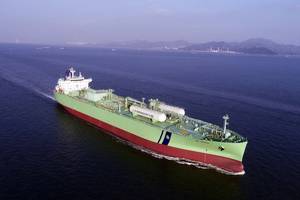
BW LPG has demonstrated the value of dual-fuel LPG operations beyond the company’s initial aim of meeting IMO 2020 Sulphur Cap regulations.In October 2020, the LPG carrier BW Gemini became the first very large gas carrier (VLGC) to have its low-speed main engine converted to an LPG dual-fuel engine. The project started several years earlier, sparked by Oslo-listed BW LPG’s preparations for the IMO’s 2020 Sulphur Cap regulations.Compared to heavy fuel oil…
-
23 Jun 2023
Maritime Safety - Enclosed Space Safety
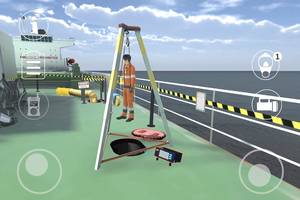
It's nearly 45 years since the tragedy on the ANCO Duke where seven crew died at the bottom of the tank they were cleaning. “I was working on chemical tankers then. All the crew felt this terrible loss of life and took on tank entries with a heightened safety focus,” says Captain Dave Watkins, Deputy Director of the confidential near-miss reporting service CHIRP Maritime. Since then, enclosed space deaths still occur…
-
01 Jun 2023
Data-Driven Voyage Optimization: The Demise of the Data Silo
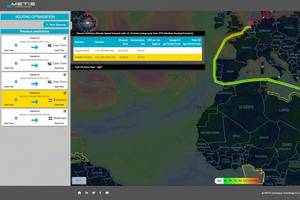
We’ve had the means for a while, now we have the incentive to crush the data siloes that are holding back voyage optimization.Like kids in the sandpit, owners and charterers are being forced to share, perhaps more than they really want to. The IMO and the EU, for starters, are setting data-driven decarbonization rules, and those in the sandpit are having to respond.Ship managers and data analysis specialists…
-
23 May 2023
Remote Survey is the New End-Game
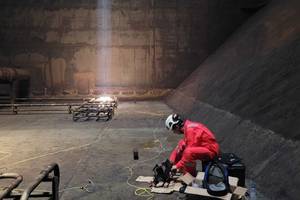
More than remote witnessing, more than remote data analysis, remote survey techniques are now going to aid the shift to full vessel autonomy.The technology that enables a robot to safely navigate an environment it has no prior knowledge of is called Simultaneous Localization and Mapping (SLAM). “It is the key to autonomy for any aspiring can-do inspection robot.” That’s according to ScoutDI, a participant…
-
03 May 2023
A New Generation of WTIVs
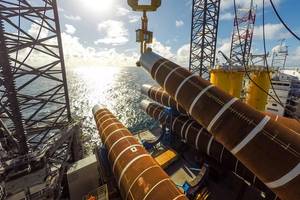
WTIVs have always been fuel-hungry. Now they are being tasked with installations that are further, deeper and heavier.Offshore wind farms continue their march into deeper water, further from shore, with turbines that can now reach more than 270 meters high with blades 120 meters long. Designers and OEMs are pushing efficiency to new levels to contain OPEX on the new-generation jack-up WTIVs taking them up there.Danish ship design firm Knud E.