

Born into Maritime: John McDonald, Chairman & CEO, ABS


 John McDonald, Chairman and CEO of the American Bureau of Shipping (ABS). Image courtesy ABS
 Image courtesy ABS
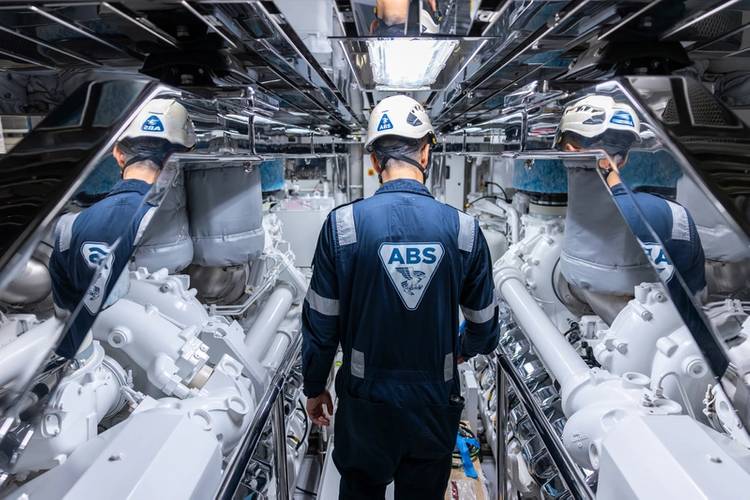 Image courtesy ABS
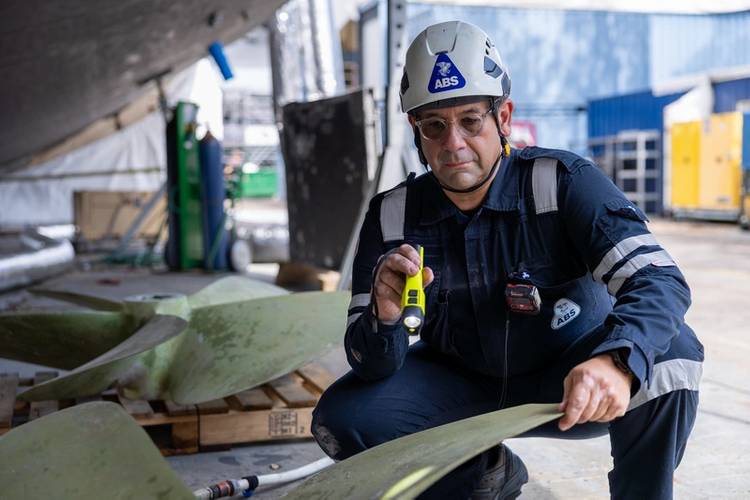 Image courtesy ABS
 Image courtesy ABS

Many claim to have ‘saltwater in their veins,’ but all you have to do is walk into the corner office of John McDonald, the new Chairman and CEO of the American Bureau of Shipping (ABS), to see that him saying “I was born into maritime” is not hyperbole. The first thing that greets you is a Dusan Kadlec nighttime painting of the Brooklyn Bridge, a painting that has special meaning to him as he fondly remembers being on a boat in New York harbor in 1983, his father USCG Captain of the Port of New York at that time, watching the fireworks over the bridge for the celebration. There are maritime executives who find the industry by accident, then there are those that are destined to be in it from birth; McDonald is the latter. He takes the helm of ABS at arguably one of the most exciting yet tumultuous times in maritime history, as it is an industry facing multiple inflection points in terms of decarbonization and fuel transition, automation and autonomy, digitalization, robotics and seafarer training, to name but a few. McDonald discussed this and much more in his inaugural maritime CEO interview with Maritime Reporter & Engineering News from his office in Houston.
The majority of people have jobs; many have careers; but John McDonald is one of the select that has a job, a career and a mission. The new Chairman and CEO of ABS is not someone who discovered the industry late, or chose it strictly as a career move, or found his way into it through some lateral jump from finance, consulting or technology. He talks about maritime the way many people talk about family: It was there from the start; it shaped the setting and the routine; it shaped the people around him. In his telling, life, career and the waterfront are one in the same.
That matters because as of January 2026 McDonald took the helm at ABS, the world’s largest classification society and one of the most influential organizations in global shipping at a time when the industry is juggling more change than at any point in recent memory. ABS sits at the intersection of classification, safety, digitalization, regulation, energy transition, autonomy, cyber risk, shipyard modernization, and as of early 2026, mariner training too. It is a broad palette of mutual priorities for certain, but it all comes back to the simple premise of ships operating safely, efficiently, effectively and globally.
ABS is a technical organization in a highly practical business. With McDonald, what stands out is not theatrics or chest-thumping. It is that he views the job through the lens of a lifelong mariner who knows that the future only matters if it can be made safe, useful and workable.
“We have a very strong safety culture; it’s built into us, not only with our people, but in everything that we do as an organization.”
“Born into Maritime”
McDonald says he was born into maritime, and in talking to him, this is not a throwaway line.
His father was a Coast Guard captain, and McDonald essentially grew up on Governor’s Island in New York, literally surrounded by vessels, maritime safety and the rhythms of a working harbor. Summers were spent on the Maine coast, where his family’s ties ran deep and where life on the water was not recreation so much as routine. He lobstered as a kid. His brother went on to the Coast Guard Academy and later retired as a captain. Maritime, in other words, was not a profession outside the front door. It was and is the family business and the household language.
He has three children who have grown up at ABS, in Korea, London, Singapore and many other places, and those experiences have shaped them into the people they are today. After he graduated Maine Maritime Academy, McDonald, started sailing and worked several years at sea. He even met his wife courtesy of maritime when he signed on to work aboard a cruise ship in Hawaii. She was the purser signing him aboard. For two years he stayed with that work before family life and the realities of shore-side stability pulled him in another direction. He joined ABS in 1996, and the rest is a long arc through survey, operations, business development and executive leadership.
In addition to the Kadlec painting, McDonald’s office houses more clues that belie his deep maritime connection. A model of the USCGC Eagle, the Coast Guard’s training ship upon which both his father and brother sailed; where his dad’s retirement ceremony was held on the Thames River and where he, as a young man, met another influential ABS leader, Bob Somerville.
Another painting, behind his desk, is a scene of New York Harbor that includes Fort William on Governor’s Island —in one of those wonderfully odd maritime side notes, served as his kindergarten. For McDonald, these things are both decorative, perhaps more importantly they are anchors to a life spent inside the orbit of maritime service, safety and tradition.
This personal history is important it gives depth, breadth and context to not only McDonald’s past, but helps to explain the tone he brings to ABS now. He is not trying to reinvent the mission of class. He is aiming to make sure the mission remains relevant as the operating environment changes around it.
 “Our core business is classification, that’s who we are, a mission-driven organization and that’s what we’ve been doing since 1862. How we do it is another matter. If you look at the investments being made in technology today, maritime is most certainly on this growth curve that we’ve never seen before,” said McDonald. Image courtesy ABS
ABS Today
When taking the 50,000-foot view of ABS today, McDonald points first to the scale of the organization and the confidence that owners and builders continue to place in it. He points to a classed fleet measured in the hundreds of millions of gross tons, thousands of vessels and a sizable orderbook.
But he does not linger on size for the sake of size, rather he is more interested in what this growth signals: trust. In his view, clients still want a class partner that is technically credible, responsive, globally present and capable of supporting them well beyond the narrowest definition of a survey cycle. That broader support theme comes up again and again. With emerging technology grabbing the headlines, McDonald is careful to ground ABS in its core purpose.
“Our core business is classification, that’s who we are, a mission-driven organization and that’s what we’ve been doing since 1862. How we do it is another matter. If you look at the investments being made in technology today, maritime is most certainly on this growth curve that we’ve never seen before,” said McDonald. “When you bring in sensor technology, and the newbuilds you’re seeing around the world today, from autonomous systems to the sensor technology to optimizing every aspect of machinery systems and monitoring the hull’s performance; and then you overlay a digital twin framework where you can monitor real-time your vessels historical and real-time performance; what the future looks like for us is taking all that of that information, using the tools we’re building out and bringing that to bear on the core work we do in classification.”
McDonald is adept, too, at bringing big picture matters like digitalization down to reality level.
“Condition-based classification, condition-based maintenance these are two areas that are very interesting to me in that, if I look back five years ago, ABS really started to look at the data we had on our vessels: how can we structure that data properly? How do we build these large-language models? How do we start using that information to drive value to our clients that either help them with operational efficiency or helps us drive a stronger safety framework onboard the vessels and at the same time gives us the ability to strengthen our rules and the regulations that we have because we’re seeing how these vessels operate with much more detail,” said McDonald. A key plank in the digitalization conversation is connectivity via both legacy and new tech entrants such as Starlink. “We can take data right off of the vessels and start doing predictive analytics today. We’ve been building our predictive analysis capability for several years, which started with U.S. government fleets. We have condition-based monitoring today on almost 20 vessels with Military Sealift Command, which was the world’s first CBM class program and growing every year as an indication of their satisfaction with it. We’re starting to bring that more into the commercial business, too, offshore already and starting now with commercial shipping pilots.” Operated by Asiatic Lloyd Maritime and classed by ABS, the bulk carrier MV Castle Point was christened by Kelly McDonald in February 2025. Image courtesy ABS
With all of the tech talk and the promise that it offers, the starting point still is people. For all the justified industry fascination with AI, autonomy, robotics and digital twins, McDonald comes back repeatedly to the human side of the business, as the common thread is still judgment. The industry still needs people who understand ships, machinery, operations, risk and the consequences of getting something wrong.“We’re an organization of engineers, technologists, digital engineers and coders and not just in your standard maritime practices; but now we have everything from AI Experts, Cyber experts, and moving into robotics, autonomy and nuclear,” said McDonald. “We have a global footprint but we’re U.S.-based, which allows us to work with various government industries as well as a number of high-tech companies. There is a lot of focus around innovation … not just our core business, the rules and tools that we have today but what we’re looking at tomorrow.
“ABS has the best people in the industry. It’s a family and I am proud of that.”
Safety First … and Always
McDonald’s emphasis on people also runs straight through ABS’ safety culture, both internally with its own people and through the ships under ABS classification. McDonald takes obvious pride in the organization’s record, both in terms of outside validation and internal performance. Port state control remains an important external check on class society performance, and ABS has maintained a strong standing there for years. He sees that not simply as a measure of ABS rules and processes, but as evidence of alignment between ABS and the owners and operators it serves.
Internally, he talks about safety as something built into the organization’s DNA, its daily conduct, not simply a slogan dusted off for presentations. He takes pride in the long stretches without lost-time injuries and to the importance of pushing accountability from the executive level down through every layer of management to the personnel actually boarding ships and entering hazardous spaces. That is not glamorous material, which is exactly why it matters. In class, safety loses meaning the moment it becomes abstract.
He's passionate too in discussing the connection of that safety mindset to technology. He does not talk about digitalization as a replacement for class. He talks about it as a way to make class more informed, more targeted and, in some cases, more efficient.
As noted, ABS has been building the infrastructure to use its own data more intelligently, which McDonald says has been a deliberate effort to structure information from across its vessel base, build data lakes, develop large language model capability and create tools that allow ABS to understand vessel condition and operational patterns with greater depth than before. In practical terms, that means the organization can increasingly look at live or near-live vessel data, identify anomalies, support clients proactively and in some cases satisfy elements of classification or compliance remotely.
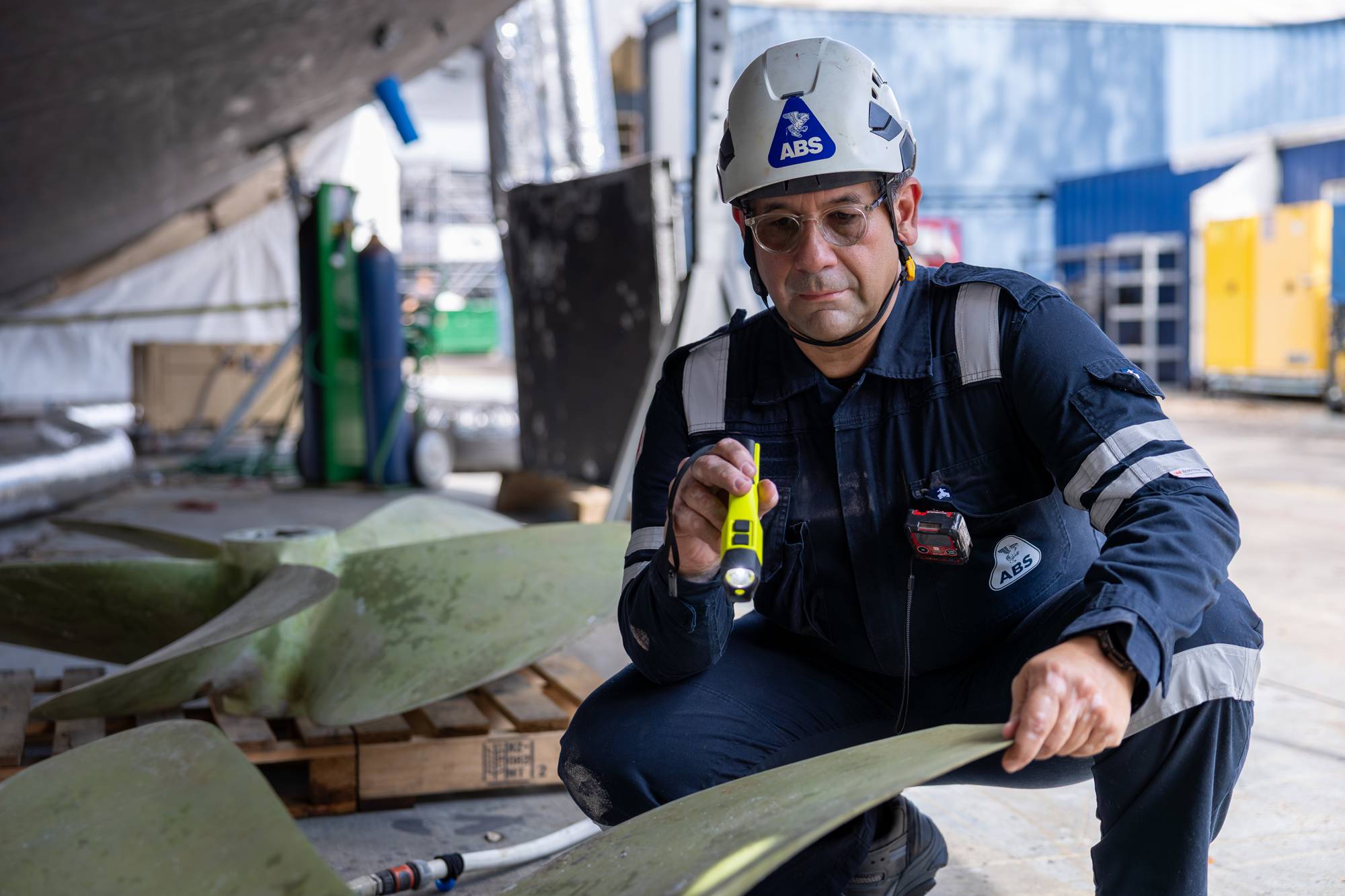
That is not theoretical. ABS already performs a meaningful percentage of its survey activity remotely. Put another way, this is no longer a pilot project nor chatter for conference presentations, rather an operating model. By moving certain checks and document-driven activities remote, ABS effectively reduces travel, reduces fatigue among survey staff and directs human attention toward the tasks that genuinely require boots on steel — tank inspections, structural assessment, critical systems evaluation and other work where physical presence is irreplaceable.
The efficiency gains are real. McDonald said that last year alone ABS reduced survey staff travel time by thousands of hours. But the deeper point is strategic. Remote capability, condition-based class and condition-based maintenance all point to a more intelligent version of class service, one less tied to rigid intervals and more responsive to actual equipment condition and operating data, as is being done with MSC.
The willingness across the industry of owners to participate, McDonald says, has been strong, and that makes sense. If the data helps owners improve efficiency, anticipate failures, optimize spare parts and avoid unnecessary downtime while also supporting class, the value proposition is obvious.
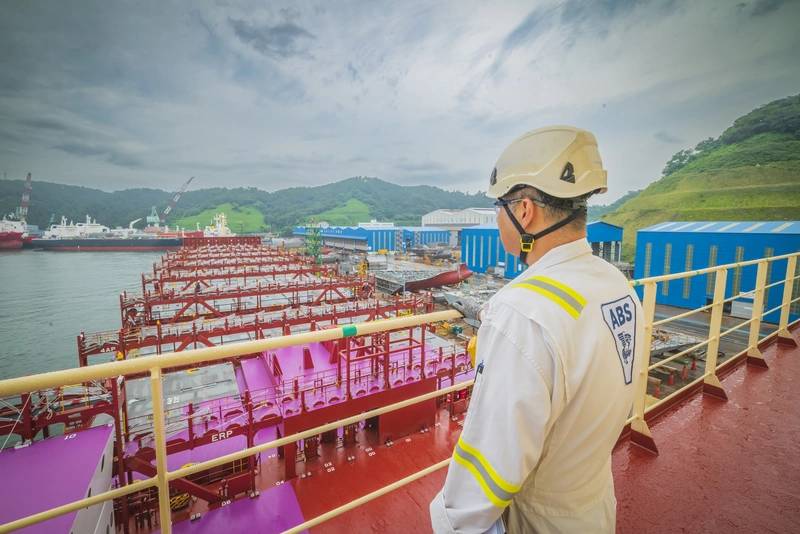 Image courtesy ABS
Digitalization and AI
Artificial intelligence is the other large thread running through McDonald’s agenda, but as with all of the other topics discussed, they do not stand solo in a silo rather exist in unison with all of the other techs and topics discussed. Here again, his approach is practical. ABS stood up an AI Center of Excellence to look first at internal use cases: workflow support, better access to procedures, faster drafting and knowledge retrieval, and software development. From there it moved toward applying AI more directly to the classification process itself.
One of the more compelling examples he offers is using digitized ABS rules and AI tools to run those rule sets automatically against drawings, operations manuals and engineering analyses. Again, the goal is not to remove human oversight but to compress the time needed to complete tedious, rules-based review. What might once have required an engineer to manually work line-by-line through a document can now, in certain cases, be handled in seconds. That should improve speed, consistency and capacity, especially as new designs and new technologies expand the complexity of review work.
“What the future looks like for us is taking all that information… and bringing that to bear on the work that we do in our core classification business,” said McDonald. “We are using technology to understand the vessels that ABS has under class with much more depth and a bit more accuracy.”
McDonald also sees ABS playing a role as a guide to clients that are earlier on the digital maturity curve. While the industry’s biggest players with the largest fleets and deepest pockets are progressing at speed to incorporate digital solutions, most owners do not start from a sophisticated data architecture, with many still trying to move from spreadsheets to structured systems. ABS has responded by building an AI consulting capability within its commercial business, focused not on generic digital strategy but on vessel operations, maintenance, reporting, bunkering optimization and predictive analytics.
The maritime industry is full of capable operators who know exactly what problems they want to solve but do not necessarily want a consultant who lacks domain fluency. ABS can help bridge that gap because it knows both the vessels, the rulebooks and the digitalization solutions.
But as has been proven time and again through the history of innovation, technology moves can be a double-edge sword. In this case, the more connected ships become, the more cyber risk and threats move to the front burner. On this point, McDonald is clear: sensor-heavy vessels, real-time connectivity and shore-side access create operational benefits, but they also expand the attack surface. ABS has been building cyber notations, internal capabilities and service offerings around that reality. He describes cyber as a core growth area, with dedicated centers of excellence and increasing engagement with clients on everything from governance and processes to testing and implementation. It is one more example of class adjacent work becoming class essential.
Fuel Transition
Arguably there is no greater challenge or opportunity in maritime than then one focused on decarbonization and fuel transition. From sail to steam to diesel, the industry has had its fair share of fuel pivots throughout its history, and the fuel transition in maritime is on again, as owners navigate increasing mandates from the International Maritime Organization to slash emissions.
“Decarbonization is still very here and now and active,” said McDonald. “The industry is not backed away from it.” Today the industry collectively, scouts for that ‘fuel of the future’ that can effectively, efficiently, economically, and safely replace heavy fuel oil, the primary fuel that has and continues to power commercial ships and boats for more than a century. The choices are broad, from the natural and ‘green’ varieties of everything from Biofuels, LNG, Methanol, Hydrogen, Ammonia, as well as the very real possibility to leverage new nuclear technologies on commercial ships. But the challenges are many and the path forward is not the same for all, as cornerstones such as logistics, price and availability remain, not to mention the technological considerations and safety framework around any fuel transition to ensure that fuels work as they should and keep vessel, seafarer and property safe. That is exactly where class comes in.
On fuels, McDonald’s tone is both excited and measured. Decarbonization has not gone away, though the pathway remains unsettled. He points to a pause of sorts after recent IMO developments, with many new vessel orders reverting to conventional fuel choices even as LNG and methanol remain strong in liner segments. Ammonia continues to move forward.
Nuclear is the fuel topic where McDonald sounds most convinced that the industry may be underestimating the pace of change. He admits he once thought commercial nuclear propulsion would arrive only after his career was over, but he no longer thinks that, and in turn ABS has hired nuclear engineers, has continued to develop guidance and is working with the U.S. Department of Energy on conceptual designs. He sees likely early applications in power barges or stationary support systems before full propulsion, but he is clearly preparing ABS for a world in which nuclear is not a thought experiment, rather a real solution for the industry.
 Image courtesy ABS
Training Seafarers
And then there is training, which is one of the more notable additions to the ABS portfolio.
Traditionally, ABS has not had a formal commercial training business of the kind now taking shape courtesy of a recently closed acquisition. McDonald sees that as a gap worth filling, especially given the mismatch between legacy curricula and the technologies now entering fleets and yards.
In a deal to deliver immersive training at scale to the maritime industry, ABS late last year signed an agreement and recently sealed the deal to purchase the MetaSHIP intellectual property and related vessel simulator software assets from Orka Informatics as part of the strategic growth plan for ABS Training Solutions.
The acquisition aims to allow ABS to expand its digital training program, which can be delivered on board, in port or at home, as well as in a global network of high-tech ABS learning centers in Qatar, Greece and Singapore. The software powers an embedded gaming experience using the industry-leading ABS MetaSHIP Fleet, virtual vessels that allow students to reach true competence without setting foot on board.
The ABS MetaSHIP game-based training breaks down the complex tasks required to operate modern ships into visual and engaging lessons that equip seafarers with the skills they need in a rapidly evolving maritime landscape. MetaSHIP is a digital maritime universe featuring vessels, ports and waterways, and training and assessment on vessel operations through gamification. The ODENES platform, also included in the acquisition and part of MetaSHIP, tracks training completions and generates reports. Navigational Skill and Behavioral Assessment, another component of MetaSHIP, is a specific simulation used for measuring the performance of maritime personnel, designed to evaluate and enhance the operational skills and behaviors of users.
Training also links directly to McDonald’s concern about the future U.S. maritime workforce. “We’re building out a lot of modern training; bringing in this kind of gaming technology where you can take yourself as an avatar and walk on board the vessel,” he said.
But the focus on training is not limited to this acquisition, and looking domestically with the recent intense focus on rebuilding the U.S. maritime industry base, McDonald says ABS can help. He talks about supporting the six state maritime academies, helping them modernize and pushing for a curriculum that reflects the ships cadets will actually see in the field: vessels with advanced systems, alternative fuels, digital overlays and increasing automation. The old path to a license remains necessary, but it is no longer sufficient by itself. If the U.S. intends to rebuild maritime capability at scale, the training architecture has to catch up to the equipment and operational models already emerging.
That may prove to be one of the more consequential pieces of his leadership. Everyone in maritime says people matter. Far fewer are willing to put money, structure and urgency behind the claim. McDonald is intent on doing that.
Glancing Back, Looking Ahead
Many leaders in maritime are reticent to bring the focus back to them, and when we asked McDonald to discuss his career and achievements that made him most proud, he was hesitant. Upon thinking it through, he recalled a letter from former ABS Chairman Robert Somerville during his time in Korea – a letter he still holds. “I was in Korea, and I was a surveyor at the shipyard Samsung,” said McDonald. “Our chairman at the time, Bob Somerville, who I met when I was 18, wrote me a letter that said, essentially, the values that you're bringing across to our client base and to the team within Samsung Heavy Industries is being seen across the company, so keep doing what you're doing."
That answer fit the rest of the conversation.
McDonald is clearly ambitious for ABS. He wants growth. He wants stronger digital tools, broader services, better training, deeper technical capability and a larger role in helping the industry navigate the myriad of changes ahead. But the center of gravity remains steady. Safety first. People first. Class first, even as class evolves.
That is probably the most useful way to understand the leadership transition now underway at ABS. John McDonald is not trying to turn a classification society into a software company, a consulting firm or a futurist brand. He is trying to ensure that a 164-year-old institution remains technically credible and operationally relevant in an industry being pushed hard by digitalization, autonomy, cyber risk and fuel uncertainty.
For someone who grew up on Governor’s Island, spent summers on the Maine coast, sailed ships, met his wife on one, and then spent three decades at ABS, maybe that makes perfect sense.
Maritime by birth. ABS by calling.
 McDonald is especially interested in humanoid robotics for hazardous tasks such as welding in shipyards and work in confined spaces, and notes the work being done via partnership with Persona AI and a South Korean yard that suggests the concept is moving faster than many might expect. Image courtesy ABS
U.S. Shipbuilding Revival—Momentum Meets Reality
There is no shortage of rhetoric around rebuilding the U.S. shipbuilding base. What’s different this time, according to John McDonald, is that the rhetoric is now paired with real intent at the federal level.
“A couple things that are different this time is you have commitment right from the administration… this is one of our top priorities,” McDonald said, framing shipbuilding not just as an industrial concern, but as a national security imperative.
That commitment is reflected in the recently released Maritime Action Plan, which targets a familiar but formidable checklist: people, infrastructure, shipyard capacity and—critically—supply chain. In McDonald’s view, success hinges on aligning all four simultaneously, something the U.S. has historically struggled to do.
There are, however, early signs of progress. One notable shift is the growing involvement of foreign shipbuilders and suppliers. Programs such as the Arctic Security Cutter are bringing overseas expertise, equipment and capital into U.S. yards, creating a hybrid model that blends domestic production with international know-how.
“Now you’ve got foreign equipment, you’ve got foreign expertise… and industry investing in the United States shipbuilding framework from that entire value chain,” McDonald noted.
Still, the challenges are significant. Chief among them is supply chain depth. Modern shipbuilding depends on reliable access to steel, components and specialized equipment. If those inputs must be sourced overseas, cost and schedule risks quickly multiply.
“The supply chain’s a bit of a concern,” McDonald said, pointing to the need for domestic capability alongside yard modernization and workforce development.
Training is another pressure point. With new fuels, digital systems and advanced manufacturing entering the mix, the traditional pipeline of mariners and shipyard workers must evolve quickly.
Rolled into the U.S. shipbuilding revitalization too is the advances being made robotics, and on this point he is succinct: if the United States wants to scale shipbuilding meaningfully, robotics will have to be part of the answer. ABS is engaging through smart yard guidance and through its experience with major shipbuilding nations. That includes helping yards think through how digital systems, robotics and future automation fit into a safe and efficient production model.
McDonald is especially interested in humanoid robotics for hazardous tasks such as welding in shipyards and work in confined spaces, and notes the work being done via partnership with Persona AI and a South Korean yard that suggests the concept is moving faster than many might expect. Whether or not every current claim is fruitful, the direction is clear enough: robotics is becoming part of the shipyard conversation in a way that transcends feeling experimental.
“If we’re going to start scaling and become a shipbuilding power again, robotics most certainly has to come into play.”


