

Conflict Widens to Lebanon, Iran Threatens Ships
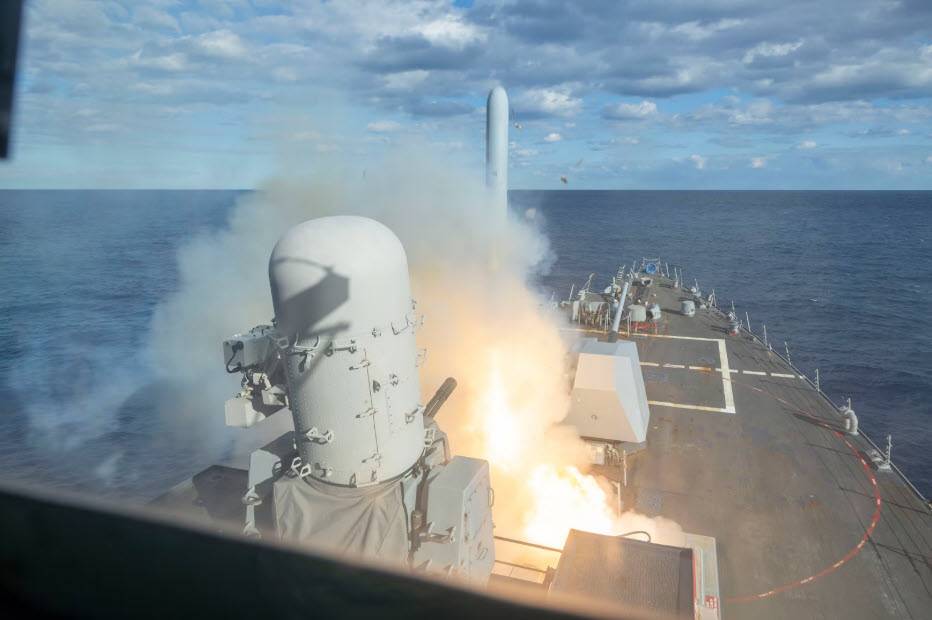
The U.S. and Israeli air war against Iran widened on Monday, with no end in sight as Israel attacked Lebanon in response to strikes by Hezbollah and Tehran kept up its missile and drone attacks on Gulf states that host U.S. military bases.
U.S. President Donald Trump said the operation could continue for some weeks and that it was unclear who was in charge in Iran, following the targeted killing of Supreme Leader Ayatollah Ali Khamenei in the opening hours of the U.S.-Israel campaign over the weekend.
The attack on Iran has pitched the Gulf into war, killed scores of people in Iran, Israel and Lebanon, thrown global air transport into chaos and shut down shipping through the Strait of Hormuz, where a fifth of the world's oil trade skirts the Iranian coast, sending oil prices surging.
Underlining the risks, Kuwait mistakenly shot down three American F-15E fighter jets during an Iranian attack, U.S. Central Command said. All six crew members ejected and were safely recovered. Video filmed at a location verified by Reuters showed one of the planes spiralling out of the sky, an engine on fire.
The U.S. military said it had struck over 1,250 targets in Iran and destroyed 11 Iranian ships.
IRAN THREATENS HORMUZ SHIPPING
An Iranian Revolutionary Guards senior official said on Monday that the Strait of Hormuz is closed and Iran will fire on any ship trying to pass, Iranian media reported.
This is Iran's most explicit warning since telling ships it was closing the export route on Saturday, a move that threatens to choke a fifth of global oil flows and send crude prices sharply higher.
"The strait (of Hormuz) is closed. If anyone tries to pass, the heroes of the Revolutionary Guards and the regular navy will set those ships ablaze," Ebrahim Jabari, a senior adviser to the Guards commander-in-chief, said in remarks carried by state media.
The strait is the world's most vital oil export route, which connects the biggest Gulf oil producers, such as Saudi Arabia, Iran, Iraq and the United Arab Emirates, with the Gulf of Oman and the Arabian Sea.
With this closure, Tehran made good on years of threats to block the narrow waterway in retaliation for any attack on the Islamic Republic.
About 20% of the world's daily oil consumption passes through the Strait of Hormuz, which is about 33 kilometers (21 miles) wide at its narrowest point.
About a fifth of global oil consumption flows past the Strait of Hormuz per day.
FOREIGN POLICY GAMBLE
For Trump, the weekend strikes against a foe of the U.S. and its allies for generations amounted to the biggest U.S. foreign policy gamble in decades.
Six U.S. service personnel have been killed so far, all in Iran's retaliatory attacks over the weekend on Kuwait. The total included two announced by the U.S. military on Monday who were previously listed as unaccounted for.
The campaign could pose a major political risk for the president's Republican Party in this year's midterm elections, with only one in four Americans supporting the attack, according to a weekend Reuters/Ipsos poll.
Average U.S. retail gasoline prices rose above $3 per gallon in part due to the conflict, a worrying sign for a president who already faces growing discontent over bread-and-butter issues.
TRUMP SAYS OPERATION AHEAD OF SCHEDULE
In his most extensive public comments so far, Trump said he had ordered the attack to thwart Tehran's nuclear program and a ballistic missile program that he said was growing rapidly.
He gave no sign that the operation would end soon.
"Right from the beginning, we projected four to five weeks, but we have capability to go far longer than that," he said at the White House.
In the first formal Pentagon briefing since the campaign began, the chairman of the U.S. Joint Chiefs of Staff, General Dan Caine, said more forces were still on their way to the region.
"This is not a single overnight operation. The military objectives ... will take some time to achieve, and in some cases will be difficult and gritty work," Caine said.
While Gulf Arab states have said they reserve the right to strike back against Iran, no U.S. allies other than Israel have participated in the campaign, and Western diplomats say they have had no indication of the administration's long-term plans.
Turkey joined Russia and China in condemning the operation, which President Tayyip Erdogan called a "clear violation" of international law.
Iran denies seeking a nuclear weapon, and it said the U.S. assault was unprovoked, occurring as Tehran and Washington were in negotiations on a nuclear accord. Trump withdrew from a prior international agreement curbing Iran's nuclear program during his first term in 2018.
Trump repeated his call to Iranians to rise up and overthrow their leaders but said it was unclear who was in charge.
Ali Larijani, Iran's top security official, said on social media that Iran would not negotiate with Trump, who had "delusional ambitions."
Iran's Foreign Minister Abbas Araqchi told state TV that the supreme leader's assassination was a "religious crime" that will have serious consequences.
Within Iran, where residents have jammed highways to flee the bombing, there was uncertainty about the future and emotion ranging from euphoria to apprehension and rage.
Many have openly celebrated the death of Khamenei, 86, who ruled since 1989 and directed security forces that killed thousands of anti-government protesters at the start of this year.
But the conservative clerical leaders have shown no sign of yielding power, and military experts say airstrikes without ground forces may not be enough to drive them out. Trump and U.S. Defense Secretary Pete Hegseth on Monday did not rule out deploying ground forces to Iran.
The Israeli military said a wave of strikes in Tehran targeted Iranian security groups responsible for suppressing protests against the regime.
Meanwhile, scores of Iranians have been reported killed in strikes, including several that hit apparent civilian targets.
"They are killing children, they are attacking hospitals. Is this the kind of democracy Trump wants to bring us?" Morteza Sedighi, a 52-year-old teacher, said by phone from Tabriz in northwestern Iran. "Innocent people were first killed by the regime and now by Israel and the United States."
WAR SPREADS TO LEBANON
A new front in the war opened on Monday when the Lebanese Hezbollah militia, one of Tehran's principal allies in the Middle East, launched missiles and drones towards Israel.
Israel responded with sweeping airstrikes, which it said targeted the Hezbollah-controlled southern suburbs of Beirut and struck senior militants. The Lebanese state news agency NNA said at least 31 people had been killed and 149 injured.
An Iranian Shahed drone that Cypriot officials said was most likely fired by Hezbollah from Lebanon also hit the British air force base at Akrotiri in Cyprus. UK Prime Minister Keir Starmer said Britain would protect its people in the region but would not take offensive action.
Israel declared Hezbollah leader Naim Qassem a "target for elimination". Officials said they were not for now considering a ground invasion of Lebanon, whose government on Monday banned military activities by Hezbollah.
As Washington's allies in the Gulf came under renewed attack from Iranian missiles and drones, black smoke rose above the area around the U.S. embassy in Kuwait. There were loud blasts in Dubai and Samha in the United Arab Emirates, and in the Qatari capital Doha.
Qatar, one of the world's biggest exporters of liquefied natural gas, halted production, with no prospect of being able to ship safely through the chokepoint of the Strait of Hormuz.
Saudi Arabia shut its biggest refinery after drone strikes caused a fire there, one of a number of energy installations that became targets.
(Reuters)