

DCA’s Doyle Delivers Vigorous Jones Act Defense at Dredger Christening


 Copyright GT | MarineLink.com
 Copyright GT | MarineLink.com
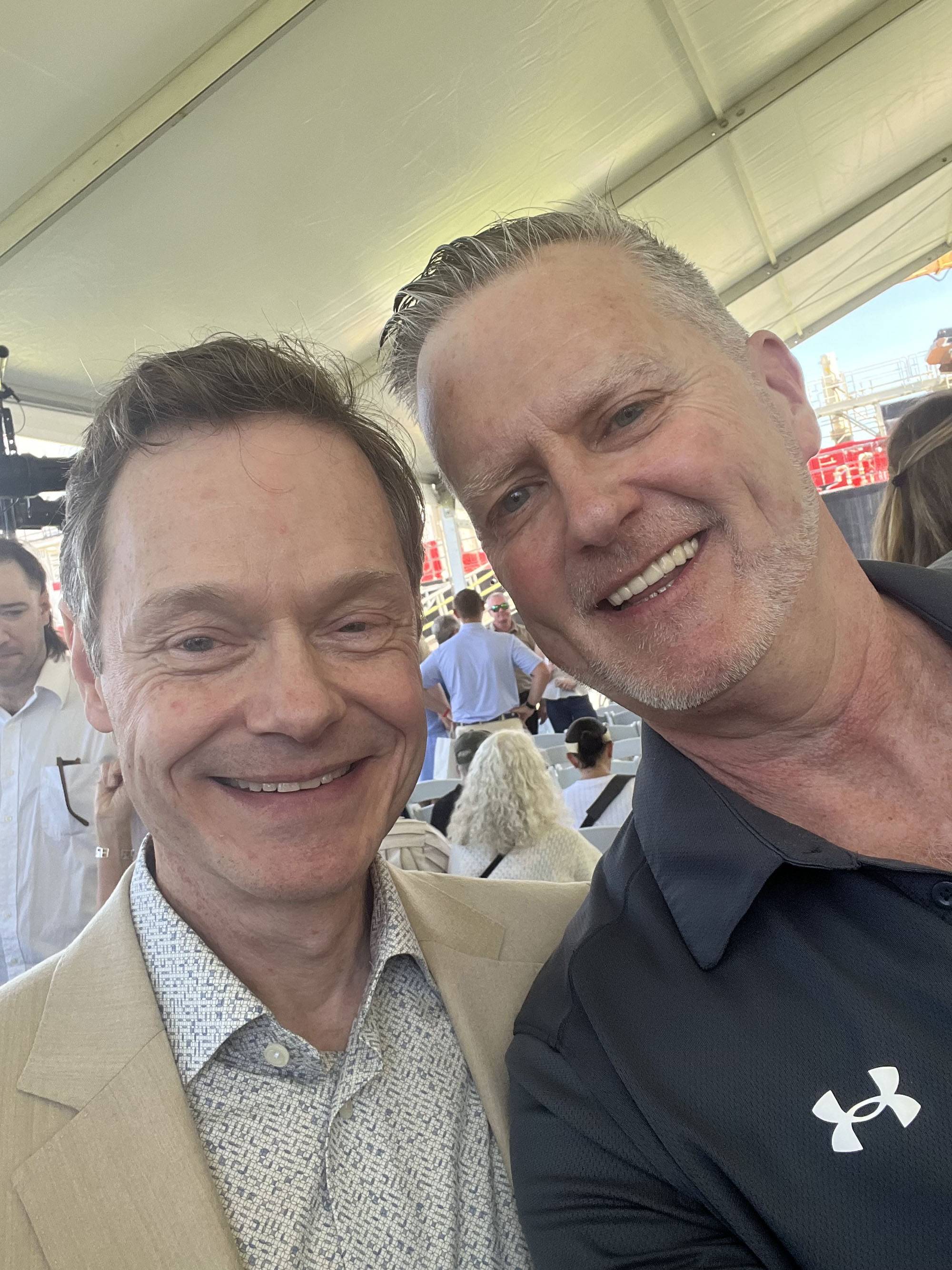
 Frederick Paup (left) and Greg Trauthwein @ the christening of his namesake hopper dredge in New Orleans. Copyright GT | MarineLink.com
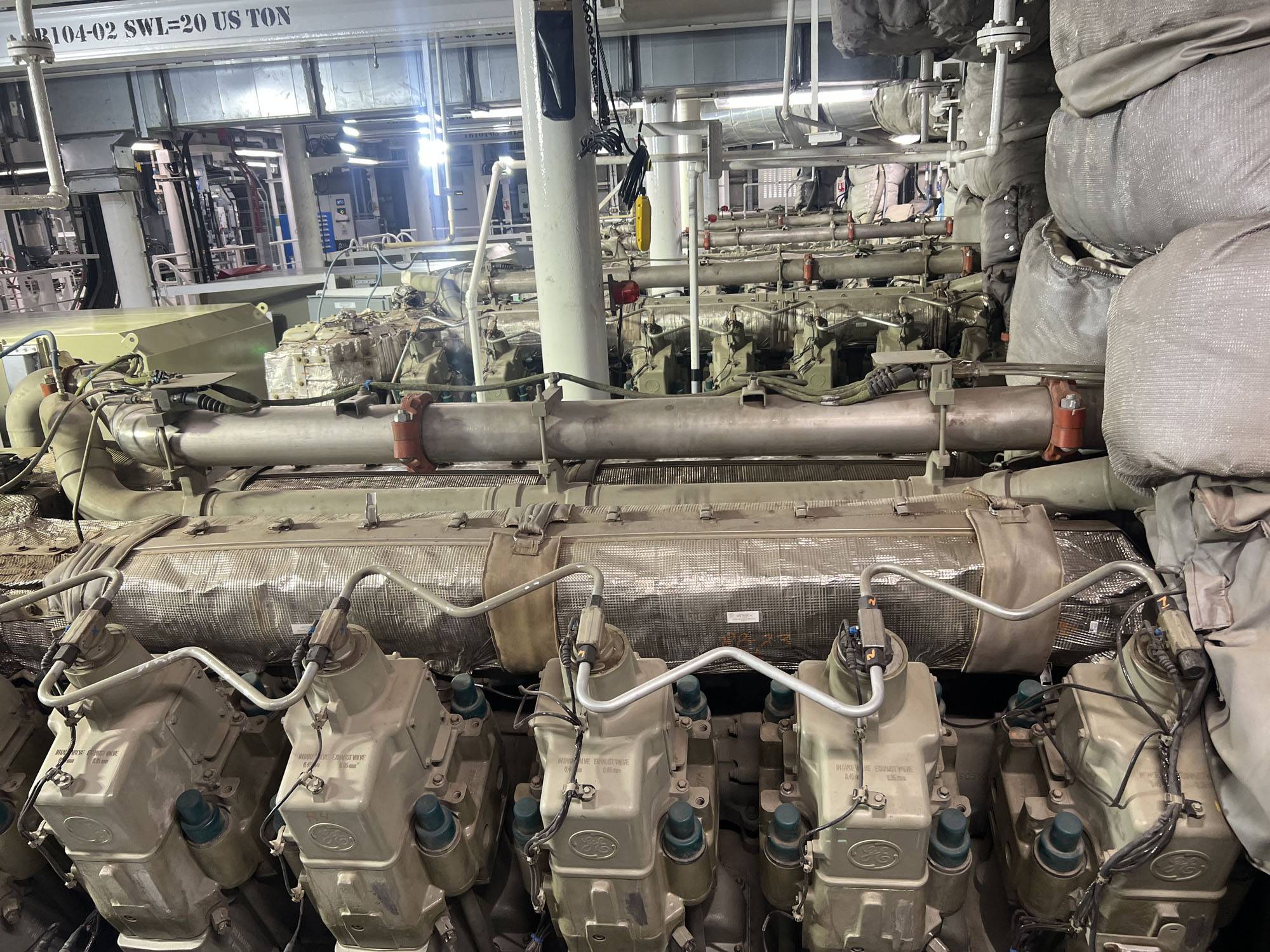
 Wabtec power plants onbaord the Frederick Paup. Copyright GT | MarineLink.com
 Copyright GT | MarineLink.com


In a maritime market increasingly defined by volatility, from war in the Middle East and the resulting whiplash freight and energy rates, William Doyle chose a moment of celebration in New Orleans to deliver a message grounded in something far less fashionable: stability.
Speaking at the March 21 christening of Frederick Paup, a 15,000-cubic-meter trailing suction hopper dredge built for Manson Construction, the CEO of the Dredging Contractors of America used the occasion not simply to praise a record-setting vessel, but to mount a full-throated defense of the Jones Act and its central role in underpinning U.S. maritime investment.
Doyle, a former U.S. Federal Maritime Commissioner and longtime industry executive, pointed to the vessel itself — the largest self-propelled hopper dredge ever constructed in the United States — as tangible proof that America retains the ability to design, finance and build complex maritime assets domestically. But more importantly, he argued, it represents what can happen when long-term policy certainty aligns with capital.
“These are 30- to 50-year assets,” Doyle said, referring to dredging vessels and other large Jones Act tonnage. “They depend on one thing above all else: predictability.”
 William Doyle, CEO, Dredging Contractors of America, delivered the invocation at the Frederick Paup Christening and a vigorous defense of the Jones Act. Copyright GT | MarineLink.com
That predictability, in Doyle’s telling, is delivered by the Jones Act, the century-old cabotage law requiring that vessels transporting goods between U.S. ports be U.S.-built, U.S.-owned and U.S.-crewed. While the law has long been a lightning rod for critics who argue it inflates costs and limits competition – recently under waiver for 60-days to help blunt the impact of soaring oil prices premised on the war in Iran and the closing of the Strait of Hormuz, a gateway to 20% of the world’s oil – Doyle framed it instead as a cornerstone of market stability, particularly in uncertain times.
Doyle acknowledged the war headlines but moved quickly to draw a distinction that he clearly felt needed reinforcing.
“A temporary waiver is exactly that — temporary,” he said. “The Jones Act is not a regulation. It is a statute: passed, reaffirmed and supported by Congress on a bipartisan basis for over a century.”
For investors, lenders and shipowners, Doyle argued, that distinction matters. Far from signaling uncertainty, the continued political support for the Jones Act should be read as a durable commitment to a protected domestic maritime market, one of the few remaining globally.
“The signal is not uncertainty,” he said. “The signal is stability.”
That stability, Doyle continued, is precisely what enables capital-intensive investments like Frederick Paup. Shipyards expand, financing flows and operators commit to multi-decade assets not in spite of the Jones Act, but because of it.
“It is not a constraint on investment, it is the foundation for investment,” he said.
Doyle’s argument gains traction when set against the broader backdrop of international shipping, where consolidation, rate volatility and geopolitical risk have become the norm. In contrast, the Jones Act trade, encompassing sectors from tankers to tugs to dredging, operates within a more insulated, predictable framework.
“While global shipping markets can swing wildly, there remains one segment that is steady, predictable and American,” Doyle said. “And that is the Jones Act trade.”
 Frederick Paup's daughter Julia did the honor of breaking the traditional bottle of champagne against the hull to christen the new hopper dredge. Copyright GT | MarineLink.com
For the dredging sector in particular, that predictability has tangible implications. U.S. dredging companies play a critical role in maintaining and expanding the nation’s ports, supporting coastal resilience and enabling both commercial trade and military readiness. Yet their work often flies under the radar.
“We are often unseen,” Doyle noted. “Often imitated around the world, but never duplicated.”The Frederick Paup, Chairman of the Board and EVP, Manson Construction, is the namesake of the new ship. While the vessel built in Brownsville, TX, was late … nearly three years late, the record-breaking vessel is designed to deepen and maintain U.S. waterways, support coastal protection projects and contribute to national security missions.
“It will serve the military. It will strengthen our coasts. It will support energy and trade,” Doyle said, underscoring the multi-dimensional value of modern dredging assets.
In that sense, the vessel is more than just a capital project; it is a manifestation of a broader industrial ecosystem—one built on domestic capability, skilled labor and long-term investment horizons. And, as Doyle made clear, it is an ecosystem he believes is inseparable from the Jones Act itself.
“In a volatile global market, the Jones Act remains one of the few constants investors can rely on,” he said. He said policy matters. Predictability matters more. And in an industry where assets are measured in decades, not quarters, the ability to plan with confidence may be the most valuable commodity of all.
As Frederick Paup’s daughter Julia released the champagne bottle that shattered against the ship’s hull in New Orleans, this time-tested tradition and Doyle’s remarks served as both celebration and reminder: the strength of American maritime is not accidental. It is built deliberately on laws, investments and commitments designed to endure.
 Copyright GT | MarineLink.com


