

EcoNavis Introduces New Flettner Rotor Technology to Further Wind-Assisted Propulsion


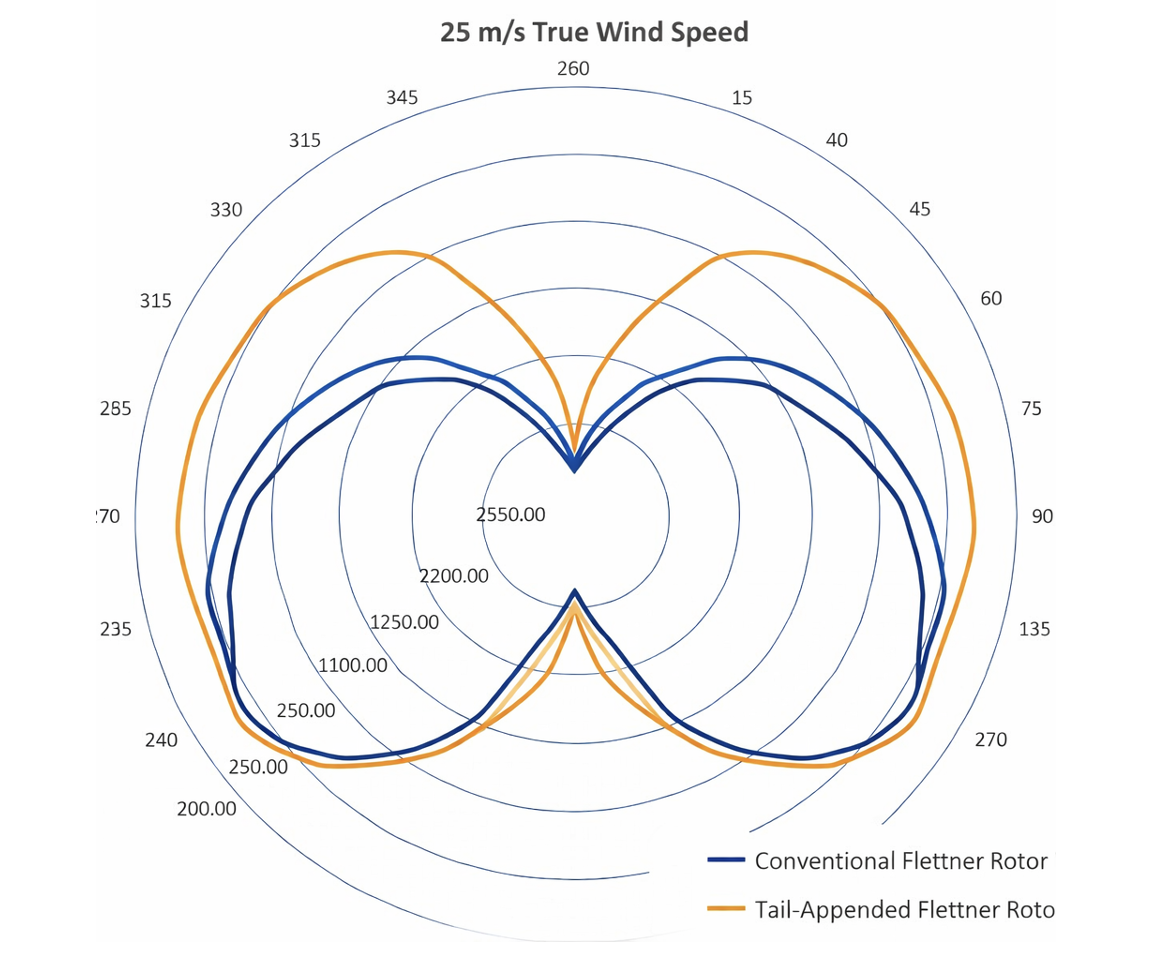
 Polar diagram at a 25m/s True Wind Speed comparing a conventional Flettner rotor with the tail-appended Flettner rotor. © EcoNavis
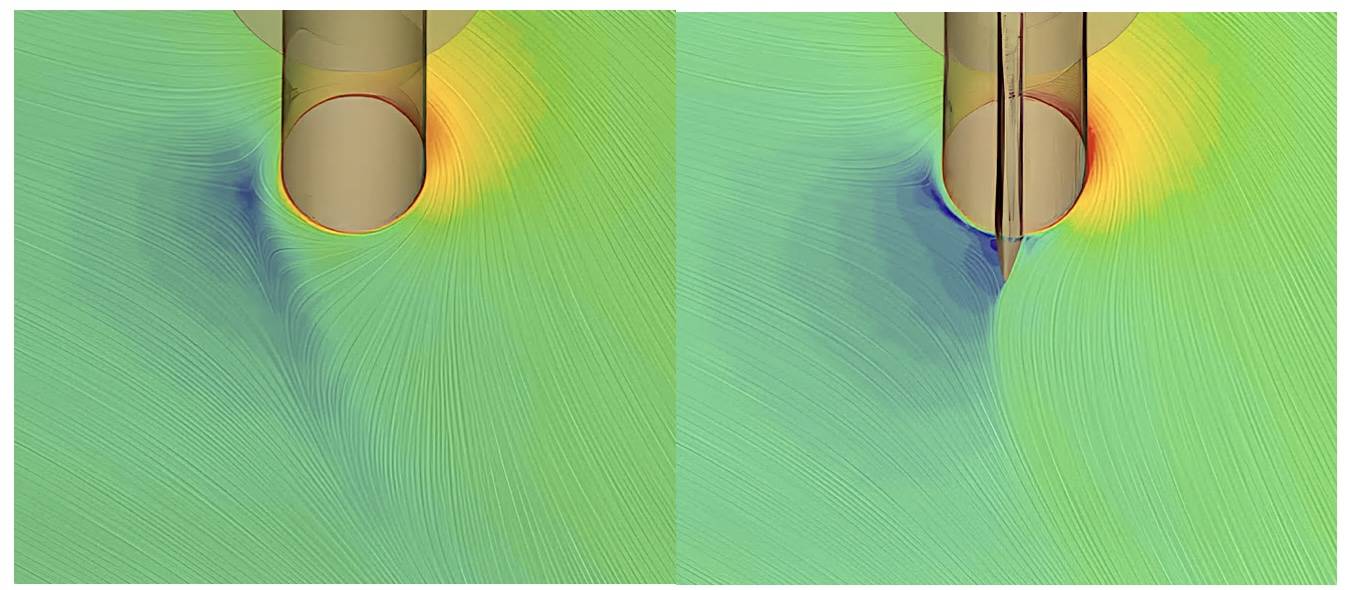
 The flow regime, represented by the same scale of the wind speed, behind the standard (left) and tail-appended (right) Flettner rotor. © EcoNavis
EcoNavis Solutions is developing a next generation wind-assisted propulsion system designed to enhance the performance and commercial viability of Flettner-type rotor sails for deep-sea shipping.
The company’s Eco Rotor Sail introduces a patented tail-appendage device designed to increase thrust, reduce power demand, and widen the range of wind angles in which rotor sails can operate efficiently.
Flettner rotors, rotating cylindrical sails first introduced in the 1920s, are enjoying a come back as shipowners seek credible ways to cut fuel consumption and greenhouse gas emissions. But a major deterrent to much wider take-up is performance reliability when the wind direction changes.
The EcoNavis design, however, essentially broadens the rotor’s effective “wind window” by reshaping the wind flow in the rotor’s wake to deliver higher thrust with lower torque demand.
According to the Glasgow-based innovator, initial simulations indicate an increase in thrust of up to ten per cent alongside a five per cent reduction in torque.
The Eco Rotor Sail retains the conventional rotating cylinder but introduces a fixed aerodynamic appendage downstream to stabilize the airflow behind the rotor, reducing losses and allowing the system to continue generating thrust as wind conditions change.
Eco Rotor Sail development is backed by a USD$132,000 (£100,000) research grant from Scottish Enterprise to take the USD$350,000 (£265,000) project through to validation and demonstration stages. The next phase will move into physical testing.
EcoNavis plans to build a scale model for wind tunnel trials at Politecnico di Milano, Italy, to validate performance and correlate results with simulation data.
Subject to successful validation, a full-scale prototype could be built this year for shipboard trials as part of an integrated power system.


