

Ferry Engine Failure Raises Concern About Emergency Response Capabilities
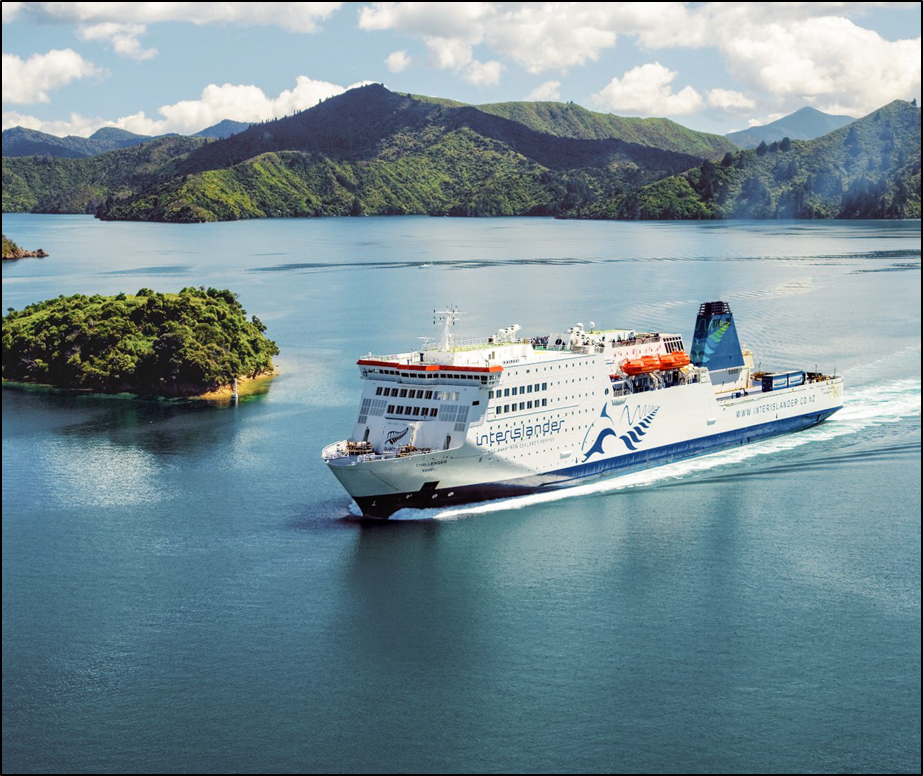
New Zealand’s Transport Accident Investigation Commission (TAIC) has issued its report on the blackout and loss of propulsion on Interislander ferry Kaitaki. A degraded rubber expansion joint in the engine cooling system failed and triggered an automatic shutdown. The part had exceeded its service life.
TAIC found six safety issues, including: lifetime management of safety-critical components; engineering decision support; evacuation standards for older ships; emergency response coordination; Maritime NZ’s Maritime Incident Response Team, and salvage and towage capability.
The incident occurred on January 28, 2023, when KiwiRail’s Interislander ferry Kaitaki was sailing from Picton to Wellington. Near Sinclair Head, it lost all propulsion and electrical power, blacked out, and began drifting towards the rocks off Wellington’s south coast in strong onshore conditions
Kaitaki’s master issued a Mayday and Maritime NZ’s Rescue Coordination Centre initiated their mass rescue plan. Numerous agencies got into action, but they did not all share the same picture of what was happening.
The blackout lasted about one hour, during which anchors arrested the drift. Propulsion was eventually restored and tugs escorted the ship towards Wellington. Near Wellington Heads, a gearbox fault reduced propulsion on one shaft before a standby engine restored propulsion. The ship berthed safely and the mass rescue response was stood down.
The failure of a single degraded component disabled a key engineering system and as a result all propulsion. A rubber expansion joint (REJ) ruptured and most of the water in the engine cooling system drained out, triggering an engine shutdown. The shutdown protected the engine, but it took the crew about an hour to repair the cooling system and restart the engines.
The failed REJ had exceeded both recommended service life and age limits. The manufacturer of the REJs says they should be no older than eight months when installed, should be inspected annually and replaced after five years.
Kaitaki's ruptured REJ was already 13 years old when installed in 2018 and 18 years old when it ruptured in 2023. Under KiwiRail's own failure modes and effects analysis (FMEA) system, the REJ was two months overdue for replacement.
The TAIC report explains how the ship’s engineering crew would likely have been able to restore power sooner if they’d had structured decision support and guidance for emergencies. KiwiRail is now developing such tools.
On New Zealand’s ageing Cook Strait ferries, risk management has fallen behind evolving hazards such as vessel age, configuration and operating environment.
The Kaitaki’s crew made the right call to keep people on board while essential systems - like staying afloat - still worked. It would have been difficult and hazardous to evacuate many passengers, including children and older people, into the rough sea with an on-shore wind.
In any evacuation, lives depend on the whole system working well under pressure. To this end, international rules issued in 2016 require newer passenger ship operators to analyze and understand the best options for escape, evacuation and rescue in a major accident.
The TAIC report explains that in New Zealand, those rules should apply to all ferries, no matter their age. This would have caught the Kaitaki, which was built in 1995.
In the Kaitaki incident, there were gaps in responders’ common understanding of the response plan or their role in it. All ships should have a plan for working with search and rescue services and should test that plan through regular practical exercises. Interislander did run drills, and some involved RCCNZ, but they were limited and didn’t fully test how the organizations would work together in a real emergency.
TAIC has called on Maritime New Zealand to prioritize the review of its Maritime Incident Readiness and Response Strategy to reflect international guidance and support regular joint exercising, clear roles and continuous improvement.
New Zealand lacks emergency towage and salvage capability. This puts disabled ships at greater risk of becoming marine casualties with fatalities or serious harm to people and the environment.
In this incident, with severe conditions near a lee shore, any hasty attempt to tow the Kaitaki would likely have created a second incident because the crews hadn’t trained for it and neither the tugs nor the Kaitaki had the necessary equipment.
Maritime NZ’s safety actions so far have included a trial of a salvage tug (discontinued early 2026), ongoing work to improve long-term capability and a funding model.
The Commission has called for Maritime NZ, the Ministry of Transport and others to continue their work to strengthen salvage and rescue capability where there high risk of very serious marine casualties, particularly mass fatalities.


