

Ferry Switch to Bio-LNG Significantly Reduces CO2 Emissions
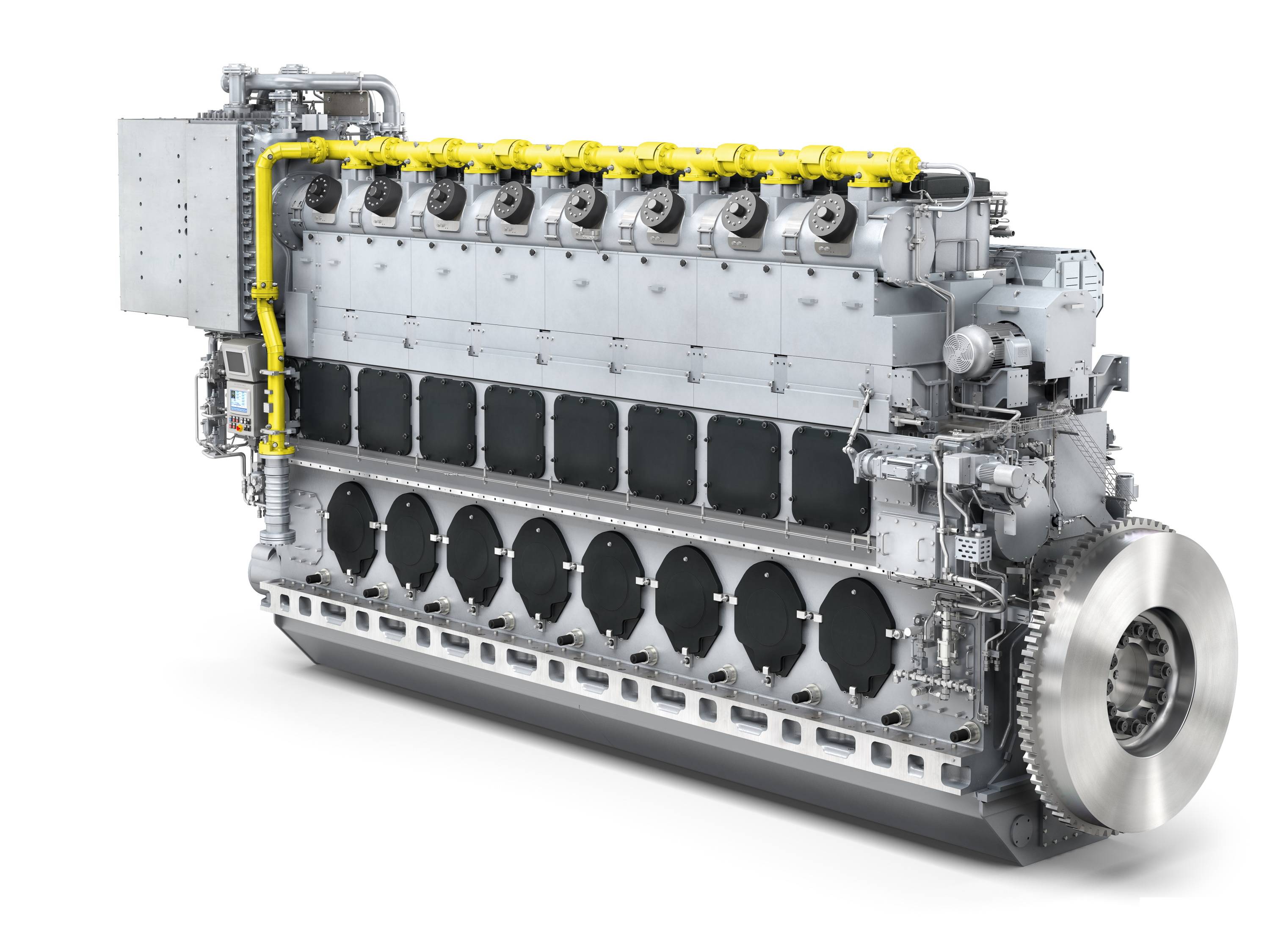
German ferry operator TT-Line has revealed that its ro-ro passenger vessels, Nils Holgersson and Peter Pan, successfully operated on bio-LNG during 2025, enjoying a significant emissions reduction.
The 230-metre vessels were commissioned in 2022 and 2023 respectively and are powered by 2 × 8L51/60DF + 2 × 6L51/60DF engines each. They trade in the Baltic Sea between Germany, Sweden, Poland and Lithuania.
TT-Line and Everllence collaborated on continuous emission-measurements on board the Nils Holgersson that Everllence carried out for almost a year in support of operations optimization.
This revealed:
• no significant ageing effect on the engines related to methane emissions;
• emission values from the test bed could be reproduced by measurements on board;
• no negative influences on engine operating-parameters during bio-LNG operation.
Andreas Schaerli, COO TT-Line, said: “With the use of climate-neutral bio-LNG, which is obtained from waste materials, TT-Line is making a decisive contribution to climate protection on the Baltic Sea. Thanks to this technology, our Green Ships – the Nils Holgersson and the Peter Pan – enable a CO2-free journey throughout the entire fleet. Our customers can already fully compensate for their crossing by adding bio-LNG during the booking process. We are thus consistently focusing on innovative solutions to sustainably reduce emissions and shape the future of ferry transport in a climate-friendly way.”
The bio-LNG is sourced from agricultural waste in northern Europe where biogas is fed into the grid and then extracted, liquefied and loaded onto a bunker vessel, which transports the climate-neutral fuel to the respective TT-Line vessels. Replacing one tonne of fossil LNG with bio-LNG saves 2.75 tonnes of CO2 emissions, equivalent to a 100% reduction.
Dr. Michael Filous, Senior Vice President and Head of PrimeServ Germany, Everllence, said: “The key benefit associated with bio-LNG is the reduction in CO2 emissions. A major advantage for the customer is that while there are specifications that the fuel gas needs to fulfil - such as methane number – no additional engine works are necessary as long as the fuel gas meets the specifications. Indeed, this was the case for the Nils Holgersson.”


