

Fred. Olsen 1848 Completes Pilot Installation of Tension Buoy
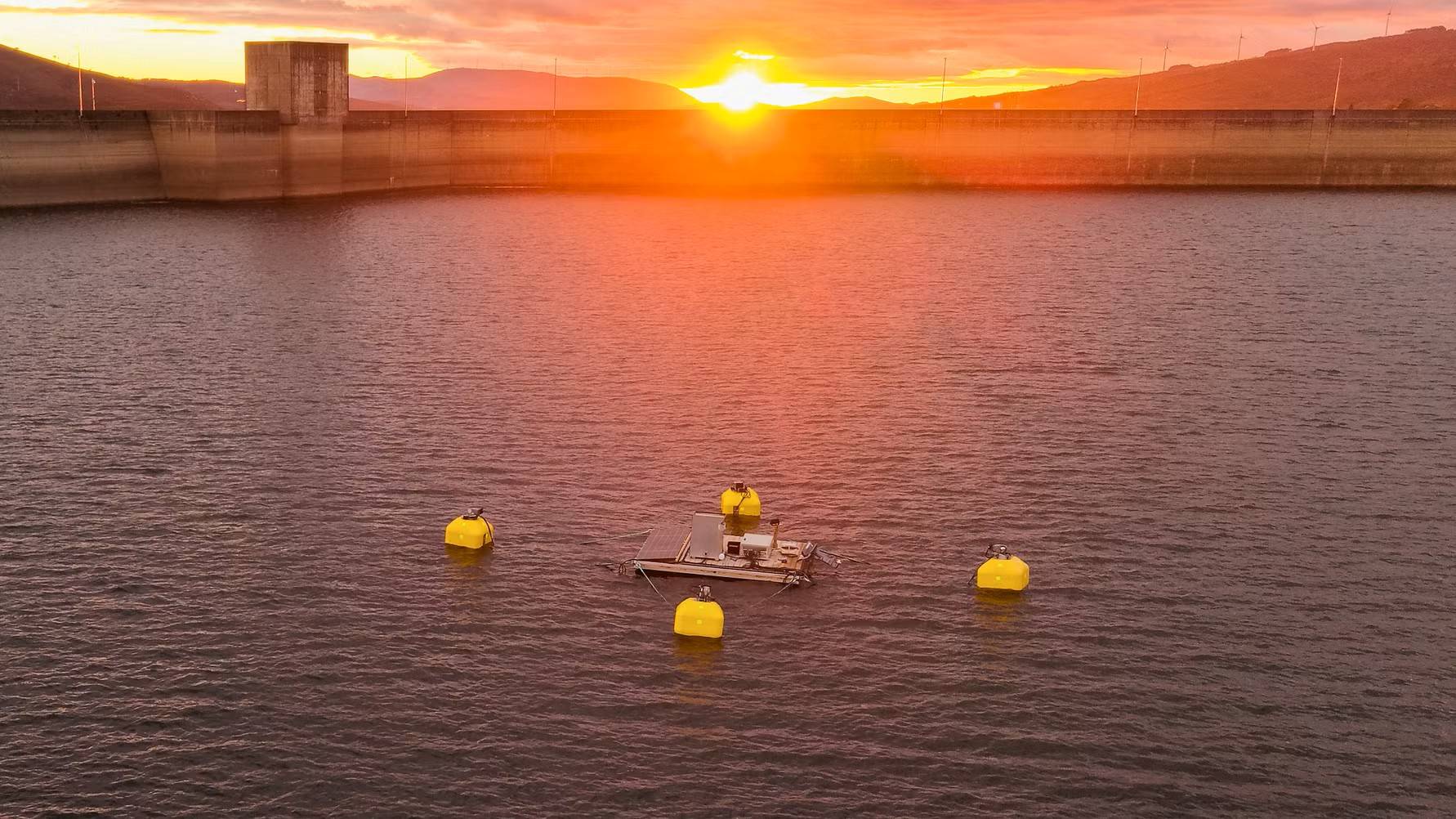
Fred. Olsen 1848 has completed a pilot installation of four automatic Tension Buoy units at the EDP Floating PV Lab, Europe’s first open-access laboratory dedicated to testing technologies for floating and hydro solar power generation.
With water levels that rise and fall by as much as 50 meters, this Portuguese dam lake is a great testing ground for the adaptive mooring system, says the company.
Tension Buoy's adaptive mooring technology is designed to ensure stability and performance for FPV systems under large water level variations. Unlike conventional solutions, Tension Buoy’s self-adjusting tensioning system can be tailored to any site, enabling reliable operation in reservoirs and dams with virtually no limits on water-level range or bathymetry.
“By validating our technology in a dam lake with such large water level and bathymetry variations, we are uncovering the potential for floating solar and hydro power hybridization. It’s a key step toward making hybrid renewable systems more adaptable and resilient,” said Even Hjetland, Principal Development Engineer at Fred. Olsen 1848 and a member of the installation team.
The installation was completed in five days, underscoring the efficiency and simplicity of the Tension Buoy deployment process. The project was delivered in close collaboration with EDP, Sperra, and local partners. Sperra’s 3D-printed gravity anchor was deployed alongside the Tension Buoy system, providing an opportunity to validate novel anchoring technologies under the site’s extreme year-round conditions.
The pilot installation will continue to operate as a live demonstration for a year.