

Global Maritime Security Training Program Conducted in New Zealand
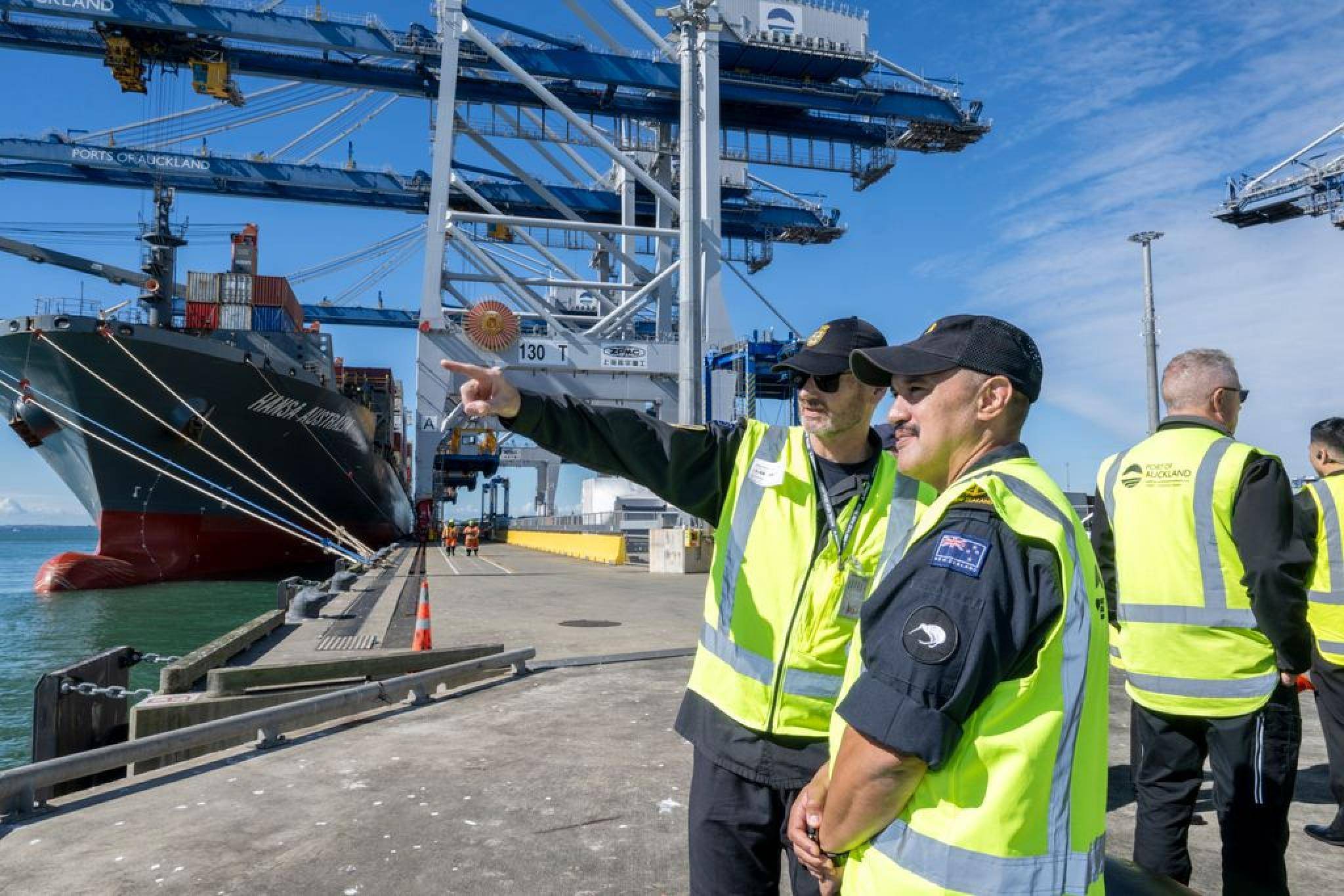
Exercise Bell Buoy has concluded after two weeks of intense operational activity in Auckland, New Zealand, bringing together international military and maritime partners to strengthen cooperation in an increasingly complex global security environment.
Bell Buoy is designed to train personnel engaged in Naval Cooperation and Guidance for Shipping (NCAGS) and Maritime Trade Operations (MTO). It focuses on protecting commercial shipping, enhancing maritime domain awareness, and improving coordination among partner nations during crisis scenarios.
This year’s edition brought together representatives from Australia, Canada, Ecuador, France, the Philippines, the Republic of Korea, Singapore, the United Kingdom, New Zealand, and the United States. More than 42 participants, including NATO and PACIOSWG (Pacific and Indian Ocean Shipping Working Group) representatives, took part in the exercise.
The primary objective was to strengthen international cooperation and coordination among NCAGS/MTO units operating in an escalating security scenario.
In its third consecutive year of participation, EU CRIMARIO supported the exercise by providing IORIS as the communication and collaboration platform for both commercial and military personnel involved in the operations.
The exercise included a wide range of operational simulations aimed at ensuring the safety of seafarers and the continuity of maritime trade during conflicts, piracy incidents, and other crises.
Participants trained on maritime interdiction operations (MIO), navigation through maritime threats scenarios, while military and maritime industry experts worked together on tactics, techniques, and procedures for protecting commercial vessels.
With 99 per cent of New Zealand’s imports and exports transported by sea, the protection of maritime trade routes remains a strategic priority. Commodore Arndell, participating in the exercise, underlined the importance of securing sea lanes at a time of growing geopolitical instability. “The deteriorating strategic environment in the Indo-Pacific, and indeed the world, is requiring us to be more alert of the potential for impacts to our vital shipping links to international markets,” he said.
Captain Cannon Neslen, U.S. Pacific Fleet NCAGS Director, said the global merchant shipping industry is facing “unprecedented” security challenges. He stressed the importance of exercises such as Bell Buoy in strengthening cooperation between civilian and military maritime stakeholders: “It highlights the importance of the MTO teams communicating with key shipping and country stakeholders in understanding the array of commercial and military risks.”


