

Human Judgement Critical to Voyage Planning
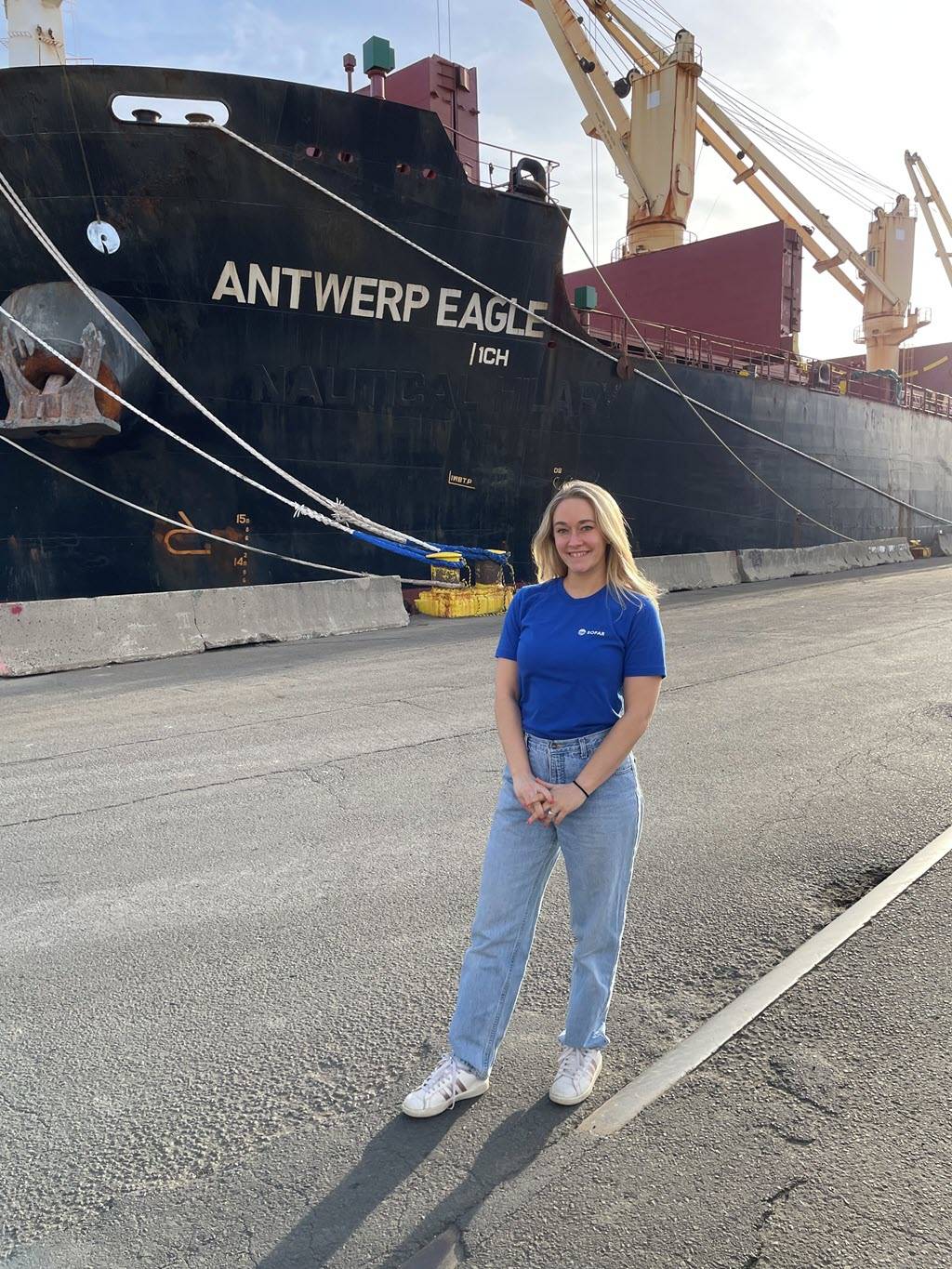
Not every risk at sea can be measured, but in shipping a route still has to be chosen.
Behind every route recommendation is a human judgement call. While weather and performance can be calculated with precision, other risks exist beyond the reach of data, forcing decisions to be made in an unavoidable grey area.
In recent weeks, routing decisions in the Persian Gulf and the Arabian Sea have carried a different kind of weight. A route that appears optimal on paper can also place a vessel closer to areas of geopolitical tension. In those moments, the question is no longer just “What is efficient?” but “What is safe?”
This is the challenge weather routers face when trying to provide captains with reliable sailing advice, especially when tight schedules and many millions of dollars of cargo and fuel are on the line.
Weather routing is often viewed as a precise, technical discipline. Under normal circumstances, a route recommendation can be a largely rules-based process: assess the available data, weigh measurable variables such as raw forecast data, fuel consumption, transit time, and cargo considerations, and then present an informed, logical proposal.
A clear-cut example might be a recommendation to alter course farther south, where calmer seas and favorable currents could save a vessel $500 per day in fuel and reduce sailing time by 12 hours. Suggestions like these are straightforward, supported by quantifiable evidence, and relatively easy to justify.
However, the equation becomes far more complex when political instability and potential security risks arise. Unlike weather or fuel consumption, war risk cannot be neatly measured and there’s no equation to model crew anxiety. What has changed is not the availability of data, but the environment in which that data must be applied. How does a router provide sound guidance when the most critical variables cannot be quantified?
If a more efficient route brings a vessel closer to a region of potential conflict, the projected savings quickly become secondary to safety concerns.
But where is the line drawn and whose call is that to make? Offering advice in these scenarios requires navigating an uncomfortable gray area where the potential consequences far outweigh the loss in time or fuel. In these situations, experience and judgement become the best available framework for interpreting what cannot be quantified.
This is where clear, consistent communication between routers, ship captains, and operators becomes essential. While political conditions may shift unpredictably, weather data remains a reliable constant, updated daily and interpreted in real time. By continuously providing route options based on the latest conditions, routers ensure that all parties have access to the same objective information. This fosters transparency, supports informed decision-making, and helps reduce friction between stakeholders during periods of heightened uncertainty.
These conversations are not theoretical; they are ongoing, real-time decisions between people responsible for the same outcome. This open dialogue and reliability are key, as captains know they will have options should their strategy need to change suddenly.
In this role, routers act as trusted, impartial intermediaries, grounding decisions in data when emotion, speculation, or external pressures threaten to take over. Their expertise enables them to quickly identify areas with favorable currents, anticipate weather patterns, or suggest routes that optimize both safety and efficiency. That does not remove uncertainty, but it gives captains and Operators a steadier basis on which to make difficult decisions.
Some may argue that assessing geopolitical risk falls outside the scope of routing. However, the value of routing lies in its ability to provide tangible efficiencies that can indirectly enhance safety. By reducing transit time through optimized routes, vessels can limit their time spent exposed to potentially dangerous regions. In these moments, the role of routing is not to push a particular course, but to support better-informed decisions by the captain. These improvements may be quiet, but they can shape the outcome of an entire voyage.
Jessica Topal is Senior Routing Specialist at Sofar Ocean


