

Hyke Electric Ferry Pilot Sees Success in Norwegian Public Transport
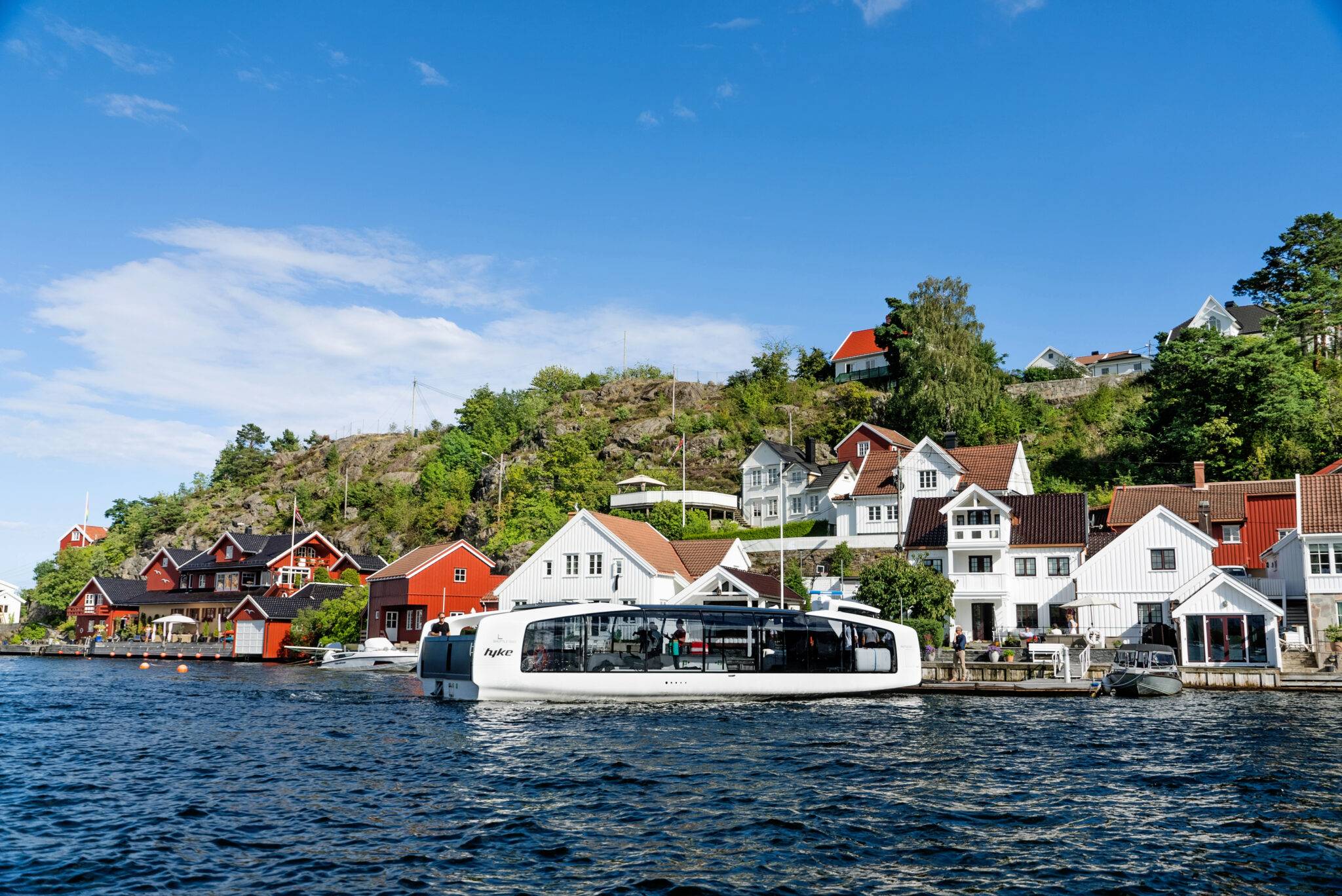
After 14 months in daily public transport service in Fredrikstad, Hyke’s fully electric F-15 Shuttle has demonstrated low energy consumption, strong passenger demand, and a compelling case for electric ferries as a cost-effective urban mobility solution.
Traffic jams plague cities worldwide, yet their waterways remain underused. After successful public transport, Norwegian tech company Hyke has shown there’s a better alternative to building bridges or tunnels by unlocking the potential of water and existing urban infrastructure.
Between April 2024 and July 2025, the fully electric passenger 50 passenger ferry operated as part of Fredrikstad’s municipal transport system on the Bekkhus–Vaterland route, carrying more than 41,000 passengers in daily operation. The route covered a 225-meter river crossing with an average crossing time of approximately two minutes, demonstrating a high-frequency urban transport application.
With up to 88% or 8x lower energy consumption than diesel vessels, the Hyke F-15 Shuttle sets a new benchmark for efficiency. It uses roughly the same amount of power as five household hair dryers.
The results indicate that electric ferries can serve not only as replacements for conventional vessels, but in certain cases as a cost-efficient alternative to fixed infrastructure such as pedestrian bridges or tunnels.
Electric ferry proven in daily public transport use
The Hyke Shuttle was introduced as a dedicated service within Fredrikstad’s ferry system, operating alongside existing routes throughout the pilot period.
Over the course of the project, the vessel delivered:
- 14 months of continuous operation in public transport with no safety incidents
- Up to 8× lower energy consumption than comparable diesel ferries
- Passenger satisfaction of 4.72 / 5.00
- 100% user loyalty
- More than 41,000 passengers transported in daily service
The Hyke F-15 Shuttle is a fully electric passenger vessel developed for short urban crossings and municipal transport applications. The vessel combines lightweight construction with an energy-efficient propulsion system, enabling extended operation with minimal energy use.
Key specifications:
- Passenger capacity: 50
- Vessel weight: approximately 12 tons
- Battery capacity: 188 kWh (gross)
- Energy consumption: approximately 10–12 kWh per hour
- Operational endurance: approximately 10 hours per charge
The pilot demonstrated that the vessel operates with significantly lower energy consumption than conventional diesel ferries, while eliminating direct emissions and reducing noise levels in urban environments.
Beyond technical performance, the pilot generated substantial operational and institutional learning for Fredrikstad Municipality.
The project provided experience in:
- Electric propulsion systems and vessel operation
- Charging infrastructure and energy management
- Winter operations and infrastructure resilience
- Passenger behavior and service adoption
The pilot was conducted as part of Fredrikstad’s broader sustainable mobility strategy and supported through:
- The Urban Growth Agreement (Bypakke Nedre Glomma)
- The EU Horizon Europe SUM (Seamless Urban Mobility) program
As a designated living lab, the project contributes to wider European efforts to develop and scale sustainable urban mobility solutions.


