

Industry Leaders Respond to Attacks on Seafarers
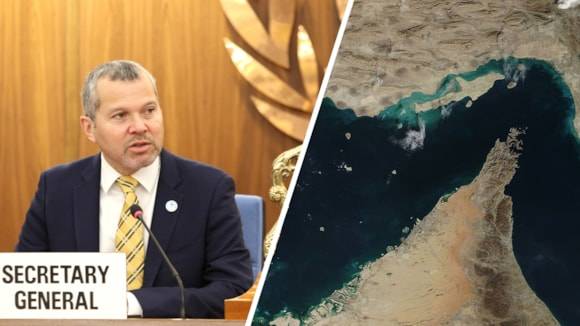
The Secretary-General of the IMO Arsenio Dominguez has issued a statement on the situation in the Strait of Hormuz:
“I am deeply concerned by reports that several seafarers have been injured in attacks on merchant vessels. No attack on innocent seafarers or civilian shipping is ever justified. These crews are simply doing their jobs and must be protected from the effects of wider geopolitical tensions.
“Freedom of navigation is a fundamental principle of international maritime law, and it must be respected by all Parties, with no exception.
“I am monitoring the situation closely, and I urge all shipping companies to exercise maximum caution. Where possible, vessels should avoid transiting the affected region until conditions improve.
“I also call on all stakeholders to remain vigilant against disinformation and to rely only on verified, authoritative sources when making navigational decisions.
“My thoughts are with the injured seafarers and their families. Their safety and welfare are our highest priority, and the IMO will continue working closely with Member States and partners to support safe navigation and to uphold the principle that civilian mariners must never be harmed.”
World Shipping Council: Seafarer Safety is Paramount
“The recent escalation of conflict in the Middle East is causing disruption to global liner shipping, with many carriers pausing or rerouting services as they assess the evolving security situation,” World Shipping Council President & CEO Joe Kramek said.
“The safety of seafarers is paramount. Seafarers must not be targeted or placed at risk as a result of conflict, and the fundamental principle of freedom of navigation must be respected. Ocean carriers are making operational decisions based on the best available information and their individual risk assessments. Our thoughts are with the seafarers currently in and around the affected region.
“The Middle East sits at the crossroads of major global trade routes. When services through the region are suspended or diverted, the impact is not limited to the immediate area. Longer voyages and changes to network rotations can lead to delays and scheduling adjustments across connected trades routes worldwide.
“The industry has recent experience navigating disruption, including during increased hostility in the Red Sea. While rerouting is complex and can extend transit times, it has enabled trade to continue moving under difficult conditions.”


