

Insights: As Ships Get Bigger, Pilots Keep Maritime Commerce Flowing

Clay Diamond, Contributor
Clay Diamond is the Executive Director-General Counsel for the American...
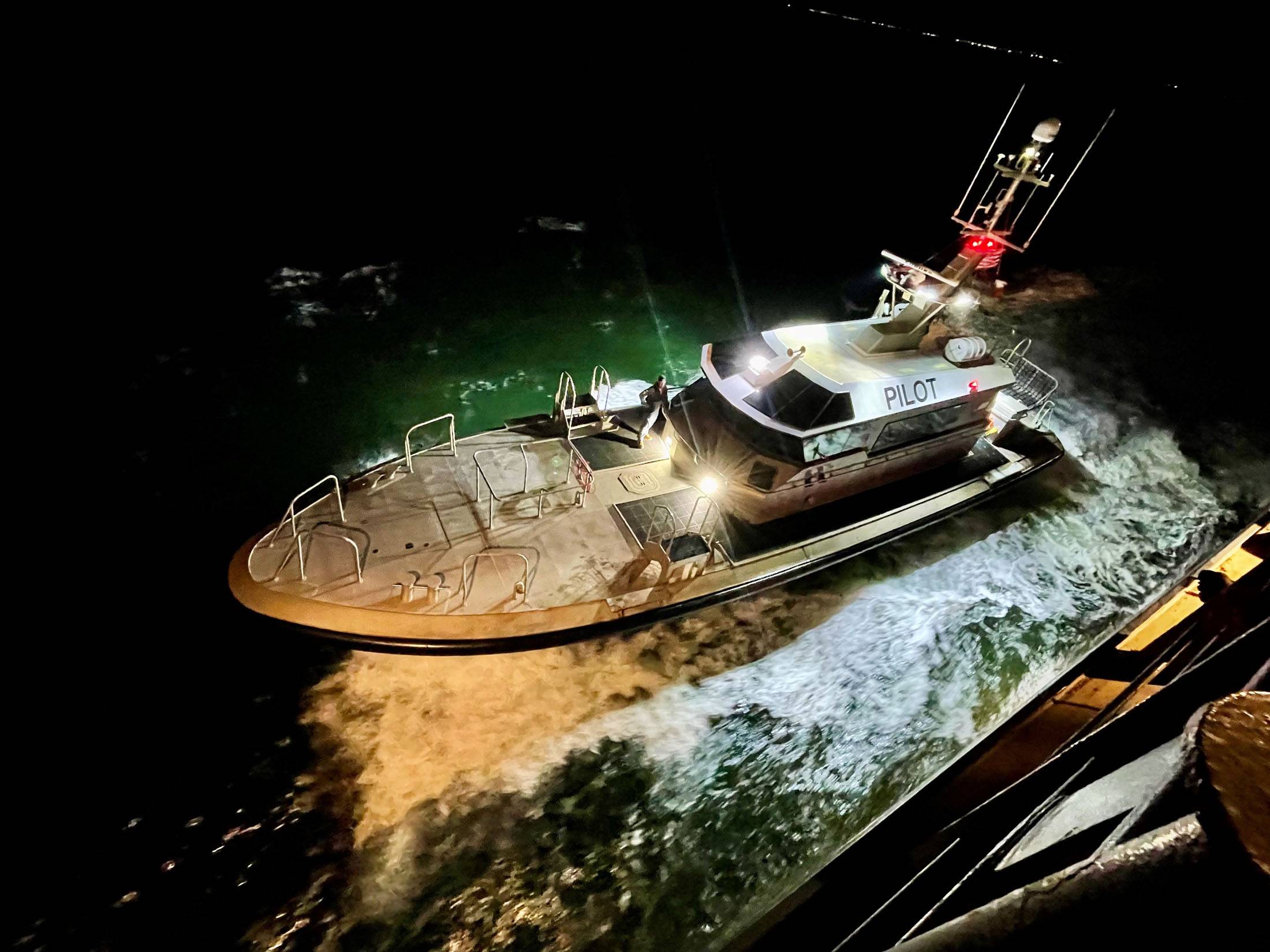
Over 95% of large ocean-going vessels moving in U.S. waterways are under the direction and control of a pilot that is a member of the American Pilots’ Association (APA). The enormous increase in vessel sizes – as much as five times bigger than just twenty years ago – without corresponding expansions of waterways has made the already difficult work of these pilots even more challenging.
APA-member pilots are generally the only U.S. citizen aboard foreign ships moving in the fragile bays, ports, rivers, and lakes that are the lifeline of this country. The pilot boards the ship and takes charge of its navigation and has a duty to prevent it from engaging in unsafe operations. In the U.S., a pilot's overriding obligation is to serve the public interest by protecting the marine environment and port infrastructure while keeping maritime commerce flowing efficiently. The pilot is not a member of the ship's crew. In fact, the U.S. pilotage system of laws and regulations looks to ensure the pilot is insulated from the economic pressures on the shipowner and independent of control by the ship’s master.
Every time a pilot boards a ship, she or he knows that a moment’s inattention, complacency, wrong decision, or simple mistake could lead to a catastrophic vessel casualty with great harm to the marine environment, hundreds of millions of dollars in damages, and/or loss of life. Coupled with the physical dangers pilots face (every year pilots around the world are killed or injured on the job), few professions have presented such risks and demanded such skill in the normal course of activities.
Piloting has always been an extremely difficult profession, requiring a high skill level, but it is becoming even more difficult as the global shipping industry opts for larger vessels that dramatically outpace dredging of navigational channels and upgrades to other port infrastructure. In other words, ships are getting larger and ports are getting correspondingly smaller. Pilots are now regularly asked to assume the risks associated with maneuvering massive deep draft ships through winding, narrow, and congested waterways designed decades ago for much smaller vessels.
The National Transportation Safety Board (NTSB), in its report on the containership Dali’s allision with the Francis Scott Key Bridge, confirmed that pilots are facing enhanced challenges due to ship growth continually outstripping port improvements. In its report, NTSB concluded that increasingly larger commercial ships “pose increased risks and challenges to maritime safety due to their reduced maneuverability in, and in close proximity to, port and waterway infrastructure that was not designed to accommodate vessels of such size.” This NTSB report shows that the difficulties associated with increased ship sizes in “shrinking” ports are not theoretical. These challenges are here and they are now. Following are just some challenges pilots are facing in this new reality:
- Extremely Limited Maneuvering Space: Larger vessels mean less room for error in channels and turning basins, reducing the margin for safe navigation.
- Reduced Under-Keel Clearance (UKC): As ships get larger and carry more cargo they go deeper, which increases the risk of grounding, especially in ports with limited dredging capabilities.
- Increased Stopping Distances & Inertia: Larger, heavier ships require much greater distances to stop or turn, making speed control and precision maneuvering critical.
- Visibility Limitations: High-stacked containers on Ultra Large Container Ships and can significantly limit a pilot’s view from the bridge, adding to the difficulty of a pilotage maneuver.
- Environmental Factors: High winds and strong currents have a greater effect on larger ships with ever expanding underwater hull masses and “sail areas,” increasing maneuvering difficulty in tight channels and during mooring.
- Infrastructure Constraints: Many ports, designed for smaller ships, lack the necessary berth depth, pier length, crane size, and turning basins, leading to higher operational pressures.
- Operational Risks: Increased ship sizes make any potential accident (grounding, collision or allision) far more severe, with greater environmental and financial consequences.
While many ports are investing in dredging and infrastructure upgrades, most maritime experts predict the pace of ship growth will continue to exceed these upgrade efforts. This means that the U.S. marine transportation system and supply chain upon which our economy depends will continue to rely heavily on pilots and their finely honed skills to bridge the gap between the realities of growing ships and near-static ports. Fortunately, APA-member pilots and our compulsory pilotage systems are up to the challenge.
Pilots licensed by the twenty-four coastal states and Puerto Rico, and U.S.-registered Great Lakes pilots, are resilient, specialized, independent, safety-driven, rigorously regulated, and fully capable of mitigating the enhanced risks associated with large ships moving in confined hazardous waterways. Compulsory pilotage is one of the most effective ways for governments to protect the marine environment while facilitating the safe and efficient movement of maritime commerce because, unlike other maritime safety regulations which merely direct a ship to take or not take certain actions, pilotage regulations place on the bridge of a ship a highly trained pilot to ensure the ship takes appropriate action. This pilot possesses unmatched local knowledge; is an expert ship-handler; leverages emerging navigation technologies; is free to exercise informed independent judgement; and has the sole objective of protecting the public interest.
Despite increased risks posed by larger ships calling at U.S. ports that have not kept pace with ship growth, APA-member pilots will continue to step up and perform their vital duties. These pilots will continue to act in the public interest, uphold their traditionally high standards, and maintain the independent, professional, and specialized knowledge that is crucial for the safe, environmentally responsible, and efficient movement of maritime commerce.


