

Lloyd's Register Explores Hydrogen's Potential for Decarbonization in Recent Report
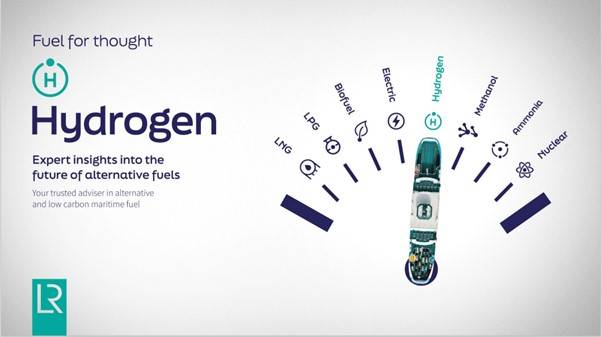
Lloyd’s Register (LR) has published the latest report in its Fuel for thought series, providing an assessment of hydrogen’s potential role in maritime decarbonization.
Fuel for thought: Hydrogen examines hydrogen from production and supply through to onboard use, highlighting the fuel’s advantages alongside the safety, infrastructure and cost challenges that currently restrict its adoption.
Green hydrogen has the potential to deliver zero tank-to-wake greenhouse gas emissions when used in fuel cells and has a vital role as the building block for e-fuels such as ammonia and methanol. But hydrogen’s low volumetric energy density, the need for cryogenic storage at –253°C and heightened safety risks means that the fuel is far from a ready-made solution for most ship types.
The report notes that while interest is rising, particularly as regulatory measures tighten, hydrogen-capable vessels still represent less than 0.5% of the global orderbook.
The assessment comes as shipowners face increasing pressure to cut emissions under the EU ETS, FuelEU Maritime and the IMO’s 2050 net-zero ambition. Green hydrogen stands to gain from FuelEU Maritime’s two-times multiplier for renewable fuels of non-biological origin until 2033, a mechanism that could accelerate its uptake as production scales.
Infrastructure—and the lack of it—remain a critical challenge. Despite a few emerging bunkering projects, low-emissions hydrogen as a whole – including hydrogen produced via renewable-energy powered electrolysis (green hydrogen), biomass and fossil fuels with high levels of carbon capture and permanent storage (blue hydrogen) – accounted for less than 1% of global production in 2025, according to IEA figures 1.
Significant investment in production, transport and bunkering infrastructure is needed before the fuel can support wider maritime demand. Shipping will also need to compete with other industries for green hydrogen, driving the need for robust certification schemes and transparent lifecycle assessments.
Safety emerges as a key theme. Hydrogen’s wide flammability range, low ignition energy and potential for embrittlement require rigorous design standards and specialized crew training.
LR’s own hydrogen requirements, set out in Appendix LR3 of its Rules for Ships Using Gases or Other Low-Flashpoint Fuels, provide a framework to manage those issues, supported by guidance on fuel cells, composite cylinders, liquid hydrogen systems and bunkering arrangements.
Despite these hurdles, the analysis points to near-term opportunities. Early adoption is most viable for short-sea trades such as ferries, tugs and coastal vessels where regular bunkering cycles reduce the constraints of onboard storage.
Fuel cell technologies show particular promise for these applications, supported by improving cost trajectories and advances in durability. Hydrogen-ready designs and hybrid fuel strategies also offer shipowners a practical route to futureproof assets.
Fuel for thought: Hydrogen is now available to download from Lloyd’s Register at: Fuel for thought: Hydrogen | LR
Watch: Padmini Mellacheruvu, LR's Lead Technical Specialist in Cryogenic and Compressed Fuel Systems, gives an introduction and overview of hydrogen as a fuel for shipping including the technical challenges, safety elements and sustainability - https://www.lr.org/en/knowledge/webinars/introduction-to-hydrogen-as-a-fuel-for-shipping/


