

First Green Methanol Bunkering of New Car Carrier Successfully Completed

EUKOR Car Carriers, SIPG Energy, and World Fuel have successfully completed the first green methanol bunkering of M/V Arctic Tern, the first vessel in the new Shaper Class series of car carriers, at the Port of Shanghai.The operation involved the delivery of 2,800 MT of green methanol to Arctic Tern via a ship-to-ship transfer using SIPG Energy's methanol bunkering vessel M/V Hai Gang Zhi Yuan, the largest vessel of its kind in operation. The bunkering operation was carried out at Haitong Terminal…
FOBAS Fuel Quality Report Identifies Challenges with ISO-Compliant Fuels

Lloyd's Register (LR) has warned that ship operators are facing a growing risk from fuels that appear compliant under routine ISO 8217 testing but still present operational risks once onboard.According to LR’s latest Fuel Oil Bunker Analysis and Advisory Service (FOBAS) Fuel Quality Report, covering the first half of 2026, off-specification fuels remain a persistent challenge. However, some of the most disruptive cases now involve fuels that pass routine compliance testing but show poor stability or compatibility…
Caterpillar MaK Engines Receive Dual-Fuel Conversion Solutions

Caterpillar announced new alcohol-based fuel conversion solutions for MaK engines. The dual-fuel conversion, for M 43 engines, is engineered to operate on up to 95% methanol or ethanol by volume which lowers greenhouse gas (GHG) emissions up to 80%. The fuel-blending conversion allows operators to blend up to 35% methanol or ethanol with marine diesel oil (MDO), marine gas oil or biofuel equivalents to deliver GHG emissions reductions up to 20% for M 20 to VM 43 engines[i]. Both…
BeHydro Receives Lloyd’s Register First Class Approval for Hydrogen Marine Engine

Lloyd’s Register (LR) has issued the first Type Approval Certificate for a 100% hydrogen-fueled, spark-ignited marine engine.The approval has been awarded to the hydrogen engine developed by BeHydro and confirms the design meets LR’s requirements for safety, performance and reliability in marine applications.The engine has been developed and tested at ABC Engines’ facility in Ghent and is designed to operate entirely on hydrogen, without the need for pilot fuels. This simplifies system design and removes onboard carbon emissions at source…
BIMCO Adopts Biofuel Clause to Address Shipping Industry Challenges

BIMCO has adopted a Biofuel Clause for Time Charter Parties to address legal and operational challenges as the use of low-carbon fuels in shipping increases.As the shipping industry decarbonizes, regulatory frameworks reshape companies’ fuel strategies. The integration of biofuels into charter party agreements is complex, however, and often raises questions around fuel quality, engine compatibility and liability. The clause provides clear definitions, agreed fuel specifications aligned with ISO standards and a structured process for sampling, testing, storage, and handling of biofuels.
Ammonia-Fueled Vessel Delivered to EXMAR

ANTWERPEN was delivered to EXMAR, the Belgian gas shipowner and infrastructure developer, a ship powered by WinGD’s X52DF-A ammonia-fueled engine, reported to be the world’s first ocean-going ship designed to operate on ammonia fuel.The achievement is the result of a collaboration between WinGD, EXMAR, engine builder HD Hyundai Engine Machinery Division (HHI EMD) and shipyard HD Hyundai Heavy Industries Co., Ltd. This is the first in a series of four newbuild ammonia dual-fuel midsize gas carriers, for EXMAR, each to be named after a Belgian city.ANTWERPEN is a 46,000m³ LPG/ammonia carrier.
LR Certifies R/V Prince Madog Hydrogen Fuel Cell Retrofit

The UK-flagged research vessel Prince Madog has received certification for a hydrogen fuel cell retrofit, following approval by Lloyd’s Register (LR) under its ShipRight Risk Based Certification (RBC) framework. The certification was presented at Seaworks 2026 in Southampton.The project, delivered by vessel owner O.S. Energy’s Naval Architecture and R&D office in collaboration with hydrogen and clean energy systems specialist Ecomar Propulsion, included the development of the vessel’s gaseous hydrogen storage system and the detailed integration design of the associated fuel cell…
VPS: Fuel Quality Management for Vessels in Extended Idle

Since the closure of the Strait of Hormuz to most commercial shipping in late February 2026, an estimated 1,550 vessels, carrying approximately 20,000 seafarers, have been unable to transit, or have chosen to remain at anchor in the Arabian Gulf, Gulf of Oman, and approaches. Traffic through the Strait, which normally averages around 138 vessels per day, has fallen to near-zero on most days. The conflict began on February 28, 2026, resulting in vessels being idle for approximately 90 days.
IMO Approves New Guidelines for Ammonia-Fueled Vessels

New safety guidelines for the use of ammonia as fuel on gas carriers have been approved at the International Maritime Organization’s (IMO) Maritime Safety Committee (MSC 111), marking a step towards the commercial deployment of ammonia-fueled vessels.The guidelines, developed through collaboration between Lloyd’s Register (LR), the Belgian Federal Public Service Mobility and Transport (FPS Mobility) and gas shipping operator EXMAR, provide a practical framework to manage the safety risks associated with ammonia.By drawing directly on operational experience and regulatory input…
New Assessment Maps Pathways for Sustainable Maritime Fuels

A new report from the Lloyd’s Register Maritime Decarbonisation Hub (The Decarb Hub) finds that early investment in a small number of strategically positioned hubs and export gateways could accelerate the availability and uptake of sustainable maritime fuels. The report, Building the sustainable maritime fuel supply chain, is the first in The Decarb Hub's “Maritime System in Transition” series. It sets out a global, evidence-based assessment of where alternative maritime fuels…
DNV Launches Hydrogen Fuel Recommended Practice

DNV has released a new recommended practice (RP) for hydrogen as ship fuel. It outlines the competence requirements for crew, inspectors, and technical personnel to support the proper handling of hydrogen systems on board ships.Hydrogen is gaining traction as a marine fuel, with seven vessels currently in operation and another 30 in the orderbook. However, several safety barriers like hydrogen leakage, low ignition energy, and management of high‑pressure or cryogenic storage, still limit its uptake.
ABS Delivers New Report for EMSA on Ammonia Safety

Commissioned and published by the European Maritime Safety Agency (EMSA), a new report focused on the safety of ammonia as a marine fuel was developed by an ABS-led consortium that included the National Technical University of Athens (NTUA) and the Fundación Valenciaport.Based on the insights gained from the study, the report includes recommendations that expand upon existing interim guidelines from the International Maritime Organization for the safety of ships using ammonia as fuel.
Fuel Oil Bunker Report Reveals Surge in Marine Fuel Quality Failures

Lloyd’s Register (LR) has released its latest Fuel Oil Bunker Analysis and Advisory Service (FOBAS) Fuel Quality Report covering July to December 2025, revealing a rise in the frequency and severity of off specification marine fuel incidents across several of the world’s busiest bunkering hubs.The second half of 2025 was characterized by a concentration of repeated fuel quality failures across major ports including Singapore, Rotterdam, Antwerp, Hong Kong and Port Klang. December saw the highest number of monthly off specification cases recorded in 2025…
Alfa Laval Launches FCM LNG Fuel Supply System Featuring Cryogenic Technology

In response to the strong market trend for LNG, Alfa Laval has launched its new FCM LNG fuel supply system during Marintec 2025. The LNG fuel supply system features cryogenic technology from Fives, a company recently acquired by Alfa Laval. This enables Alfa Laval to deliver a high-performance system that enables customers to adopt LNG efficiently and safely as a marine fuel. As the maritime industry navigates its decarbonization journey, LNG has solidified its role as a transitional fuel.
Fuel Assessment Update of the Mediterranean Emission Control Area

By the end of October 2025, six months had passed since the implementation of the Mediterranean Emission Control Area (ECA). This article will set out to review what’s changed in terms of the fuel mix and fuel quality, across the region between November 1, 2024 - October 31, 2025.The six months leading up to the implementation of the Mediterranean ECA (1st November to30th April 2025), VPS tested marine fuels representing 1,610,852 mt, bunkered in the Top 10Mediterranean ports.
Vessels Face FuelEU Maritime, EU ETS Challenge Despite Delay of the IMO Net Zero Framework

The decision made during the MEPC meeting in October 2025 to delay the IMO’s Net Zero Framework, by one year, has caused waves across the shipping industry, generating opinions and comments from many industry stakeholders. As a consequence of this decision, it is ever more likely that it will give rise to more regional legislation and Emission Trading Schemes, which may come to the fore as a substitute for the delayed global IMO Net Zero Framework.With this in mind, the EU ETS…
Honeywell Introdcues Biomass Conversion Technology

Honeywell introduced a breakthrough technology that converts agricultural and forestry waste into ready-to-use renewable fuels for hard-to-abate sectors, such as the maritime industry. The technology produces lower-carbon marine fuel, gasoline and sustainable aviation fuel (SAF) from inexpensive and abundant biomass sources like wood chips and crop residues. For ship operators, these ready-to-use or “drop-in” fuels provide a cost-effective and lower-carbon alternative to traditional heavy fuel oil.
Navilands Group Selects ABS Wavesight for Digitalized FuelEU, EU ETS Compliance

ABS Wavesight, the ABS-affiliated software-as-a-service (SaaS) company, has been chosen by Navilands Group to provide a single integrated platform to help streamline compliance with the FuelEU Maritime Regulation and EU Emissions Trading Scheme (ETS) requirements.Navilands will implement the Carbon Diligence suite, part of the new ABS Wavesight Advantage platform, across a selection of bulkers and containerships, with further expansion planned by year-end.As of January 1, 2025…
VPS: The Power of Precision Bunker Quantity Surveys

In the high-stakes world of marine fuel procurement, where average deliveries can exceed $1 million, precision and accountability are everything. Veritas Petroleum Services (VPS) has been conducting Bunker Quantity Surveys (BQS) since 1987 and has delivered close to 200,000 surveys across the globe.In a recent analysis of 10,000 VPS surveys, results show that a single vessel could save up to $145,000 per year by identifying short deliveries, detecting density discrepancies, and properly measuring remaining onboard fuel (ROB).
Singapore Marine Bunker Sales Dip in First Half of 2025

Sales of marine bunker fuel in Singapore dipped slightly in the first half of 2025, official data showed on Monday, as shipping uncertainties in the wake of global tariffs capped demand, particularly in the first quarter.Total sales at the world's largest refuelling hub for ships stood at 26.98 million metric tons in January to June this year, dipping 1% from 27.19 million tons in the same period last year, data from Singapore's Maritime and Port Authority showed. Conventional fuel sales…
Tighter Emissions Regulations, Slower Economy to Soften Marine Fuel Demand
Stricter environmental regulations and slower global economic growth will soften marine fuel demand in the coming years, the International Energy Agency said in its annual report on Tuesday.Marine fuel sales jumped last year due to Red Sea disruptions that made shipping companies take longer routes.But demand for those fuels, also called bunkers, could flatline at around 5 million barrels per day (bpd) in 2024-2030, because of weak underlying shipping growth and rising costs from tougher maritime environmental standards…
Marine Fuel Sales at Fujairah Port Hit Three-Month Low
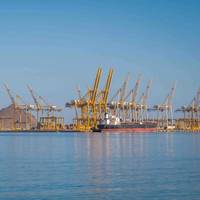
Marine fuel sales at the United Arab Emirates' Fujairah port hit a three-month low in May, data showed, while market sources said they are monitoring the situation in June as conflict flares between Israel and Iran, heightening regional tensions. Bunker sales, excluding lubricants, totalled 614,296 cubic metres (about 608,000 metric tons) at the Middle Eastern bunker hub in May, based on Fujairah Oil Industry Zone (FOIZ) data published by S&P Global Commodity Insights. The volumes were down 8.2% from April and by 0.2% from May last year.
Industry Partners Complete STS Ammonia Bunkering Pilot off Western Australia
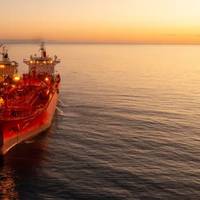
The successful completion of the first-ever ship-to-ship transfer (STS) of ammonia at anchorage in Western Australia, as part of the maritime decarbonization initiative led by Global Centre for Maritime Decarbonization (GCMD), has marked a major milestone in paving the way for ammonia as a viable marine fuel.Under the supervision of the Pilbara Port Authority (PPA), the pilot took place within the anchorage area of Port Dampier, simulating real-world bunkering conditions and demonstrating…



