

Naval Surface Warfare Center Dahlgren Division Hosts Annual School Innovation Challenge


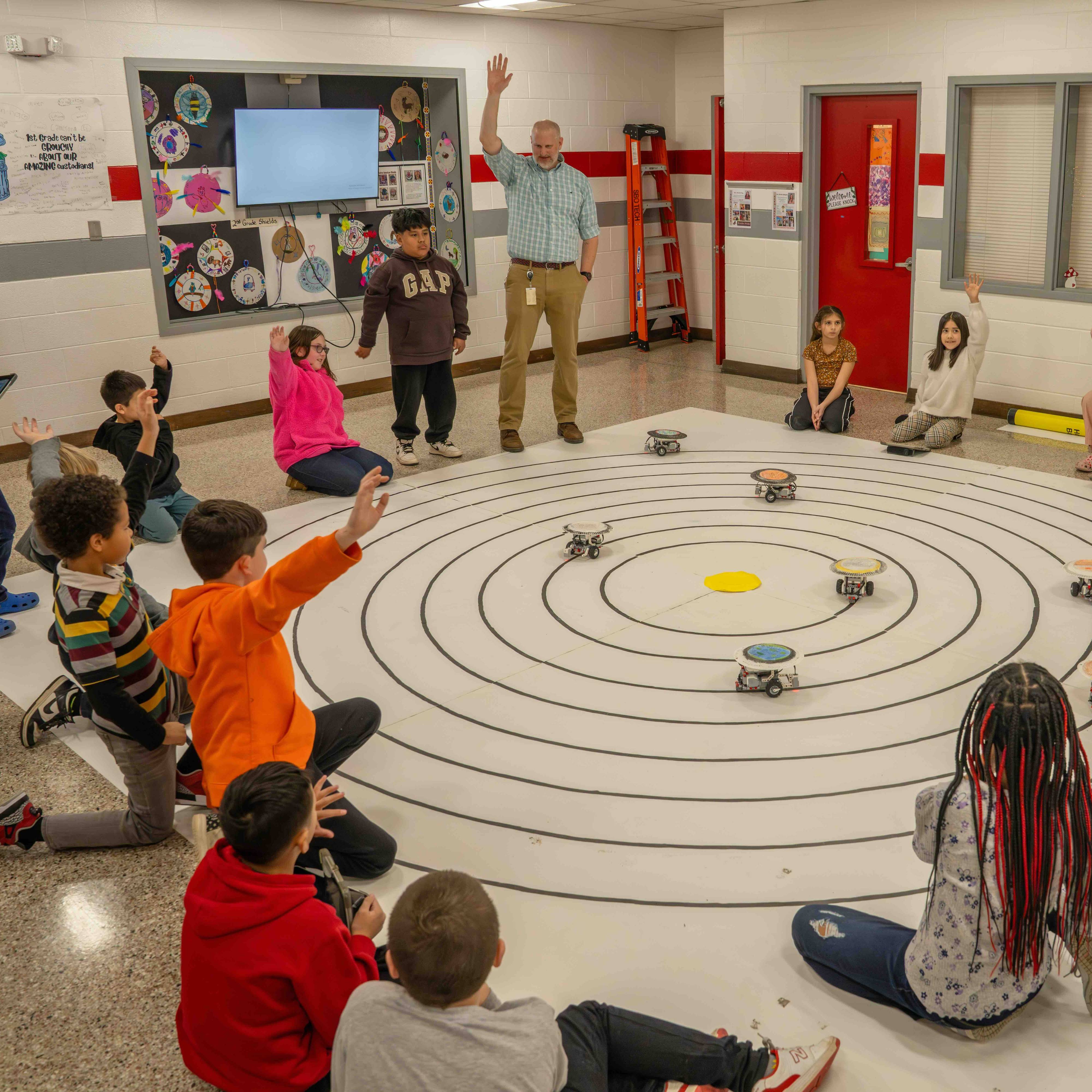
 Preston Ailor, an instructional technology teacher for Richmond County Public Schools, leads a fourth grade class through a science unit on solar systems using Lego robots donated by Naval Surface Warfare Dahlgren Division. The donation is part of NSWCDD’s expansive STEM outreach across regional school districts to build a pipeline for the next generation of scientists and engineers essential to the Navy’s mission. (Dorina Watermolen/NSWCDD Photo)
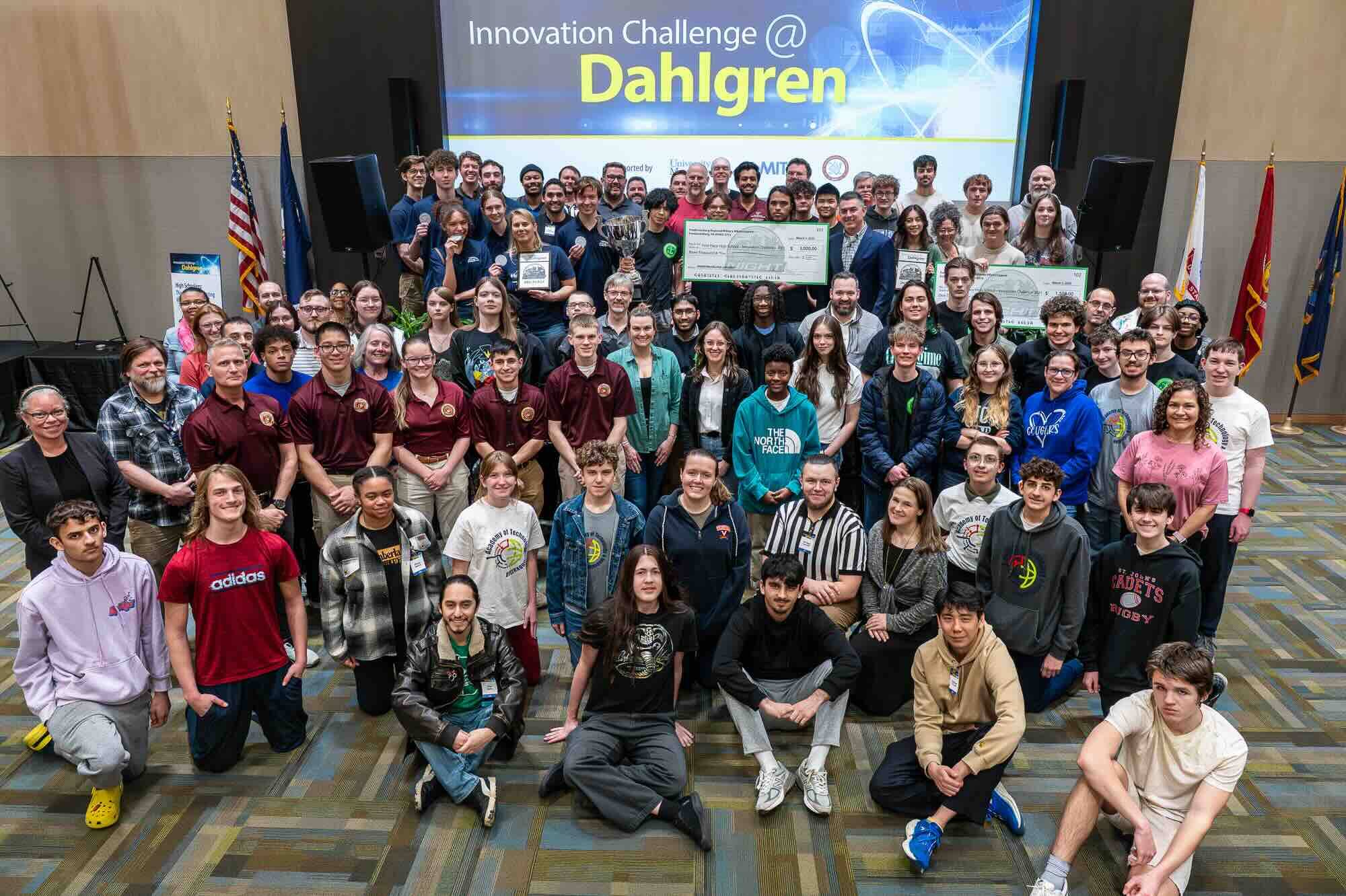
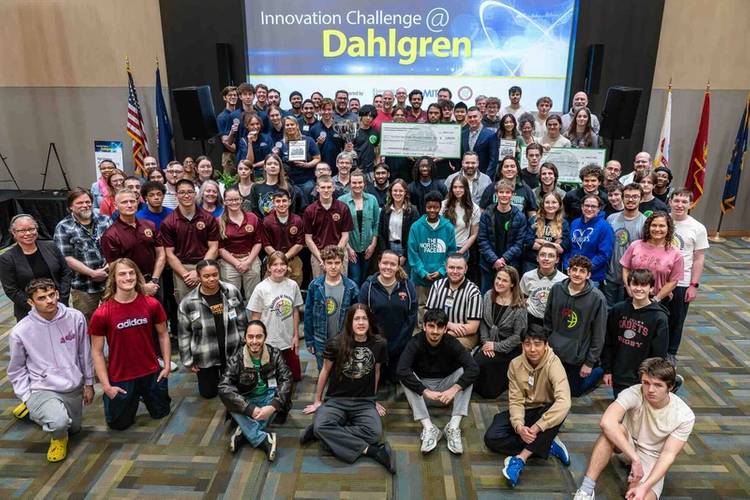 Naval Surface Warfare Center Dahlgren Division launched the Innovation Challenge @ Dahlgren five years ago to motivate youth in the local area and throughout the region to become the next generation of Navy scientists and engineers. Since then, the number of schools participating in IC@D nearly tripled. During IC@D, teams compete against one another to solve complex engineering challenges in what has become a flagship event for Dahlgren Division’s STEM outreach efforts. (Dave Ellis/NSWCDD Photo
For more than a decade, Naval Surface Warfare Center Dahlgren Division has invested in regional schools through STEM events, robotics competitions and technology donations, recognizing that the next generation of scientists and engineers is already sitting in today’s classrooms.
On Feb. 13 and 14, NSWCDD will host its annual Innovation Challenge at Dahlgren, called IC@D for short, for middle and high schoolers at the Fredericksburg Convention Center. The invitation-only event will bring together 35 teams that compete against one another to solve complex engineering challenges in what has become a flagship event for Dahlgren Divison’s STEM outreach efforts.
Launched for high school students in 2022 and expanded to middle schoolers two years later, IC@D is part of Dahlgren Division’s commitment to build the next generation of scientists and engineers. But exposure to STEM and building excitement around it begins as early as elementary school. The goal, Tyler Truslow, STEM director at NSWCDD said, is to get students excited about STEM at the beginning of their academic careers.
Multiplying impact
When NSWCDD received new robotics kits in late 2024 to replace an older set, Truslow reached out to Preston Ailor, an instructional technology resource teacher for Richmond County Public Schools who has led his high school robotics team to victory in two of the last three IC@D events. He thought Ailor, who splits his time between the county’s elementary/middle and high schools, could put the older Lego Mindstorm robot kits to good use.
Ailor was thrilled to have them. A teacher for more than 20 years, Ailor knows students identify as a math or science person in upper elementary school, and that it’s vital to get kids excited about STEM early.
He challenged the school’s fifth graders to design conceptual posters for imaginary robots—free from any limits on imagination or resources—and guided them in using generative AI to visualize their ideas, introducing them to AI and the basics of prompt engineering. He developed a Naval Sea Systems Command-themed robotics camp and curriculum using the NSCWDD kits as a foundation, incorporating the robots into science, math and even English classes.
Thirty students participated in the weeklong robotics competition for fifth and sixth graders modeled after Dahlgren Division’s innovation challenges, representing 15 percent of students in those grades.
“We were able to open it up to all students, not just gifted students, including those who didn’t think they were good at math and science. We had some high-level kids in there, but my biggest win was when a student told me on Day 2 that this was the first time she had stayed after school for anything other than tutoring. She told me, ‘I feel like one of the smart kids now,'” Ailor said.
Community investment
When Dahlgren Division hosted its first IC@D five years ago, around a dozen schools participated. This year, Truslow is anticipating nearly 40 middle and high school teams. As interest in IC@D has grown, so has STEM outreach.
In fiscal 2022, NSWCDD STEM efforts reached 13,000 students. Two years later, that number had doubled to more than 26,000. Truslow estimates that since the start of IC@D, Dahlgren Division has engaged with 82,000 students and 500 unique educators.
Truslow also attributes the growth to the popularity of IC@D and the dedication of Dahlgren Division’s STEM advocates, who are the scientists and engineers who deliver technical excellence here every day.
NSWCDD has provided 3D printers, electronics kits, desktop computers and chemistry and biology materials. It has donated robotics kits to 40 schools, including full classroom sets to seven schools. It supports STEM nights, science fairs, coding clubs, in-class workshops, classroom-based STEM projects and speaking engagements. Dahlgren Division and its STEM advocates help run the annual STEM Summer Academy for regional middle schoolers and design curriculums and challenges for National Robotics Week each spring.
The next generation
When Richmond County Elementary School teacher Kaylyn Drake began a unit on the solar system, she turned to Ailor, who can come up with a STEM-based project for just about any subject using the Dahlgren Division-donated robots.
“My job is to have creative freedom,” Ailor said. The more he brings the robots to classrooms, the more teachers ask him to incorporate them into their own lessons. “It spreads like an infection.”
Ailor had just the thing for Drake’s fourth grade class, which spent a week working in eight small groups to research an assigned planet. Students wrote some of the facts they found on paper plates and designed them to look like their planet. Ailor used large mats, also donated by NSWCDD, to make a large-scale, one-dimensional model of the solar system.
The solar system unit would culminate with students learning how to use iPads to create an algorithm to “tell” their robot to orbit the solar system.
Inside Drake’s classroom, he walked students through connecting iPads to robots and entering a series of commands.
“Commands are special directions,” Ailor explained to the students. “Computers are great because they do what you tell them to. But we can get it wrong. Sometimes when we get it wrong, it’s more fun. OK. Now we’re going to write an algorithm.”
Once they were done, the students taped their planets to the top of the robot. Then they filed out of the classroom and toward the school entrance, where the solar system filled up much of the floor. Then came the big test: To see whether each planet would “orbit” around the sun.
The students watched as the robots began their programmed trek. Every so often, a planet drifted into a neighboring orbit or started going backwards, but for the most part, the robots stayed on course.
After watching them for a while, Ailor asked the students if they wanted to go back to class for free play with the robots. They wanted to stay in the hallway and watch their planets.
As Ailor and Drake answered questions, they both understood that the students were taking in much more than a lesson on the solar system. They knew that maybe, somewhere among the group was a student for whom this was a first spark in what could become a STEM career.