

By the Numbers: FY2025 Dredging Stats Released
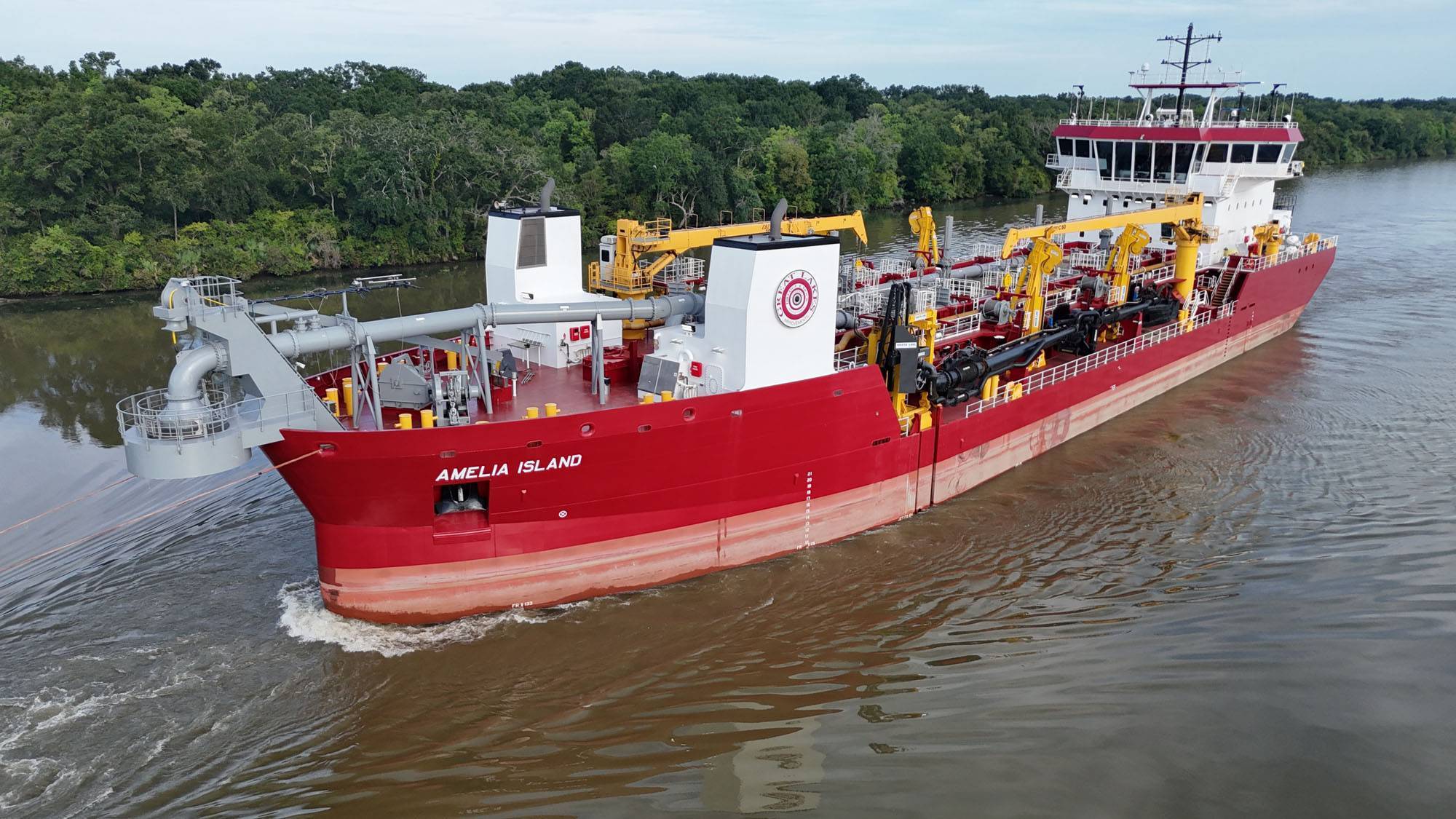
The Dredging Contractors of America (DCA) is pleased to report another strong year for the U.S. dredging industry in Fiscal Year 2025, with $1.8 billion in federal dredging awards executed entirely by the American-owned, American-crewed, American-built Jones Act dredging fleet.
According to Michael Gerhardt’s U.S. Dredging Report, FY2025 marked a transition year. While the prior year featured major deepening and widening projects in ports such as Norfolk, Brazos Island, Sabine, and Mobile, FY2025 saw fewer large-scale channel expansions. Instead, the industry’s core maintenance dredging market remained steady and reliable, ensuring the continued safe and efficient movement of commerce across the nation’s waterways.
At the same time, beneficial use of dredged material continued its upward trajectory, reinforcing dredging’s dual role in navigation and environmental stewardship. A record 74% of projects incorporated beneficial use, supporting coastal restoration, wetland creation, and island rebuilding efforts. Regions such as New Orleans led in large-scale habitat creation, while Baltimore continued its long-standing work restoring islands in the Chesapeake Bay—demonstrating how American dredging directly contributes to climate resilience and ecosystem restoration.
Speaking before the start of the Port of the Future Conference, William Doyle, Chief Executive Officer of the Dredging Contractors of America commented:
“Every dollar of this $1.8 billion program was delivered by American dredges, American mariners, and American workers under the Jones Act. The results speak for themselves—greater efficiency, real competition, and hundreds of millions in savings to taxpayers. Just as importantly, this work sustains dredging critical to our national and economic security—ensuring our military installations and port gateways across the United States remain open, ready, and resilient. This is what an America First maritime policy looks like in action.”
The FY2025 federal dredging program totaled $1.80 billion, with hopper and dustpan dredges accounting for $608.5 million (34%) of all awards. While this segment declined from FY2024’s peak driven by major deepening work, it remained consistent with long-term averages thus highlighting the stability of the U.S. dredging fleet.
Competition remained robust across the Jones Act marketplace, with an average of three bidders on all unrestricted projects. This competitive environment delivered significant value to taxpayers:
- $773 million in total savings to the federal government
- Average savings of 26% per project compared to government estimates
- 63% of projects awarded below the government estimate
- 91% awarded below the government’s estimated awardable range (GEAR)
Notably, in many cases, industry bids came in dramatically lower: - 68 projects more than 10% below government estimate
- 32 projects more than 25% below
- 13 projects more than 40% below
- 7 projects more than 50% below
These results underscore a key point: the Jones Act dredging industry delivers not only national security and domestic capability, but also cost efficiency and strong competition.
Small Business Participation
Small businesses continued to play a meaningful role in the industry with $294.6 million (25%) was awarded to small businesses across 135 projects. In total, 47 companies—19 large and 28 small businesses—participated in federal dredging work, demonstrating a healthy and diverse industrial base.
American Capability with Industrial Impact
Every project in FY2025 was performed by U.S.-built, U.S.-flagged, and U.S.-crewed dredges under the Jones Act, reinforcing a uniquely American capability that underpins:
•The reliability of U.S. ports and waterways
•The strength of the domestic maritime industrial base
•Rapid response capacity for coastal storms and emergencies
•Long-term environmental restoration and resilience
As FY2025 demonstrates, the Jones Act dredging fleet continues to deliver for the nation—providing world-class infrastructure work, measurable taxpayer savings, and environmental benefits—without reliance on foreign equipment or labor.


