

Offshore Service Vessels: A Measured Market Recovery

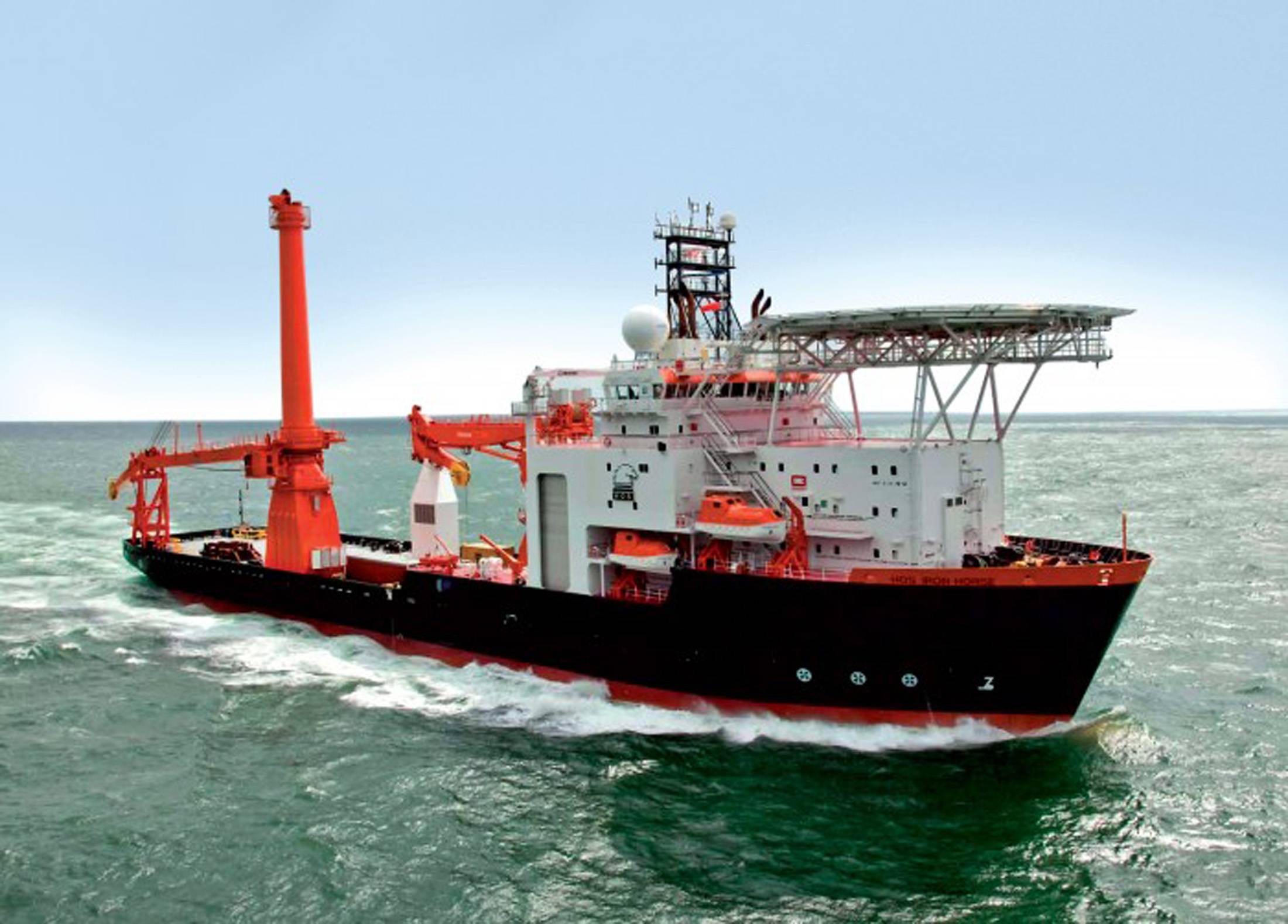
The outlook for the offshore support vessel (OSV) business has brightened considerably since the dark days of the previous decade and is possibly in a “Goldilocks moment” — not too weak and not too strong. While strengthening, it has not yet reached the point of significant new vessel ordering. Paradoxically, across maritime markets, observers are often concerned when exuberance gets out of hand. For now, newbuild activity remains limited.
On the Q3 2025 earnings call for listed company Tidewater (NYSE: TDW), which operates more than 200 vessels across worldwide markets — including 34 in the Americas, with charterers such as Exxon Mobil, Total and Pemex — Piers Dayer Middleton, executive vice president and chief operating officer, told listeners:
“OSV supply growth is expected to remain very moderate, supporting market dynamics overall, with the OSV order book of 134 units according to Clarksons Research still representing roughly 3% of the current fleet, reflecting limited capacity for supply growth. Newbuilding activity in the OSV space continues to be subdued, and we see no signs of significant new supply entering the market in the foreseeable future.”
Capital Returns — Carefully
At the late 2025 Marine Money event in New Orleans, on a panel devoted to OSVs, Morten Arntzen, senior shipping advisor at Macquarie, described how the Australia-based infrastructure and equipment financing giant has navigated the sector. He explained that Macquarie entered ship finance beginning in 2016 “at a time that a number of banks were either exiting or reducing their exposure — many because they lost hundreds of millions in the offshore sector.”
The brighter prospects for OSVs alluded to by Arntzen come with the potential cost of greater volatility on the horizon. In 2025, geopolitics — and potential shifts in the energy supply landscape — have loomed large. As oil supply has increased, with greater output from existing resources among OPEC+ producers, prices have slid downward toward the $60 to $65 per barrel range for benchmark Brent crude. At that price, new investment in offshore drilling — and in supporting equipment, including OSVs — may be limited.
Headwinds in the Gulf
The view from one highly informed insider was outlined in an online posting by Matthew Rigdon, chief operating officer of New Orleans-based OSV operator Jackson Offshore. In a January 2026 assessment of the marketplace published on Jackson’s website, Rigdon wrote:
“There are emerging headwinds in the offshore oil and gas industry in the Gulf of America that many operators are citing as challenges to growth in activity in the region. Among these challenges are the rising costs associated with drilling wells in the GOA.”
Rigdon suggested that this trend is prompting clients to reevaluate whether and how they can achieve the required rates of return to justify new drilling activity and production growth. As a result, vessel demand could soften over time, although the supply dynamics of deepwater OSVs must also be considered.
In a previous posting, Rigdon described one work-around in play — vessel sharing — “where one vessel serves multiple client locations,” calling it a game-changer for efficiency and cost savings across the Gulf of America. “Vessel sharing not only reduces fuel use and operational costs but could also play a pivotal role in making the next generation of OSVs financially viable,” he wrote.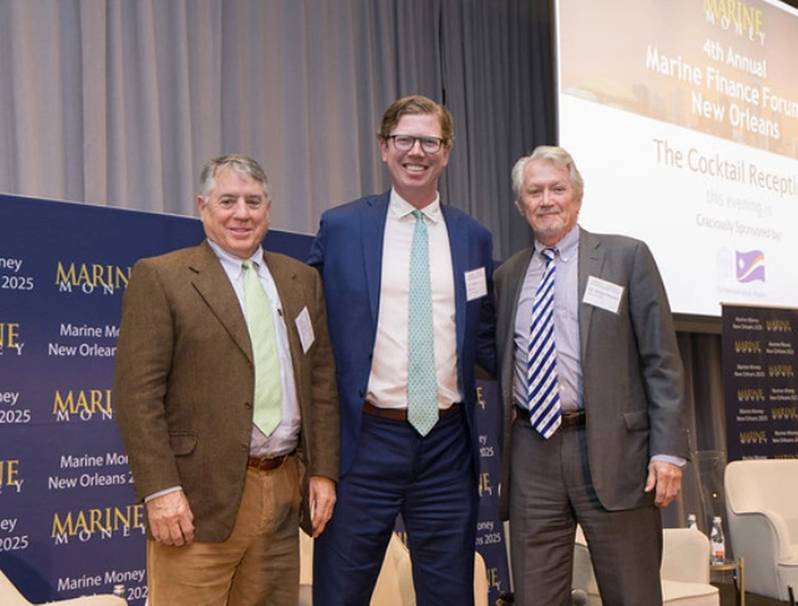 Marine Money 2025 OSV Panel: Peter Laborde, William Baldwin (moderator) and Morten Arntzen.
Image courtesy Marine Money
Timing the Market
Back at Marine Money, Arntzen explained that Macquarie has roughly $1 billion in loans outstanding in the offshore sector, with no losses on its books. The secret, he revealed, was timing.
“We did not lend any money until 2022 to the offshore sector,” he said — a time when crude oil prices had peaked and turned downward, with Brent pricing averaging above $100 per barrel — adding that “we are growing and looking for business in the sector.”
Arntzen said Macquarie is looking to expand its presence in the U.S. marketplace, following successes internationally. Highlighting the bank’s decision on timing its market entry, he said, “The world has re-discovered that they’re going to need the offshore sector.”
Importantly, he also alluded to periods of caution — as opposed to times of extreme optimism — in asset markets as being opportune moments for lenders to step into sectors.
Financing the Next Moves
While Macquarie seeks to leverage its experience in other geographies as it enters the U.S. market, another active player is CSG Investments, focused on secured lending across multiple sectors, including domestic maritime. CSG is linked to Beal Bank, based in Plano, Texas.
In a press release, CSG revealed that it was lending $450 million to vessel owner Otto Candies Ltd. for “general corporate purposes, including refinancing of existing indebtedness and paying for the acquisition of the four MPSVs from Harvey Gulf.” The deal was widely discussed at the New Orleans event.
The Marine Money panel also included shipowner J. Peter Laborde Jr., managing member of the family-owned Laborde Marine, which operates 25 vessels. Laborde referenced a key market characteristic: its ups and downs.
Referring to the 2010-15 period, Laborde — whose father founded Tidewater — said, “We were all building boats during those years.” He lamented that in 2015-16, “the market just shifted overnight … and the oil companies pulled the plug on the offshore business.”
He cited his firm’s decision to limit building activities several years before the pullback, pay off debt and avoid the wave of bankruptcy filings that ultimately followed. “Today we have no debt,” he said.
Strategic Shifts and Consolidation
Laborde was asked about the recent deal in which Otto Candies acquired four vessels from Harvey Gulf. He explained that Candies, an entity dating back to the 1940s, had gravitated toward offshore construction support — in contrast to offshore towing and traditional support — over the last two decades.
This evolution came at a time when industry stalwarts such as Harvey Gulf and Hornbeck Offshore Services needed to pivot following oil company pullbacks in the mid-2010s, shifting from standard OSVs toward multipurpose support vessels (MPSVs), often placed on long-term charters. Laborde said Harvey Gulf decided to exit the MPSV market, while Otto Candies, “with a very strong balance sheet” and broadening its reach, including into offshore wind, was a logical buyer.
The four-vessel acquisition was financed by Beal Bank’s CSG Investments, with Laborde suggesting the deal was completed entirely with debt. In CSG’s press release, banker Longhurst was quoted as saying:
“Acquiring four high-quality, high-demand vessels represents a pivotal moment for Otto Candies. These funds will help the company further develop their existing first-class platform in the Jones Act offshore markets, supporting both oil and gas and wind development and production.”
Potential consolidation in the OSV sector — a topic raised at Marine Money — also received attention. Longhurst noted that his institution tends to look for larger lending deals, greater than $200 million, and said, “There are a lot of small guys in the industry still, and I would love to see real growth in consolidation. I think that the industry needs to have large, sophisticated sponsors to take it to the next level.”
Laborde agreed. “I think that consolidation is inevitable,” he said, noting that some players are relatively new to ownership following bankruptcy filings, with former bondholders now serving as stockholders and no clear exit path. “Those guys have got to find a way out.”
He pointed to the lack of an IPO market — which would allow equity holders to monetize their positions — as pushing firms toward consolidation. Recent presentations by AMA Capital and Evercore have suggested a trend toward privatization, or “going private” deals, rather than new public offerings across maritime segments.
Policy, Security and the Broader Landscape
Where might the market be heading?
Rigdon wrote that despite headwinds, “the OSV sector should remain fundamentally solid.” Most importantly, there are currently no oil and gas OSVs under construction, and it is highly unlikely that new OSVs will be built in the next several years. The supply of deepwater-capable OSVs serving the Gulf of America will therefore remain static.
At the same time, he noted strong demand for U.S. Jones Act OSVs outside the Gulf, further reducing the number of vessels available to service traditional oil and gas operations in the region.
Beyond fossil fuel exploration and production, two additional facets of the 2026 landscape are worth watching: offshore wind and maritime security.
In late 2025, the Trump administration halted offshore wind projects underway. By February 2026, after developers successfully challenged the administration’s stop-work directives in federal court, construction resumed at five projects. Later that month, the administration filed another challenge in the U.S. Court of Appeals, appealing a December ruling striking down the wind permitting freeze issued when the president took office in January 2025.
Meanwhile, a long-awaited Maritime Action Plan was released in mid-February. While offshore vessels have figured in the dialogue, implementation would likely span many years.
OSVs are also emerging in a more immediate initiative. A December 2025 solicitation by the U.S. Coast Guard — part of the Department of Homeland Security and active in enforcement actions involving sanctioned and “dark fleet” tankers — sought commercial vessels to expand its capabilities.
In a recently published op-ed, Aaron Smith, president of the Offshore Marine Service Association, wrote:
“The U.S. vessels that construct and support offshore energy are technological triumphs. These vessels are built for long-duration operations, crane operations and modular mission profiles. The offshore energy fleet already meets or exceeds many of the performance requirements outlined in the Coast Guard’s solicitation and can be further improved and customized to a multitude of roles quickly via containerized equipment. The same capabilities that allow them to service offshore energy infrastructure make them ideal platforms for logistics, surveillance support and specialized mission execution in support of federal agencies.”
As geopolitical developments continue to unfold, market volatility is likely. Still, observers should be watching for an increasing role for the U.S.-controlled OSV fleet — whether close to home or in geographies across the globe.
* Note: This article published in the March 2026 edition of Marine News, which published before the outbreak of war in Iran.