

Vessev Launches Hydrofoiling Network for Urban Transit
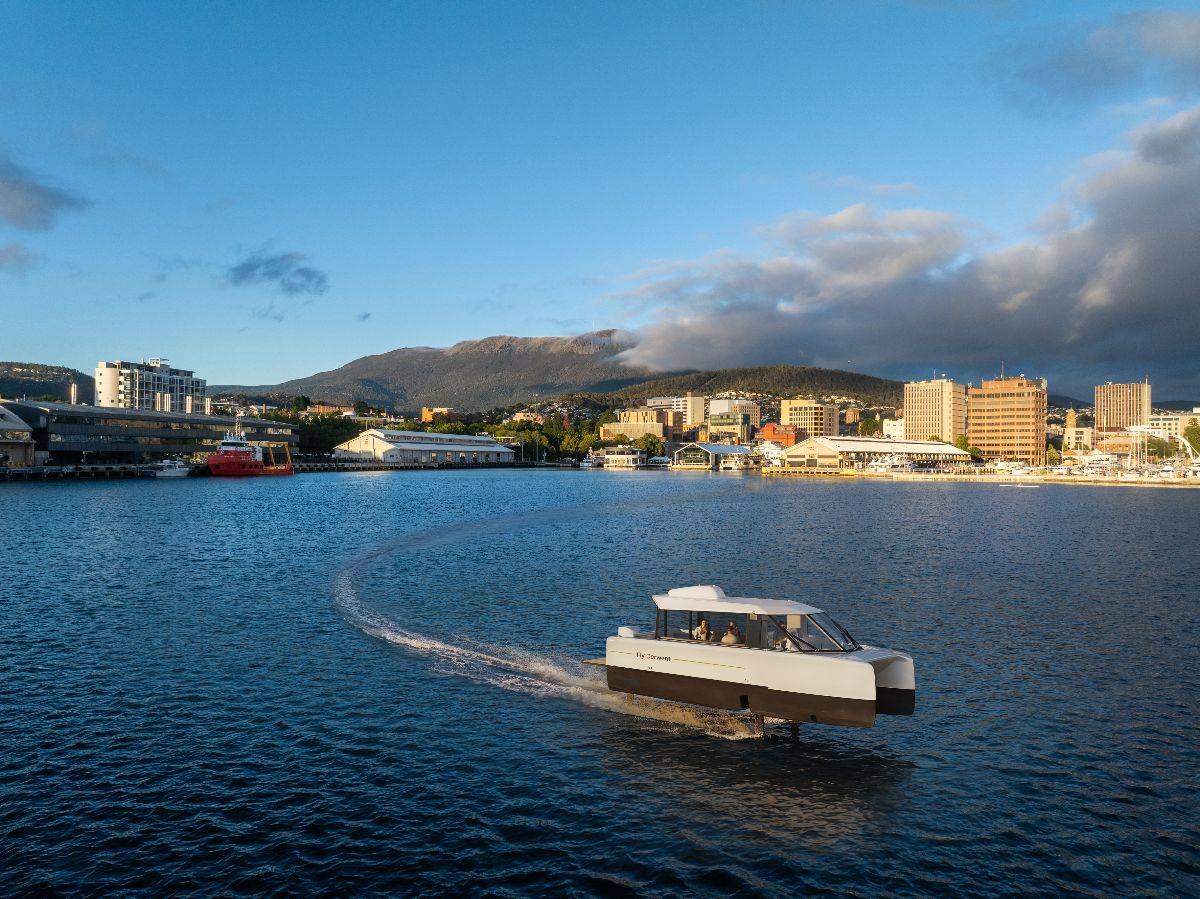
Vessev, a technology company designing and building electric passenger vessels, announced the launch of a new hydrofoiling network in Hobart, Australia, marking a step in using waterways as an efficient, scalable, zero-emissions layer of urban transport.
Fly Derwent, a new clean energy transport venture, will launch the network on the Derwent River, reconnecting Hobart’s waterfront using Vessev's VS–9, with expansion to a fleet of VS–12 vessels. Together, the system will create a high-frequency water transit network, without requiring major new infrastructure. Powered by Tasmania's renewable grid, which runs on approximately 100% renewable electricity including hydrogeneration, wind and solar, the service is designed to deliver one of the lowest-emissions commuter transport models globally.
Vessev’s VS–9 and VS–12 are electric hydrofoiling vessels built to commercial standards for public transportation. The 29-foot VS–9 carries 10 passengers with a range of up to 50 nautical miles at a cruising speed of 25 knots, while the 37-foot VS–12 can carry up to 30 passengers.
The vessels are powered by a fully integrated foil system inspired by America's Cup designs that automatically adjust to conditions up to 100 times per second, delivering a smooth, stable ride with virtually no wake. This opens new waterways for transport around the world, minimizing environmental impact in sensitive environments, like those found along the Derwent River.
The VS–9 is expected to arrive in Hobart in early 2027, with the VS–12 fleet to follow.
With vessels already operating in New Zealand and additional orders underway from around the world, Vessev is working with cities and operators globally to explore how electric-powered, hydrofoiling passenger operations can reduce traffic and environmental impact by turning underutilized waterways into transit networks.


