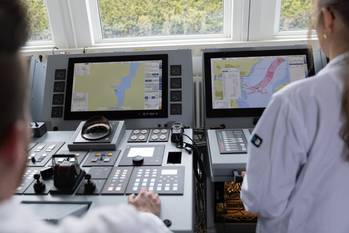
Ship Simulators
A ship simulator is an advanced training device; an electronic or mechanical system used to expose vessel operators and crew members to typical shipboard conditions and systems. Simulation training is not a substitute for the experience of training on an actual vessel, but is used as a preliminary method to thoroughly familiarize students with equipment, procedures, and processes. Simulation also is useful for review and for demonstrating updates and modifications to existing craft.

Liberia Opens Maritime Training Institute
The Liberia Maritime Training Institute (LMTI) was officially opened by Liberia President…

Wallem Adds Three Ship Simulators in Ukraine
The Wallem Maritime Training Center in Odessa, Ukraine added three training simulators…

PC Maritime to Install ECDIS in 50-vessel China Shipping Deal
PC Maritime’s Navmaster ECDIS has been chosen by China Shipping Group to be fitted…
MSI to Train NOAA Officers
Maritime Simulation Institute to Provide Professional Maritime Training to NOAA Officers…
HR Wallingford Sign Navigation Simulator Agreement with FMSC
HR Wallingford has recently signed an alliance agreement with Fremantle Maritime…
Cal Maritime Will Host 2012 Koch Sea Scout Cup
The California Maritime Academy (Cal Maritime), a campus of The California State University…
Panama Canal Authority Opens Simulator Center
In commemoration of the Panama Canal’s 88th Anniversary on August 15th, Panama President…

Naval forces globally are undergoing a profound transformation, driven by an accelerating pace of technological innovation and evolving geopolitical landscapes. This article explores the cutting-edge advancements that are redefining maritime defense and offense. From the integration of artificial intelligence and unmanned systems to the development of directed energy weapons and advanced stealth capabilities, we delve into how these innovations are enhancing situational awareness, extending operational reach, and enabling new forms of naval warfare. The future fleet will be characterized by networked, intelligent, and highly adaptable platforms, operating across multiple domains to secure sea lanes and project power more effectively than ever before.
Blockchain technology, initially developed as the backbone of cryptocurrencies like Bitcoin, is now making waves in the shipping industry. With its ability to provide secure, transparent, and tamper-proof records, blockchain is poised to revolutionize global supply chains, addressing some of the most persistent challenges in maritime logistics, including inefficiencies, fraud, and lack of transparency.
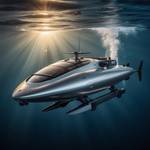
The maritime industry is on the brink of a revolution, with autonomous and unmanned marine vehicles poised to redefine the future of shipping. These innovative vessels, powered by advanced technologies and cutting-edge propulsion systems, offer numerous advantages, including increased efficiency, reduced operational costs, and enhanced safety. In this article, we'll explore the current state of autonomous marine vehicles, their propulsion systems, and the potential impact they may have on the global shipping industry.

The global maritime industry is on the cusp of a profound transformation, driven by rapid decarbonization, advanced digitalization, and an increasingly complex regulatory landscape. This article explores how these forces are reshaping the skills, roles, and welfare needs of the maritime workforce. From the demand for "green" engineering expertise to the rise of remote operations and AI-driven systems, we delve into the challenges and opportunities in attracting, training, and retaining the talent essential for sustainable and efficient shipping. The future maritime professional will be a highly adaptable, digitally fluent, and environmentally conscious individual, operating within an industry that must prioritize human-centric approaches to truly thrive.
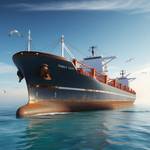
Tanker ships are an important component of the maritime sector, and they transport liquid cargoes around the world. These vessels are vital to the supply chain for energy, chemicals and other essential commodities. There are many types of tankers, each designed for specific cargoes such as oil, LNG, chemicals, or other liquids.