
Marine Link
Monday, May 4, 2026

Shipbuilding / Vessel Construction

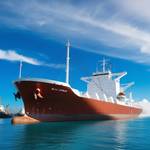
Shipbuilding is the construction of ships, which takes place in a specialized facility known as a shipyard. Shipbuilders, also called shipwrights, are workers which specialize in vessel construction and repair. The construction of boats is called boat building. Due to the smaller size and scope of the vessels being produced, boats do not necessarily require the full services of a shipyard but may be built in a boatyard or even smaller private facility.

Block construction is a modern shipbuilding method which involves the assembly of prefabricated sections. Cross-sections of the superstructure are pre-built in a shipyard, taken to the building dock (or slipway,) and then hoisted into position and attached. Some of the more equipped shipyards are able to build equipment and utilities into the blocks, pre-installing pipes, plumbing, and electrical cables. The more components that can be built into the blocks before final assembly, the less effort required once the hull is welded together.

Since the 40s, modern ships have been made of welded steel. The first ships produced by this method had problems with inadequate fracture toughness, which let to rare but devastating structural cracks. The development of specialized steel in the 50s has largely eliminated the problem of brittle fracture, although there are still instances due to the unregulated use of grade A and B steel. This problem seems to result when steel with unknown toughness or FATT (fracture appearance transition temperature) is used in side shells. Despite these occasional incidents, most problems with brittle fractures seem to have been eliminated my modern methods and regulation.

Depending on design and materials, vessels reach a point in their lifespan where refitting and repair become impractical or impossible. The demolition of ships is called ship breaking- a process designed to allow materials and components to be reused and recycled. Equipment can often be reused in other ships, and metals (particularly steel) are separated for scrap recycling, with the hulls being discarded in ship graveyards.

Tags: shipbuilding Vessel Construction

© Adobe Stock/MQ-Illustrations

Op-Ed: The Jones Act Waiver, A Gift to China and NATO’s Iran Onlookers

When Iran closed the Strait of Hormuz, the Administration had a real problem on its hands.

Design work is under way for Port Alpha, a greenfield “next-generation shipyard”.
Image courtesy Saronic Technologies

Gulf Coast Shipbuilding is the Anchor for America’s Maritime Comeback

The future of shipbuilding and maritime competitiveness will be featured at the Maritime…

A US Navy submarine recently spotted exiting GD Electric Boat in Groton, CT. Copyright Maritime Reporter & Engineering News | MarineLink.com

Submarine, Shipbuilding Demand Power GD Q1 Growth

General Dynamics reported a solid start to 2026, with its maritime-focused Marine…

Source: Hanwha Ocean

Hanwha Ocean and Leidos Partner on Naval Shipbuilding

Hanwha Ocean and Leidos are collaborating to advance next-generation naval ship design…

Source: U.S. Navy

US Navy Secretary Phelan Fired

Navy Secretary John Phelan has been fired, a U.S. official and a person familiar…

© Mitsubishi Heavy Industries

MHI-MME, Mitsubishi Shipbuilding Obtain AiP for Methane Oxidation Catalyst System Design

Mitsubishi Heavy Industries Marine Machinery & Equipment Co., Ltd. (MHI-MME) and…

Klaveness Combination Carriers' (KCC) MV Baltazar (Credit: bound4blue)

bound4blue Installs Wind Propulsion System on KCC’s Vessel Newbuild

Wind propulsion company bound4blue has completed the installation of two suction…

(Credit: Nam Cheong)

Nam Cheong Sells Two Offshore Support Vessels for $37M

Malaysia-based offshore support vessel (OSV) provider Nam Cheong has sold two vessels…

© Brad Nixon / Adobe Stock

USA Shipbuilding Coalition Launches

Partners representing both labor and management have launched the USA Shipbuilding…

© Adobe Stock/icholakov

US Unveils Details of $1.5 Trillion Defense Budget

The Pentagon on Tuesday unveiled more details of President Donald Trump's $1.5 trillion…

Image courtesy AMTECH

Amtech Delivers ATB MAM 141 & Tug Battery Park

New U.S.-Flag coastwise registered tonnage was delivered into service April 18, 2026…

Chantiers de l'Atlantique-built Celebrity Xcel can run on methanol as well as standard fuel types.
Image courtesy Celebrity Cruises

Cruise Shipbuilding Keeps European Yards Busy to mid-2030s

A flourishing cruise market and European shipbuilders’ unerring contractual success…

Related Articles

The Future of Shipping: Autonomous and Unmanned Marine Vehicles

The maritime industry is on the brink of a revolution, with autonomous and unmanned marine vehicles poised to redefine the future of shipping. These innovative vessels, powered by advanced technologies and cutting-edge propulsion systems, offer numerous advantages, including increased efficiency, reduced operational costs, and enhanced safety. In this article, we'll explore the current state of autonomous marine vehicles, their propulsion systems, and the potential impact they may have on the global shipping industry.

Maritime Piracy in Southeast Asia

Maritime piracy in Southeast Asia has been a persistent and complex issue with deep historical roots and contemporary relevance. This region, characterized by its extensive coastal areas, strategic maritime routes, and bustling trade activities, has frequently been targeted by pirates. The issue of piracy in Southeast Asia presents economic, security, and governance challenges that require regional cooperation and coordinated efforts.

Maritime Piracy in the Horn of Africa:

The Horn of Africa, strategically positioned at the nexus of global trade routes, has long faced the specter of maritime piracy. The waters off Somalia, in particular, have been notorious for piracy incidents that have disrupted international shipping, imperiled seafarers, and prompted multinational military responses. This region's unique combination of socio-economic, political, and geographic factors has engendered a breeding ground for modern piracy, posing complex challenges for the international community

Ship Simulators

A ship simulator is an advanced training device; an electronic or mechanical system used to expose vessel operators and crew members to typical shipboard conditions and systems. Simulation training is not a substitute for the experience of training on an actual vessel…

Armed Robbery at Sea: Navigating The High Seas of Crime

The vast, open oceans have long served as conduits for commerce, adventure, and exploration. However, along with the grandeur of maritime activities comes inherent risks, one of which is the specter of armed robbery at sea. Also known broadly as maritime piracy, this menacing threat envelops not just the economic marine highway but also the lives and safety of those who navigate it.

Subscribe for
Maritime Reporter E-News

Maritime Reporter E-News is the maritime industry's largest circulation and most authoritative ENews Service, delivered to your Email five times per week