

The Baltic Whale Enters Operation
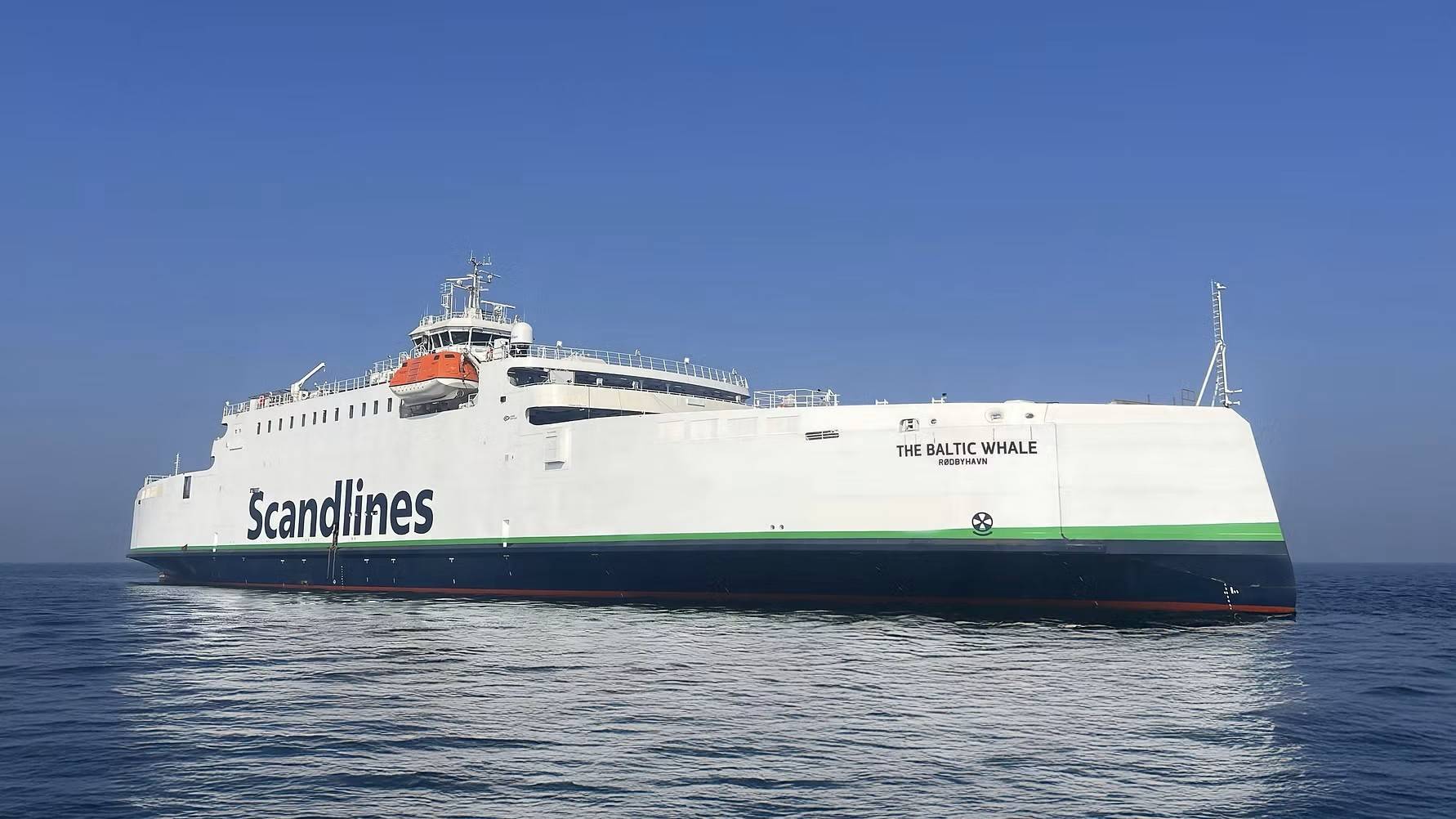
Scandlines has put its new ferry, The Baltic Whale, into service on the Rødby-Puttgarden route from Denmark to Germany.
The ferry marks an important step towards the company’s long-term goal of sailing without direct emissions by 2040 and strengthening capacity for freight customers. The Baltic Whale is among the world’s largest ferries that can operate solely on shore-based electricity.
The Baltic Whale has one of the world's largest battery systems on board a ferry and can operate without direct emissions during normal operation.
In addition, it has lower noise above and below water, which benefits both the passenger experience and the marine environment – including the Baltic Sea porpoise, after which the ferry is named.
The Baltic Whale can complete the 18.5 km crossing in approximately 45 minutes. As Scandlines has invested in new, powerful power cables and transformer stations in the ports, charging time is just 12 minutes in each port. An intelligent charging tower ensures that the ferry is automatically connected in less than 15 seconds, regardless of water level and movement.
The ferry also has the option of hybrid operation and is equipped with diesel generators that can be used when needed.
The Baltic Whale is built as a freight ferry with space for 66 freight units spread over two decks and the ability to handle so-called “dangerous goods”, which include industrial products, batteries, cosmetics and car parts, in an efficient and structured setup. This means that more freight can be moved onto this ferry, freeing up capacity for cars and passengers on Scandlines' other ferries – especially in the high season.
With the introduction of the new ferry, Scandlines increases its capacity for transporting freight units on the Rødby–Puttgarden route by 27 percent.
Facts about The Baltic Whale
Length: 147.4 meters
Width: 25.4 meters
Design draft: 5.30 meters
Load capacity: 66 freight units (1,200 track meters)
Maximum number of passengers: 140
Service speed: 16/10 knots
Crossing time: 45 minutes
Battery system: 10 MWh
Charging at port: 12 to 18 minutes
Project investment: EUR 84 million ($98 million)


