

Towage Giant Delivers Record Results, Eyes Global Expansion
SAAM closed 2025 with record financial performance, underscoring the continued strength of its harbor towage business across the Americas while positioning the company for further international expansion. For a company that has spent the past several years reshaping its business model and sharpening its strategic focus, the results signal both operational momentum and growing scale in the global tug market.
The Chile-based maritime services provider reported net income of $80.4 million for 2025, while EBITDA reached $216.9 million, representing a 15% increase compared to the previous year. Revenue also climbed 9% year-over-year, reflecting resilient demand across its core service segments and improvements in operational efficiency.
For SAAM, the performance caps a multi-year transformation that followed the sale of its port terminal assets earlier in the decade. Since 2021, the company has effectively doubled the size of its continuing operations and repositioned itself as one of the leading towage operators in the Americas. Today, the company operates in more than 100 ports across 12 countries, with a fleet of more than 200 tugboats stretching from Canada to the southern cone of South America.
Towage remains the core driver of the company’s financial performance. Under the SAAM Towage brand, the segment delivered EBITDA of approximately $187 million in 2025, supported by revenue exceeding $526 million and an EBITDA margin of roughly 35.6%. The results reflect steady vessel traffic across the company’s service regions as well as a focus on high-quality harbor towage services tailored to customer needs.
Operational discipline and service reliability have been central to the company’s strategy, particularly as ports across the Americas continue to see steady cargo flows tied to container shipping, energy exports and bulk commodities.
SAAM’s second business segment — air cargo logistics through its Aerosan unit — also contributed to the year’s positive performance. The division generated revenue of more than $105 million while delivering a 16% increase in EBITDA. Investments in improved service levels, safety standards and operational modernization helped strengthen the unit’s ability to respond to rising cargo volumes at airports across Latin America.
Beyond the headline financial results, SAAM continued to execute on a series of strategic initiatives designed to strengthen its regional footprint and operational capabilities.
One key development during the year was the agreement to acquire the remaining 30% stake in Intertug, a move that will give SAAM full ownership of the towage operator. The transaction strengthens the company’s presence in Colombia and Mexico—two markets that remain important gateways for regional trade and energy exports.
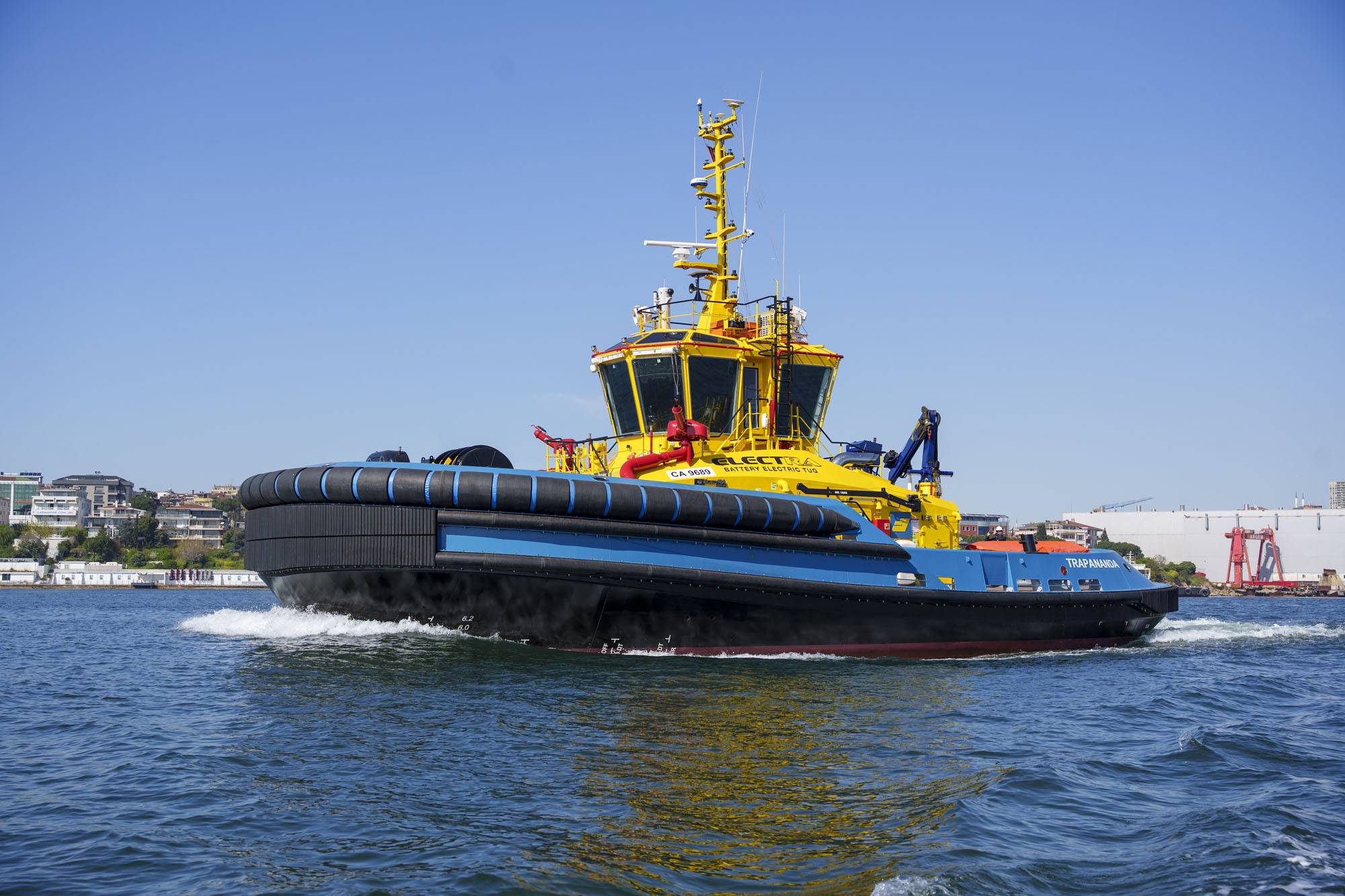
Another milestone came with the commissioning of Trapananda, the first fully electric tug operating in Latin America. The vessel entered service in Puerto Chacabuco, Chile, marking an important step in the company’s broader sustainability strategy.
Electric propulsion in harbor towage remains an emerging technology globally, but early deployments are gaining traction as ports and ship operators seek to reduce emissions in coastal and urban environments. For SAAM, the project demonstrates both a willingness to invest in new technologies and a commitment to lowering the environmental footprint of maritime logistics operations.
Leadership transition also marked the year. Longtime CEO Macario Valdés stepped down after guiding the company through a period of strategic restructuring and growth. Hernán Gómez assumed the role of chief executive on February 1, signaling the start of a new phase as the company builds on the foundation laid over the past several years.
Looking ahead, SAAM’s management has indicated that the company is well positioned to pursue further international expansion, leveraging its scale and operational expertise in harbor towage. Demand for these services remains closely tied to global trade flows and port activity, both of which are expected to remain relatively stable in the Americas in the near term.
At the same time, ongoing fleet modernization—particularly through the introduction of more environmentally advanced tug designs—will likely play a growing role in the company’s competitive strategy as ports adopt stricter emissions standards.
Financially, SAAM enters the new year from a position of strength. The company has proposed an additional dividend of $60.4 million to shareholders, which, combined with a previously distributed interim dividend, brings total dividends tied to 2025 earnings to $80.4 million.
With record earnings, a growing regional footprint and early investments in next-generation tug technology, SAAM appears poised to continue strengthening its position as one of the dominant harbor towage operators in the Americas—while increasingly looking beyond the region for its next phase of growth.


