
Damen Fuel Flexible Tug Receives Class, State Flag Approval

Damen Shipyards Group has received class and flag state approval for its ASD Tug 2713 Fuel Flexible (FF) to operate on methanol fuel. The approval was issued by Bureau Veritas and the Kingdom of the Netherlands flag state, respectively. It follows the approval in principle (AiP) that Damen received for its design of methanol-powered compact vessels in 2023.
The 27.25 by 12.83 meter ASD Tug 2713 FF is a multi-purpose vessel, designed to perform coastal and harbour operations including (LNG) terminal support, ship handling/berthing (push-pull, escort), oil pollution control and firefighting operations.
Damen’s FF Tugs are built to perform current operations on diesel propulsion, with the possibility to sail on 100% HVO (Hydrotreated Vegetable Oil). They are additionally prepared for different energy configurations in the future. Depending on what is commercially viable, available, or mandatory, the tugs can be converted to hybrid-electric or methanol propulsion.
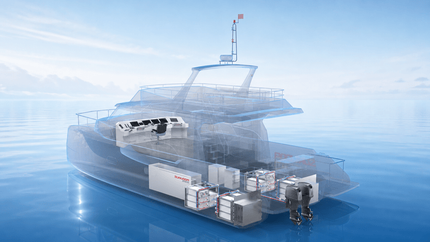
The tugs are delivered with methanol tanks and the space prepared for the installation of the necessary propulsion equipment. With this, vessel operators can invest in alternative propulsion when the picture becomes clear and when they can be confident of a financial return. The FF tugs are price-comparable, per ton of bollard pull, with a conventional vessel.
Damen has identified methanol as a promising future fuel for tugs due to its relatively high energy density, and the presence of pre-existing infrastructure. Additionally, with methanol being available from multiple sources, both renewable and non-renewable, production can be scaled, ensuring security of supply and price stability.
However, classification rules have, until now, been developed for larger vessels, such as chemical tankers. As such, they are not suited to compact vessels like tugs. To this end, Damen has worked closely with both Bureau Veritas and the Dutch flag state to secure approval for methanol propulsion in its ASD Tug 2713 FF.
This has involved a so-called risk-based approach. Together, the three parties undertook a comprehensive risk assessment. Following this, steps were taken to mitigate any identified risks, ensuring that the design is as safe as prescriptive (class-approved) designs. This approach makes it possible to continue to construct compact vessels even when they are fitted with methanol systems.
In addition to enabling Damen to construct methanol-prepared tugs, these approvals take the European Union a step closer to introduce fully methanol-fuelled vessels. This contributes significantly to zero emission waterborne targets.