

DNV Paper Finds That Existing LNG Infrastructure Can Ease Transition to Low‑GHG Methane
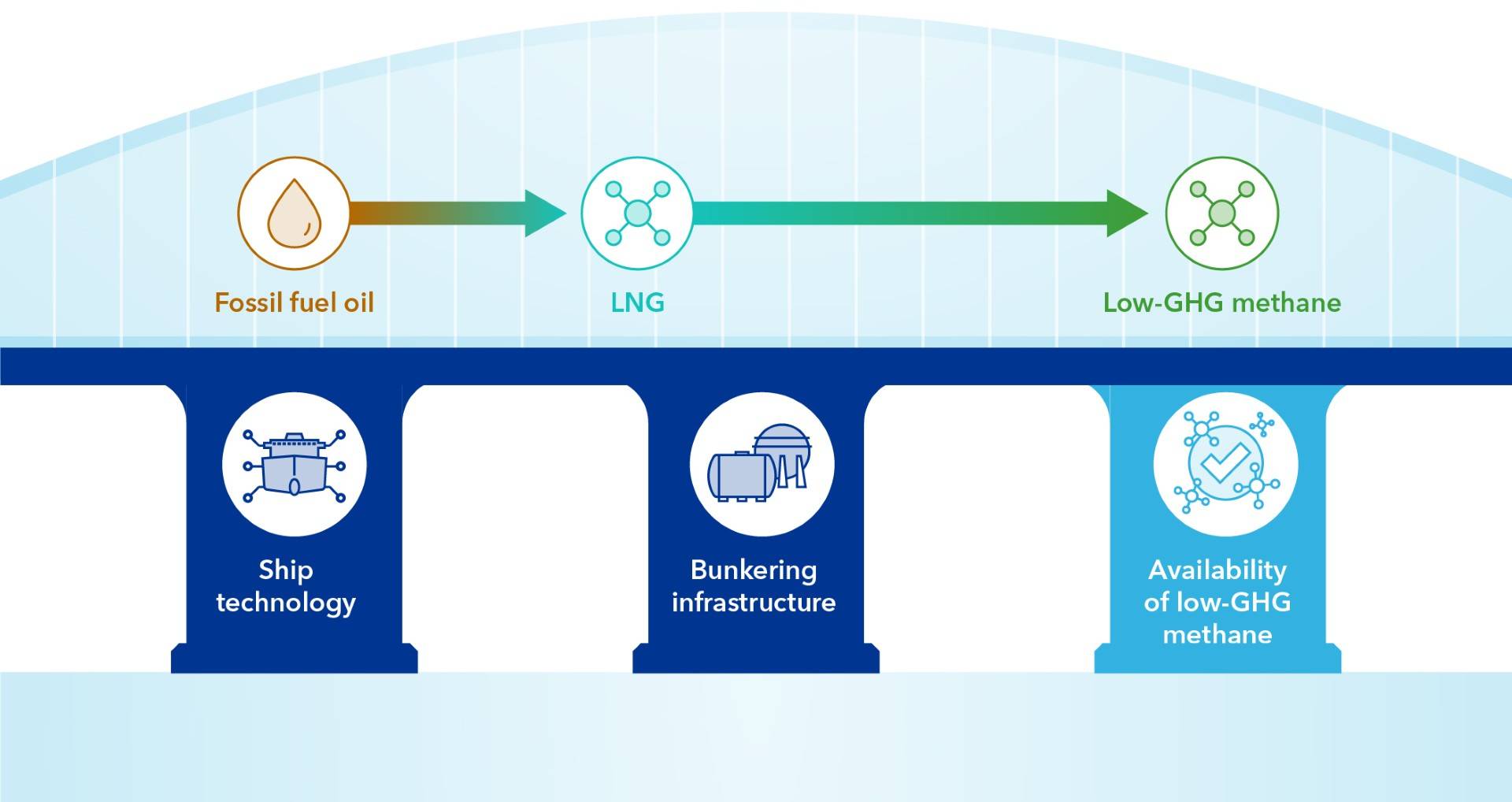
Demand for low greenhouse gas (GHG) methane is expected to grow in the coming decades as the expanding LNG‑capable fleet faces increasingly stringent emissions requirements. But its long-term viability as marine fuel depends on regulatory clarity, closing the supply gap, and securing volumes against competing demand.
With around 800 LNG‑capable vessels currently in operation, 600 more on order, existing bunkering infrastructure, decades of operational experience, and well-established international safety standards, the fleet is already technically mature.
DNV’s latest white paper “Methane in Shipping: LNG‑fueled ships and the switch to low‑GHG methane” finds that low-GHG methane (i.e. bio-methane and e-methane), which is chemically identical to LNG but produced with a far smaller climate footprint, can benefit from this existing infrastructure.
Low‑GHG methane is fully compatible with LNG engines and tanks, making it a true drop-in fuel for LNG-capable ships. Existing LNG bunkering infrastructure is also compatible with liquefied low-GHG methane. Over the past five years, this infrastructure has seen significant improvements and now covers all major bunker hubs along key global trade routes.
While the technology is mature, low-GHG methane still has some hurdles to overcome. For example, the lack of a globally harmonized rule set on permitted chain of custody models, such as mass balancing or book‑and‑claim, creates regulatory uncertainty for ship owners and may impact access to low‑GHG methane for shipping.
Fuel cost is another barrier for large scale adoption. Liquefied low-GHG methane bunker prices are currently multiple times the price of fossil LNG in major bunker hubs such as Rotterdam, with prices for liquefied bio-methane and LNG being about 1890 USD/tons and 710 USD/tons, respectively. These figures reflect current market conditions, as ongoing geopolitical tensions have driven fossil LNG prices sharply upward in recent weeks, underscoring how dynamic these prices are and how quickly the delta between fossil and bio can shift.
Low-GHG methane production has the potential to scale significantly, however whether shipping is able to secure this future supply at scale depends on its willingness to pay relative to competing sectors. Regulations such as the EU ETS, FuelEU Maritime, and the IMO NZF could gradually strengthen that willingness by creating a stronger incentive for low-GHG fuel uptake in shipping than in sectors with fewer policy drivers. DNV’s white paper finds that compliance with the FuelEU Maritime alone could generate a demand of around 2–11 million tons of low-GHG methane by 2040. Meeting the initially agreed IMO NZF Base target would require significantly larger volumes, with demand potentially reaching 40–95 million tons by 2040, depending on emission factors and fleet composition.
The white paper can be viewed here.


