
Ethical Farming Ireland Objects to Pregnant Heifer Shipping
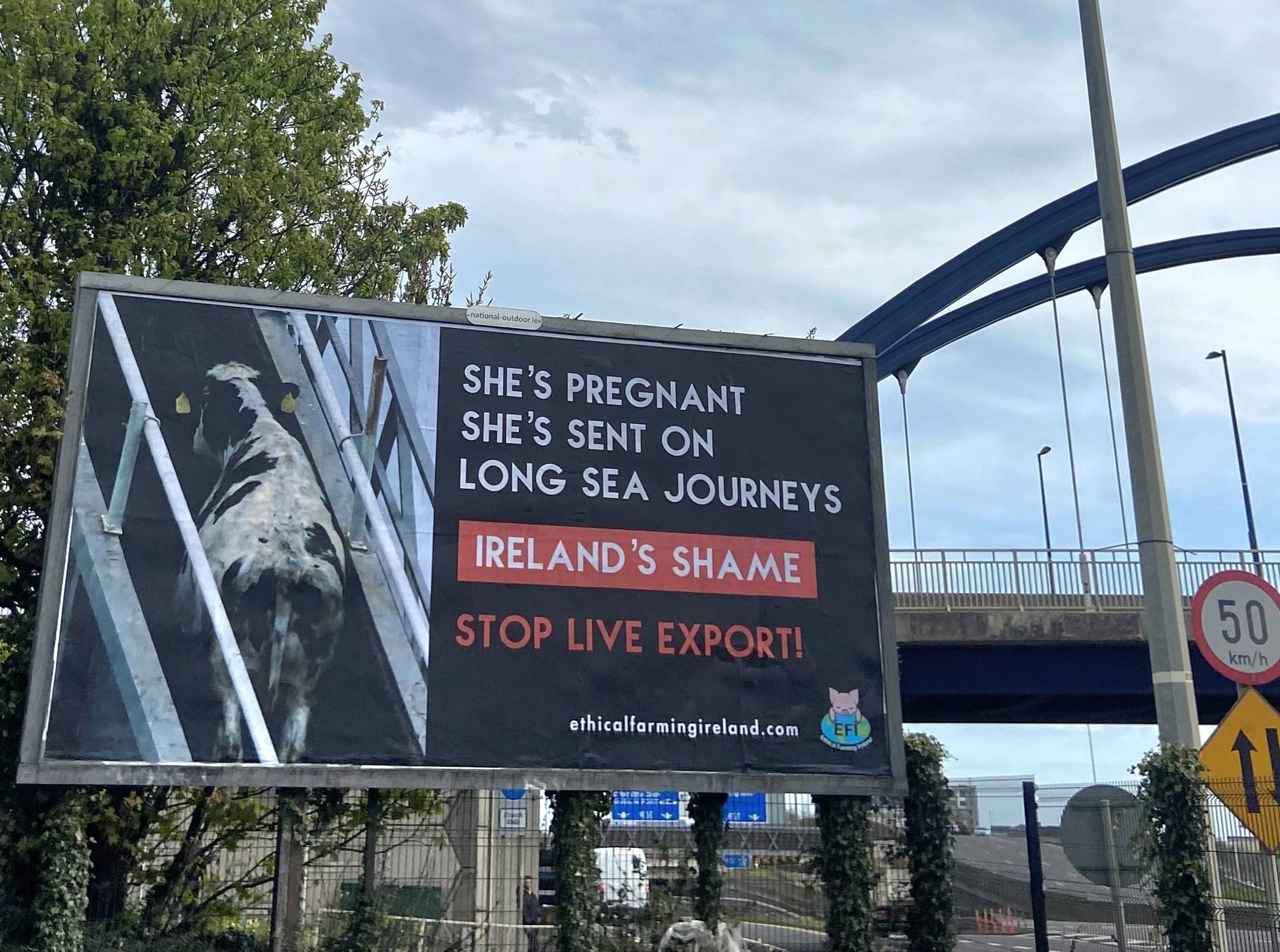
Ethical Farming Ireland (EFI) has launched a new billboard campaign to raise awareness of pregnant dairy heifers being shipped to Algeria.
The first shipment of pregnant dairy heifers left Waterford Port for Oran and Algiers ports in Algeria on January 4, 2025, and there have been three more shipments since.
“Algeria is building its dairy sector so is in need of good quality milking cows. Ironically, Algeria is, or was, a significant importer of Irish dairy,” says EFI representative Caroline Rowley.
The journey involves five to seven days at sea, and the heifers can be up to eight months pregnant. Cows are pregnant for nine months, just like humans. In comparison humans are advised not to go on long journeys after six months of pregnancy, she said.
Cattle can suffer during long sea journeys from motion sickness, respiratory illness from the high humidity and high ammonia levels, diarrhea from the grain heavy diet, and leg injuries from slipping in the soiled pens that just have a thin layer of sawdust. For pregnant animals the risks are higher, and it is common for at least one or two heifers to abort their calves during the sea journey.
During the last shipment to Algeria that left on January 12 this year with a mixture of bulls and pregnant dairy heifers on board, there were five deaths due to pneumonia, 11 premature births (two stillborn), and six injuries. One animal had to be euthanised due to ‘splits,’ a severe, painful and irreparable injury where the hind legs slip outward.
“I put in a freedom of information request, and the documents I received made for shocking reading,” said Rowland “If there was not a DAFM vet on board there would not have been anywhere near the level of detail in the reports.”
EFI sent a complaint to Minister of Agriculture Martin Heydon on March 27, but to date no response has been received. “Given that nine heifers gave birth to live calves, we have concerns that the fitness for transport checks are not being conducted correctly. We also have concerns over the Alondra which had engine problems shortly after leaving Waterford and had to turn back, adding two days to the journey.”
In December last year, a global network of 36 animal welfare and protection organizations, including EFI, issued an urgent call to the IMO to introduce binding international regulations for livestock carriers. In an open letter sent to the IMO Secretary-General, the organizations outlined systemic safety failures across the global live export shipping fleet, which is now the oldest of any ocean shipping sector, with an average vessel age of 40 years.