

Inside the Gotland Horizon X: Large, Hydrogen-Ready Catamaran
With a growing focus on mitigating climate change and progressing toward the International Maritime Organization’s (IMO) 2050 net-zero target, the marine sector is under intense pressure to decarbonize. Today, maritime transport emits nearly one billion tons of CO2 annually, representing roughly 2-3% of all energy-related carbon emissions worldwide .
Substantial progress has been made over the past decade in reducing emissions from small commercial and coastal vessels via all-electric and diesel-electric propulsion (DEP) systems. However, decarbonizing larger ocean-going and cargo-carrying ships that travel hundreds or even thousands of miles between stops has proved more difficult.
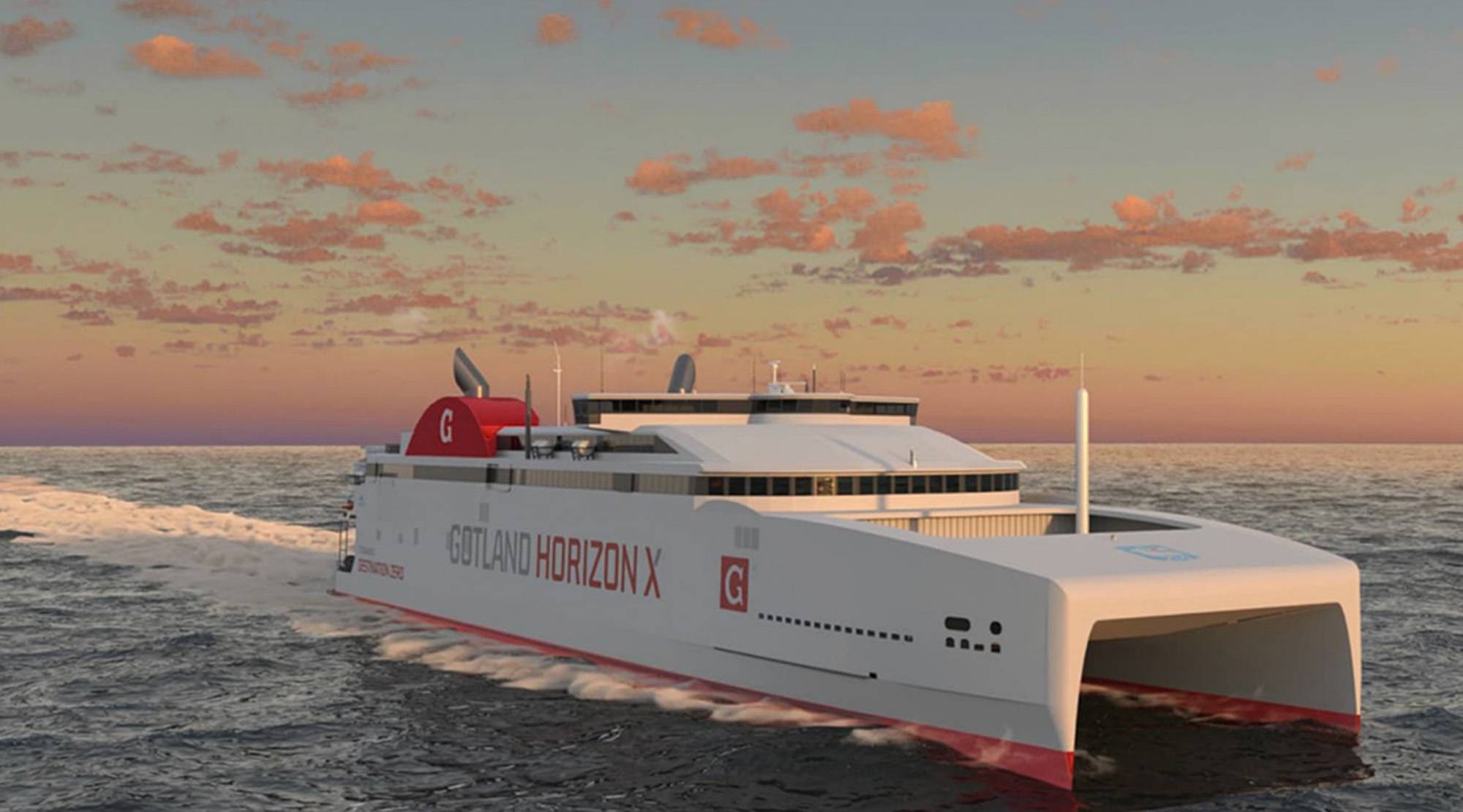
In 2025, Siemens Energy, Swedish ferry line operator Gotlandsbolaget, and Australian-based global shipbuilding company, Austal, took a significant step forward in addressing this challenge with the development of the Gotland Horizon X: a high-speed catamaran that aims to provide zero CO2 emissions crossing between the island of Gotland and the Swedish mainland.
The vessel will feature Siemens Energy’s SGT-400 high-efficiency gas turbines in a combined cycle configuration. The gas and steam turbines will drive Kongsberg water jets and provide the ferry’s electrical loads via power take-offs (PTOs) on the main gearbox.
The vessel will operate with a fuel efficiency of close to 50% – significantly outperforming traditional marine diesel engines. Additionally, its multi-fuel capability opens the possibility for operation on LNG, bio-LNG, methanol, biodiesel, and 100% hydrogen in the future, paving the way for zero-emission maritime transport.
Zero-emissions Transport
Gotlandsbolaget aims to achieve fossil-free ferry crossings between the island of Gotland and the Swedish mainland with no impact on crossing times by 2045, a goal designated “Destination Zero.”
The company formulated its first concept for a low-emission ship in 2009. Since then, Gotland Tech Development has worked to incorporate and promote the latest technological advances in shipping to reduce CO2 emissions. While the long-term goal is to use hydrogen-based propulsion technologies, current design concepts pursue solutions that allow the use of low-carbon fuels until a complete hydrogen fuel supply chain is developed.
In 2021, these developments led to the launch of Gotlandsbolaget’s first zero-emission concept ships: the Horizon series. Further work has culminated in the vision becoming reality with the order placement in February 2025 with Austal for the multi-fuel, hydrogen-ready Gotland Horizon X high-speed catamaran.
Horizon X is scheduled to enter service in 2029 and will be able to carry 400 cars and 1,500 passengers. With a top speed of 30 knots, the ship will make the ~140-kilometer crossing in just over three hours.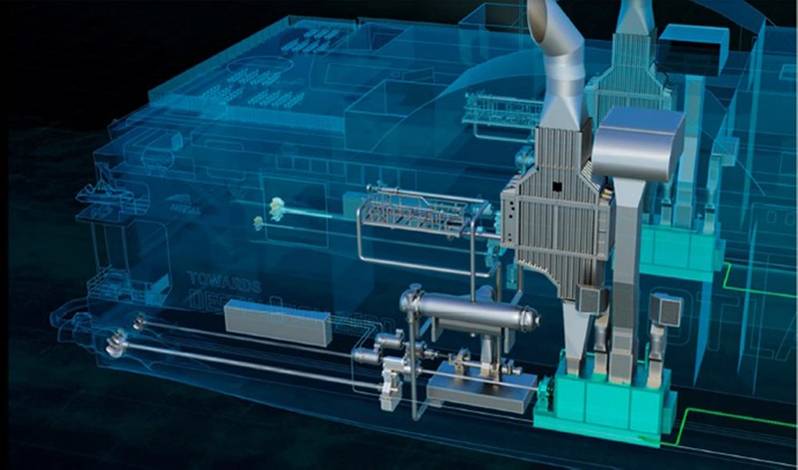 Figure 2. Engine room layout on Gotland Horizon X, showing the combined cycle power plant (courtesy Austal)
Propulsion System & Engine Room Design
The Gotland Horizon X engine room is a derivative of Siemens Energy’s Ocean Green Hybrid Combined Cycle concept, which is a low-emissions propulsion solution introduced in 2022.
Each hull of the catamaran will contain a combined-cycle power plant based on a Siemens Energy SGT-400 gas turbine, with a guaranteed power output of 13 MW at an ambient temperature of 10-20°C (as shown in Figure 2). The SGT-400 is a proven light industrial gas turbine launched in 1997. Today, there are 400+ units in operation worldwide, with more than 7 million operating hours, including many in offshore environments.
The gas turbine is installed on an underbase that houses the lubricating oil tank, and all required auxiliary systems, creating a compact unit with simple installation. Only the fire extinguisher bottles and the lubricating oil cooler are located off-package.
Building on the experience and designs utilized in the oil and gas industry, Siemens Energy has worked closely with DNV over the past two years to ensure compliance with marine requirements. Today, the core gas turbine itself, complete package, and the control system are all type-approved for marine applications by DNV.
Waste heat in the gas turbine exhaust is recovered using a once-through steam generator (OTSG), which provides steam at up to 55 bar and a design inlet temperature of 510°C to drive a 5.3 MW condensing steam turbine. An OTSG was selected because of its low weight, compact size, and reduced make-up water consumption compared to traditional marine boilers.
While it is more conventional for this type of combined cycle configuration to drive generators and supply power for electric propulsion motors (known in marine applications as combined gas-electric and steam, or COGES), for Gotland Horizon X to maximize efficiency and reduce weight, both the gas turbines and steam turbines will drive waterjets through a gearbox arrangement.
The gas turbine package includes a gearbox that reduces the power turbine speed from a nominal 9,500 rpm to 1,800 rpm. A second “main” gearbox then reduces the speed from the nominal 1,800 rpm to the speed required by the water jets. A similar arrangement is used on the steam turbine packages. The gas turbines drive steerable water jets while the steam turbines drive booster water jets. This concept provides a total of 36.4 MW of shaft power into the main drive gearboxes with an overall fuel efficiency close to 50%.
To supply the ship’s electrical loads, the main gearboxes are fitted with 1 MW PTI/PTOs, supplemented by a Battery Energy Storage System (BESS) and reciprocating auxiliary generator sets. A shore connection enables a lay-up period with the system cold and without the generators running.
Because the gas turbine is installed within its own ventilated acoustic enclosure for noise and fire protection, heat rejection into the engine room compartment is reduced. Combustion air and enclosure ventilation air are ducted from outside into the gas turbine package, with appropriate filtration and silencing to ensure reliable operation of the gas turbines and passenger comfort. Figure 3. Principal schematic of ship’s energy system. Image courtesy Siemens Energy
Emissions performance and hydrogen operation
Fuel flexibility and low emissions were two of the main drivers behind Gotlandbolaget’s decision to use SGT-400 gas turbines on Horizon X.
As standard, the SGT-400 comes equipped with a Dry Low Emissions (DLE) combustion system. The units for Gotland Horizon X will be dual-fuel and capable of operating on LNG and diesel, while demonstrating compliance with IMO’s Tier III NOx emission requirements (<2g/kWh) for the E2 and E3 duty cycles without the need for a selective catalytic reduction (SCR) system.
The gas turbines operate with a continuous flame and relatively long residence time within the combustor. Methane slip is negligible, with levels expected to be below 0.014g/kWh when the gas turbine is operating between 50% and 100% of its maximum continuous rating (MCR).
Recent combustion rig testing has demonstrated that, with a modified fuel injector, the combustion system can operate on methanol.
The long-term goal is for Gotland Horizon X to operate on 100% hydrogen fuel.
Hydrogen combustion characteristics differ from those of natural gas, with wider flammability limits and higher flame speeds, which exacerbate the risk of flashback. Without significant modifications, standard DLE combustion systems on gas turbines are typically limited to 20-50% hydrogen by volume blended with natural gas.
Siemens Energy’s work to develop a 100% hydrogen-capable combustion system started over a decade ago. In 2023, the 100% target was achieved on the SGT-400 during the EU-funded HYFLEXPOWER demonstration project in France. Additional testing will take place over the next few years as part of the follow-on HyCoFlex project at the same location.
The new combustor will be capable of operating not only on 100% hydrogen, but also 100% natural gas (or LNG) and any blend of hydrogen and gas/LNG in between, while still meeting IMO NOx requirements without an SCR. The combustor is slightly longer than the standard DLE variant but can be retrofitted with minimal changes to the gas turbine core.
Tech to Decarbonize Ocean-going Vessels
Long-haul shipping currently accounts for the majority of the maritime sector’s emissions footprint. As these vessels are required to travel long distances and remain away from ports for extended periods, hybrid propulsion designs with alternative fuel capabilities represent the most practical option for decarbonization.
The primary challenge of applying hybrid technologies to these vessels is the need to conserve space to maximize the carrying capacity of goods and fuel (due to the lower fuel densities of low-carbon fuels compared to HFO and other marine diesels). While the business case for installing a diesel- or gas-electric system, power conditioning equipment, and batteries remains difficult, the economics are improving.
Particularly on LNG carriers, the Ocean Green concept, using a hybrid combined-cycle with electric propulsion (like the system that will be installed on Gotland Horizon X), is highly applicable. The compact engine room layout and reduced weight allow for a 7-11% increase in cargo carrying capacity, resulting in up to a 17% decrease in unit freight costs compared to a conventional 2-stroke 174,000 m3 LNG carrier or a smaller tanker.
The use of hydrogen fuel cells in hybrid systems is also gaining traction as a decarbonization pathway over the longer term. Siemens Energy is currently working with partners to apply hydrogen fuel cells on marine vessels of various types and sizes.
Using the inherent fuel flexibility and efficiency of a gas turbine, Gotland Horizon X is a true multi-fuel-capable fast ferry, offering both low CO2 and NOx emissions without sacrificing crossing speed or passenger and cargo capacity. The vessel provides a scalable blueprint for high-performance, sustainable vessel design. It paves the way for zero-emission, ocean-going ships – accelerating the industry’s transition to a low-carbon future.
The New Kamewa S-4L Waterjet
Kongsberg Maritime launched its new Kamewa S-4L waterjet series with a contract to supply propulsion systems for Gotlandsbolaget’s next-generation high-speed ferry, Horizon X. The ferry will feature two S160-S4L waterjets and two S100-S4LB booster units, marking the first commercial installation of the new S-4L series.
Key enhancements include a dual bucket and steering nozzle system, designed to improve low-speed handling and docking efficiency, reducing turnaround times and fuel consumption. The S-4L series also maintains a mean time between overhaul (MTBO) of 25,000 hours or five years


