

Sonplas Unveils Explosion-Proof Test Chambers for Fuel and Energy Components

German-based engineering firm Sonplas has developed explosion-proof thermal chambers designed to test fuel and energy system components under controlled temperature conditions in hazardous environments, as demand grows for validation of equipment used with alternative fuels such as hydrogen, methanol and ammonia.The company said the chambers are designed for testing components including injectors, pumps, pressure sensors, complete fuel systems and power electronics under dynamic operating conditions.
Alternative-Fuel Vessel Orders Slow Down in First Half of 2026, DNV Finds

Orders for alternative-fueled vessels totaled 137 in the first half of 2026, down from 155 in the same period a year earlier, according to figures from DNV's Alternative Fuels Insight (AFI) platform.DNV’s AFI has recorded 15 new orders for alternative-fueled vessels in June 2026.This consisted of 10 orders for LNG-fueled vessels, nine of which were car carriers and one a CO2 carrier. The remaining five orders were for LPG/ethane carriers.Two LNG-bunker vessels were also ordered in June…
Alternative-Fuel Vessel Orders Reach 119 in First Five Months of 2026, DNV Finds

According to the latest figures from DNV’s Alternative Fuels Insight (AFI) platform, 36 new orders for alternative-fuelled vessels were placed in May 2026.Activity was primarily driven by LPG/ethane carriers, which accounted for 26 of the orders. A further eight LNG-fuelled vessels were ordered, including six container vessels and two car carriers, alongside two ethanol-fuelled bulk carriers.So far in 2026, a total of 119 orders have been placed for alternative-fuelled vessels.
Eni, MSC Cruises Complete HVO Biofuel Test for Maritime Transport

Eni and MSC Cruises have completed a test of Enilive’s HVO biofuel in maritime transport, confirming the technical feasibility of using the renewable diesel in pure form to power cruise ship engines.The trial involved powering one of the engines on the cruise ship MSC Opera for about 2,000 hours using pure HVO without modifications to the engine, while performance and emissions data were monitored.The companies said the test demonstrated that HVO can be used immediately in marine engines validated for its use without requiring technological upgrades…
Europe Funds Large-Vessel Hydrogen Project

A consortium led by the University of Vaasa has been awarded Horizon Europe funding for the H4PERION – Hydrogen FOR Performance Enhancement and Reliable Ice OperatioN – project which aims to demonstrate how a large vessel can operate with a hydrogen‑capable internal combustion engine.Long‑distance shipping remains one of the hardest sectors to decarbonise. Ships operating for weeks at a time need enormous amounts of energy and absolute reliability – requirements that today’s batteries…
DNV’s Insight: 38 New Orders for Alternative-Fueled Vessels in April

According to the latest figures from DNV’s Alternative Fuels Insight (AFI) platform, 38 new orders for alternative-fueled vessels were placed in April 2026.The majority of these orders (20) were for LNG-fueled vessels. Eight of these were for vessels in the car carrier segment, six for container vessels, four for crude oil tankers, and two for cruise vessels.A further 14 orders were placed for LPG/ethane carriers.The remaining four orders were for ammonia-fueled vessels in the…
IMO Progresses Net Zero Framework

The Marine Environment Protection Committee of the IMO concluded its 84th session with a commitment to rebuild consensus on global shipping emissions.Nearly 100 delegations took the floor this week to voice their views on the adoption of “mid-term measures” to address GHG emissions from ships - known as the IMO Net-Zero Framework - with multiple proposals tabled on how to take forward negotiations.The Committee agreed to establish an intersessional Working Group to resolve various concerns and drive broader convergence on a global measure ahead of MEPC 85 in six months.
Vale, Shandong Shipping Sign Deal for Ethanol-Powered Carriers
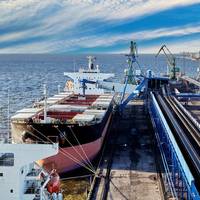
Brazilian mining firm Vale has signed an agreement with China's Shandong Shipping Corporation to build the world’s first ocean-going vessels powered primarily by ethanol, as part of efforts to cut emissions in maritime transport.The agreement covers the construction of two Guaibamax bulk carriers under 25-year contracts, with delivery scheduled from 2029 and options for additional vessels.The ships will be capable of running on ethanol, methanol and conventional bunker fuel, with…
CIMAC Report Reminds on New fuel Safety Risks
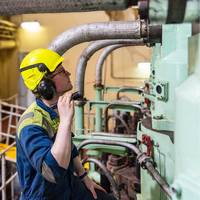
CIMAC Working Group 17 (Gas Engines) has just released a new guideline that provides a comprehensive overview of how alternative fuels such as hydrogen, ammonia, methanol, and ethanol can be used in modern stationary and marine gas engines.Under the safety concepts chapter, it states: “New fuels need new skills, so personnel need to be trained to handle the new fuels.”The report includes a summary of potential risks to humans.Anhydrous ammonia is a hygroscopic compound, meaning it actively seeks water from the nearest source, including the human body.
New Fuels Studies Still Require Apples with Apples Comparisons
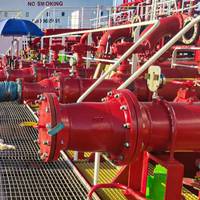
It was back in 2022, that industry group SEA-LNG said: The industry is making newbuild investment decisions now that will impact greenhouse gas emissions today and for the next 25-30 years, the typical lifetime of a vessel. It is essential their assessments of alternative marine fuel pathways are made on a like-for-like, or “apples with apples” basis.The issue was that discussion of alternative fuels too often compared the green versions of ammonia and methanol with fossil LNG.The…
First Hydrogen-Fueled Cruise Ship Launched

Fincantieri has launched what it says will be the world’s first hydrogen-powered cruise ship. Viking Libra was floated out at the company’s Ancona shipyard in Italy and is being built for cruise operator Viking, with delivery scheduled for late 2026.At approximately 54,300 gross tons and 239 meters long, the ship will accommodate up to 998 passengers across 499 cabins, consistent with Viking’s small-ship positioning. The vessel will feature a hybrid propulsion system incorporating liquefied hydrogen and fuel cells, enabling zero-emission operations in certain conditions.
Green Ammonia Shines When Regulation is Considered, says study

A new analysis from WinGD and Envision Energy suggests something the maritime industry has been debating for years ... and likely will be debating for many years to come: the changing economics of zero-emission fuels.For shipowners, the significance is straightforward. The conversation is shifting from if green fuels can compete to when — and in some cases, that answer may already be “now.”On a pure fuel-cost basis, green ammonia still carries a premium, as today, it can run close to three times the cost of very low sulphur fuel oil.
Onboard Fuel Reforming System Pilot Planned for Multi-Fuel Engines

lomarlabs has entered a collaboration with Blaze Energy to pilot a third-generation, compact, engine-integrated fuel reformer designed to accelerate the practical adoption of alternative fuels in commercial shipping.The collaboration will culminate in a pilot installation onboard a Lomar vessel, enabling Blaze Energy to validate its multi-fuel reforming system, under real marine operating conditions. The Flex-Fuel Reformer converts ammonia, methanol, or LNG into hydrogen directly onboard the ship…
Japanese Consortium Plans Ammonia Bunkering Operations in Singapore

Sumitomo Corporation, Kawasaki Kisen Kaisha, Ltd. (“K” LINE) and NYK Bulkship (Asia) have entered into a memorandum of understanding (MoU) to jointly conduct a Front-End Engineering Design (FEED) study and explore the ownership of a newbuild ammonia bunkering vessel for application in Singapore.The MoU is in support of the ammonia value chain development initiative that is jointly led by the Maritime and Port Authority of Singapore (MPA) and the country’s Energy Market Authority (EMA).
Bio-Methanol Gaining Traction as Alternative Fuel

This week, CMA CGM and SIPG Energy successfully completed the bunkering of 3,643 tons of bio-methanol for the CMA CGM Osmium at Yangshan Port in Shanghai. This operation marks CMA CGM’s first bio-methanol bunkering worldwide and sets a new national record for the largest single bio-methanol bunkering operation carried out at a Chinese port.As part of its commitment to achieving Net Zero Carbon by 2050, the CMA CGM Group is preparing to operate around 200 dual‑fuel container vessels by 2031…
Report: LNG and Methanol Divert Investment from Decarbonization Pathway

LNG and methanol create path dependencies that divert investments from shipping’s long-term decarbonization pathway, a new study by UCL academics finds.While LNG and methanol use as alternative fuels generate some knowledge spillovers and procedural regulatory learning useful for green ammonia, the main scalable zero emission shipping fuel, these benefits are likely outweighed by capital lock-in and the entrenchment of fossil fuel infrastructure, which then compete with, rather than enable the long-term solution.The research paper…
Hydrogen Ship Fuel Requires Design-Based Safety Measures, DNV Study Finds

DNV has completed a multi-year study commissioned by the European Maritime Safety Agency (EMSA) examining the safety implications of using hydrogen as a fuel in ships.The study, titled Safety of hydrogen for use in ships, concludes that hydrogen-fuelled vessels require a design-based safety approach and recommends the use of secondary enclosures across all hydrogen-carrying components, including those located on open deck.Hydrogen is increasingly being considered as a potential marine fuel, although broader adoption is expected to take time.
Equinor to Supply Bio-Methanol to Wallenius Wilhelmsen

Equinor has entered into a two-year bio-methanol supply agreement with Wallenius Wilhelmsen, a major global player in shipping and vehicle logistics, supporting a growing marine segment for low-carbon fuels.Soon bio-methanol from Equinor will fuel ships that are bringing cars and machinery from points of production to markets. Wallenius Wilhelmsen is a roll‑on/roll‑off (RoRo) shipping and vehicle logistics giant, and will use the bio‑methanol as bunker fuel for its upcoming dual‑fuel…
Japan and New Zealand Plan Hydrogen Corridor

Mitsui O.S.K. Lines, Obayashi Corporation, Kawasaki Heavy Industries, and Chiyoda Corporation have established the Japan–New Zealand Hydrogen Corridor. The consortium will study the commercialization of green hydrogen production in New Zealand and export operations to Japan.Hydrogen is expected to play a key role as a clean energy source that does not emit CO2 when burned. Japan has a low energy self-sufficiency rate, and renewable energy accounts for only a limited share of total energy consumption.For this reason…
Everllence and Vale Sign Ethanol Cooperation Agreement

Everllence and Vale – one of the world’s leading producers of iron ore, copper and nickel, and one of the largest logistics operators in Brazil – have signed a cooperation agreement regarding the development of ethanol as a marine fuel.Under the terms of the agreement, the companies will develop an advanced ethanol-powered engine – based on the Everllence B&W ME-LGI (-Liquid Gas Injection) platform – designed to provide a sustainable and viable alternative to conventional fossil…
Yanmar Prepares for Hydrogen Engine Production

Yanmar Power Solutions has acquired a site in Amagasaki City, Japan, to conduct test runs of marine hydrogen engines.The company says it will develop and build powertrains that can be used with next-generation fuels such as hydrogen, methanol, and ammonia, at the new facility.The complex will enable the company to reorganize its production system, including existing factories, and strengthen its capabilities. It is scheduled to begin operations around March 2029.
Singapore University Leads New Ammonia Engine Project

A new research project at the National University of Singapore (NUS) aims to accelerate the decarbonization of the global shipping industry through the development of next-generation ammonia-fueled marine engines with high efficiency and near-zero emissions.The project focuses on a novel in-cylinder reforming gas recirculation (IRGR) engine concept designed to address key limitations that have so far constrained the wider adoption of ammonia as a marine fuel.Project leader Associate…
Dual-Fuel Liner Fleet Reaches 400 Ships
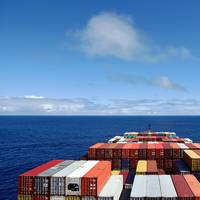
The World Shipping Council (WSC) has published its latest update to the WSC Dual-Fuel Fleet Dashboard, tracking the global liner shipping industry’s investment in new ships capable of running on renewable and lower-emission fuels.As of December 2025, the number of dual-fuel container ships and vehicle carriers on the water has reached 400, up from 218 in 2024.The number of dual-fuel ships on order has also continued to grow, reaching 726 vessels, despite a flurry of deliveries shifting from the orderbook onto the water.



