

USCG Marine Safety Alert: Preventing Opportunities For Backflow
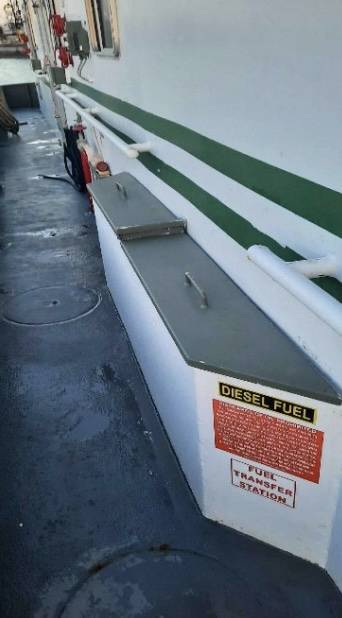
This Safety Alert highlights the critical importance of preventing water intrusion into fuel tanks. The U.S. Coast Guard (USCG) investigated a marine casualty that occurred in the Corpus Christi Shipping Channel, involving a towing vessel constructed in 2011 with a low freeboard. While pushing a barge loaded with methanol, the vessel encountered sea state conditions with 4-foot wave heights and sustained winds of 35 knots. These conditions caused water to fill the fixed containment area beneath the vessel's fuel tank vent pipes, resulting in water flowing into the fuel tanks and loss of propulsion as the vessel approached the dock.
As the vessel made its approach to an oil dock, both engines lost power. The Captain subsequently managed to drift the vessel into a nearby bank and called for assistance. Two vessels responded and successfully assisted the tow to the oil dock. Upon investigation it was discovered that the towing vessel’s starboard bunkering station containment had completely flooded with seawater, submerging the vent piping and allowing water to backflow into the fuel tank.
During the course of the investigation the following contributing factors were identified:
- The coaming surrounding the bunkering station vent piping lacked drain plugs.
- The containment’s coaming height was greater than the fuel tank vent height, which allowed water to submerge the 180-degree vent bend and backflow into the fuel tanks (Figure 2).
- The fuel tank vent openings were not fitted with a backflow prevention device such as a ball check valve.
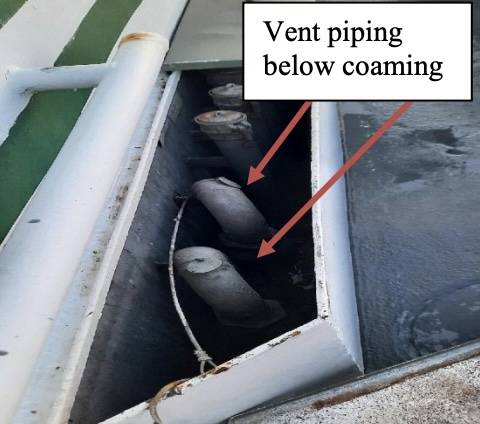 Figure 2: Inside bunkering station containment. © USCG
The USCG strongly recommends that vessel owners and operators ensure their vessel's containment areas have the following configurations to prevent a similar situation:
- Vent openings that extend above the height of the coaming to prevent vents from being submerged if the coaming fills with water.
- Containment areas fitted with drain plugs and kept open when not conducting bunkering operations to allow seawater to drain freely.
- Tank-vent backflow prevention devices, such as ball check valves which close automatically by the force of a submerging wave, are installed and situated so as not to damage flame screens.
The USCG strongly recommends that owners and operators, vessel crew members, marine surveyors, and USCG marine inspectors review this information and, where appropriate, incorporate it into onboard operations, training, and awareness.
This Safety Alert is provided for informational purposes only and does not relieve any domestic safety, operational, or material requirements. Developed by Sector Corpus Christi and distributed by the Office of Investigations and Casualty Analysis. Questions may be sent to HQSSMB-CG-INV@uscg.mil.


