
Alternative-Fuel Inflection Point: Gotland Horizon X and the Port Hydrogen Question

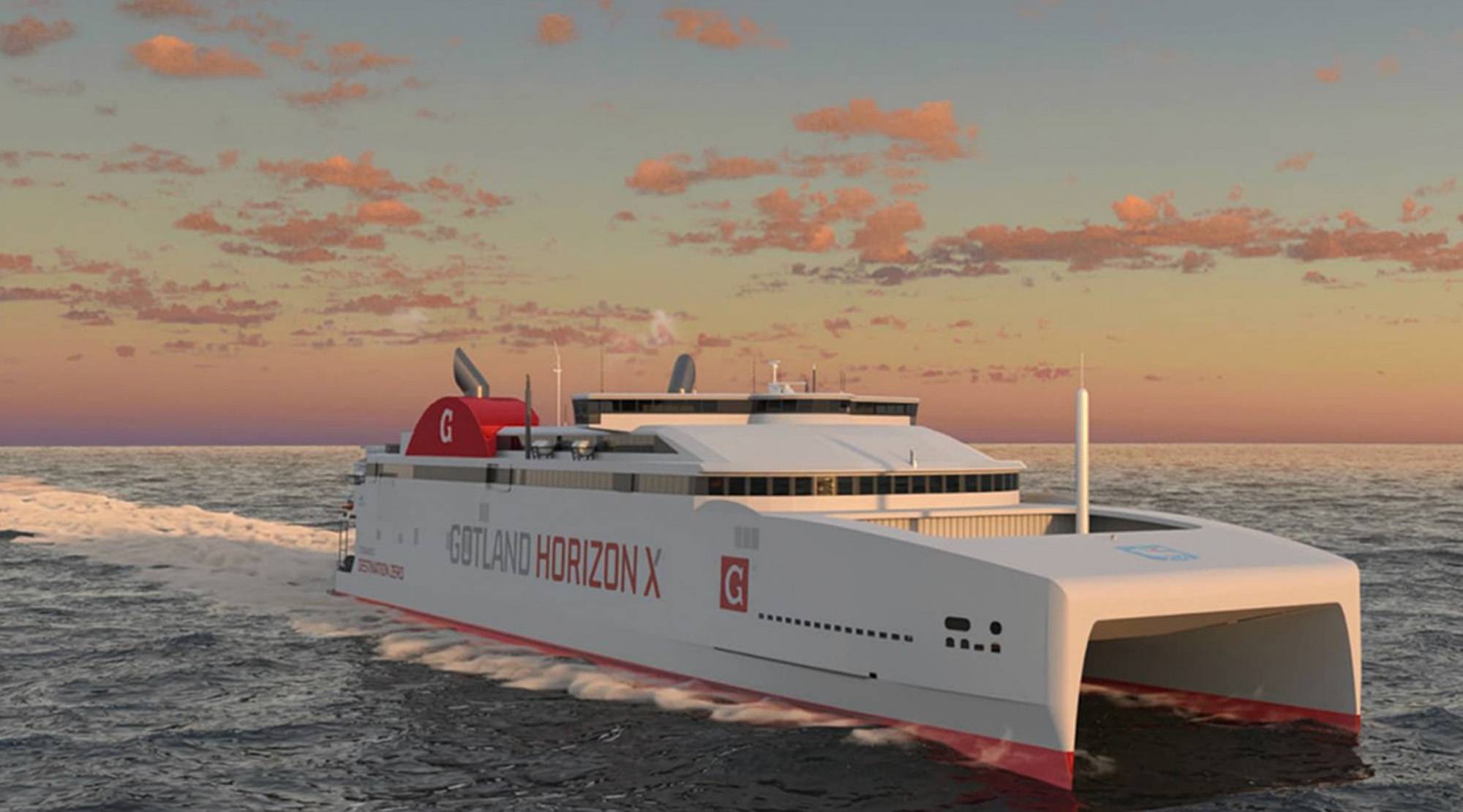
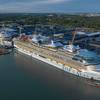
Gotland Horizon X is a 130-meter, 18,300-gt, 1,500-passenger, 400-car, 30-knot catamaran now under construction at Austal for delivery in summer 2028. Positioned as hydrogen-ready from day one, the vessel is not a technology demonstrator. It is a frontline Ro-Pax ferry designed to maintain timetable integrity while opening a credible pathway toward hydrogen. For ports and fuel suppliers, that distinction matters. Horizon X is less about a single vessel and more about what it signals: future-fuel ships are coming that will demand corresponding evolution ashore.
Jonas Moberg, Head of Newbuildings at Gotlandsbolaget, frames the project as part of a long-term strategy rather than a one-off experiment.
“We have kept our compass,” Moberg says. The company builds ships to operate them for decades, not to flip them. That mindset forces a hard question: what will fuel economics, infrastructure and regulation look like 10, 15 or 20 years from now?
No one can answer that with certainty. So Horizon X is built around flexibility.
The vessel will enter service capable of operating on LNG and diesel. But its powerplant architecture is designed to transition toward 100% hydrogen when infrastructure allows. In practical terms, that means the ship can operate commercially from day one while positioning itself — and its home ports — for the next phase of marine fuel evolution.
That sequencing is deliberate. Moberg points to Gotland’s 2009 decision to invest in gas-powered vessels before LNG infrastructure was fully mature.
“Without having the infrastructure in place for fueling, we took a bold decision and we built the ships,” he says. They entered service in 2018 and 2019 and have operated successfully, blending LNG and biogas where available.
Horizon X follows the same philosophy: move forward, but do not strand the asset. Jonas Moberg, Head of Newbuildings, Gotland Tech Development. Image courtesy GotlandWhy Batteries Didn’t Fit
The Gotland route between mainland Sweden and Gotland Island is roughly 80 nautical miles, requiring high-20-knot service speeds — about 28.5 knots — to maintain the three-hour crossing that defines the product.
Batteries were evaluated. But the energy demand of a large high-speed Ro-Pax vessel makes full battery propulsion impractical at this scale. The weight penalty alone challenges performance, and charging infrastructure at the required magnitude is, for now, unrealistic.
That pushed the design team toward fuel-based solutions — and ultimately toward hydrogen as the long-term objective.
But hydrogen cannot be viewed in isolation from the vessel’s operational needs. The ferry must deliver 30-knot performance, carry 1,500 passengers and 400 cars, and operate year-round. Emissions reduction cannot come at the expense of service reliability.
A Combined-Cycle Ferry Powerplant
At the heart of Horizon X is a propulsion system derived from Siemens Energy’s Ocean Green Hybrid Combined Cycle concept introduced in 2022.
Each hull houses a combined-cycle plant built around the Siemens Energy SGT-400 gas turbine, producing 13 MW per unit. Waste heat from the turbine exhaust is captured by a once-through steam generator (OTSG), producing steam that drives a 5.3 MW condensing steam turbine.
The key design decision: both gas and steam turbines feed mechanical drive waterjets via gearboxes rather than generating electricity for electric propulsion. That mechanical approach reduces weight and maximizes efficiency — critical in a high-speed catamaran.
Total shaft power reaches 36.4 MW, with overall efficiency approaching 50%. For comparison, earlier generations of gas turbine ferries in the 1990s operated closer to 30–35% efficiency — insufficient for modern economics.
For Moberg, combined cycle was non-negotiable. Without it, fuel efficiency would not have supported the business case.
Michael Welch of Siemens Energy emphasizes the maturity of the SGT-400 platform. Originally launched in 1997 for oil and gas and co-generation markets, the turbine’s twin-shaft configuration allows variable output speeds — well suited for waterjets. Its high exhaust temperature makes it particularly effective in combined-cycle configurations.
The result is a propulsion system optimized not only for peak output, but for part-load efficiency — a critical factor in real-world ferry operations where power demand fluctuates. Michael Welch, Siemens EnergyHydrogen-Ready — What That Really Means
“Hydrogen-ready” is often used loosely in shipping. In Horizon X’s case, it is tied to a defined development pathway.
Siemens has been working on hydrogen combustion in the SGT-400 for more than a decade. According to project documentation, the platform achieved 100% hydrogen operation in 2023 under the EU-funded HYFLEXPOWER project, with further testing ongoing.
The turbine features a Dry Low Emissions (DLE) system and is designed to meet IMO Tier III NOx limits without SCR. A new combustor configuration allows operation on 100% hydrogen, 100% natural gas/LNG, or blends between, with retrofit potential and minimal changes to the turbine core.
But Moberg is clear: the engine is only part of the equation.
“If you’re talking hydrogen, you need a complete arrangement in order to get it on board,” he says.
Hydrogen’s small molecular size, storage challenges and safety requirements mean that fuel handling systems define practical fuel flexibility. Designing a ship capable of storing and managing hydrogen — whether liquid or pressurized — requires careful integration with classification societies, port authorities and regulators.
The vessel’s ability to transition fuels does not eliminate the need for shore-side readiness. It amplifies it.
Ports as the Next Bottleneck
Today, ordering diesel is simple. Ordering hydrogen is not. The transition from LNG to hydrogen introduces a new layer of complexity for ports:
- Dedicated storage infrastructure
- Safe transfer systems
- Regulatory frameworks
- Supply chain reliability
- Crew training and emergency protocols
Horizon X highlights a critical point for port operators and energy suppliers: ships can be built ahead of infrastructure, but only up to a point. If hydrogen-ready vessels enter service without parallel port investment, the transition stalls.
Moberg acknowledges this reality. The ship will operate conventionally until hydrogen bunkering becomes viable. That means LNG and diesel capability remain essential in the near term.
However, by committing to hydrogen readiness now, Gotland effectively signals to ports and energy providers that demand is coming. In fuel supply chains, credible demand often drives investment.
Engineering Challenges and Approvals
Adapting a land-based turbine for marine use required extensive collaboration with DNV for type approval of the turbine core, package and control systems.
Combined-cycle integration presents additional complexity. Weight and volume are critical in a high-speed catamaran. The OTSG was selected specifically for low weight and compact footprint.
Fuel handling presents further engineering hurdles. LNG operations bring boil-off management issues, and high-pressure fuel requirements add design complexity. Hydrogen introduces even greater challenges, particularly in combustion dynamics and flashback prevention.
These are not incremental adjustments. They are system-level integration exercises.
The Cost of Flexibility
Moberg estimates a capital cost premium of roughly 25% compared to a more conventional vessel of similar capacity.
Under pure head-to-head economics, that premium would be difficult to justify. But Horizon X is part of a broader fleet strategy with strong seasonal demand peaks. High capacity and high speed unlock value in summer operations while future-proofing the asset for a 25-year lifecycle.
“If we would have gone on a fuel cell version we would have been more locked in,” Moberg says. “The flexibility here is key.”
Fuel cells might offer efficiency benefits, but they risk technological lock-in. A multi-fuel turbine platform provides optionality — critical in an era of regulatory uncertainty and volatile fuel pricing.
Part-Load Efficiency: A Practical Insight
One of Moberg’s most significant observations concerns part-load performance. Traditional gas turbines lose efficiency sharply away from full power. Combined-cycle configuration flattens that curve.
“Efficiency actually is almost flat from 100% down to 50% or lower,” he notes.
For ferry operators, that changes the calculus. Ships rarely operate at full power continuously. Designing for real-world operating profiles — not theoretical peak conditions — is essential.
A Signal to the Fuel Supply Chain
Horizon X does not assume hydrogen infrastructure will appear overnight. It does something arguably more important: it commits to a vessel architecture that can absorb hydrogen when ports are ready.
For maritime fuel suppliers, the message is clear. Demand for hydrogen bunkering will not originate from speculative small craft or isolated pilot projects. It will come from large, high-capacity vessels operating on fixed routes with predictable schedules.
That predictability — daily calls, defined volumes, stable service life — makes ferry operators ideal early adopters of new fuels.
If ports align investment with such operators, the hydrogen supply chain can scale in measured, commercially grounded steps.
A Future-Fuels Blueprint
Horizon X is not simply a fast catamaran. It is a strategic bridge between LNG-era decarbonization and a hydrogen-capable future. The vessel maintains timetable discipline, preserves operational reliability and introduces a propulsion architecture that avoids technological dead ends.
For ports, fuel suppliers and maritime stakeholders, the takeaway is straightforward: alternative-fuel vessels are no longer theoretical. They are entering construction. The question now shifts from whether ships can burn hydrogen to whether ports can supply it.
Gotland Horizon X suggests the clock is ticking.
- By the Numbers: Gotland Horizon X
- Type: High-speed Ro-Pax catamaran, multi-fuel, hydrogen-ready
- Length: 130 meters
- Beam: 30.5 meters
- Gross tonnage: 18,300
- Speed: 30 knots
- Capacity: 1,500 passengers and 400 cars
- Crossing: ~140 km / 80 nm, ~3 hours
- Power into waterjets: about 36 MW (interview) / 36.4 MW (technical paper)
- Builder / contract: Order placed February 2025 with Austal
- Delivery / entry into service: Moberg cites summer 2028 delivery; the technical paper targets entry into service in 2029
- 2 x Siemens Energy SGT-400 gas turbines (one per hull), 13 MW each (guaranteed at 10–20°C ambient)
- Waste heat recovery: once-through steam generator (OTSG), up to 55 bar, 510°C design inlet temp
- Steam turbine: 5.3 MW condensing
- Total shaft power to waterjets: ~36–36.4 MW
- Overall fuel efficiency: close to 50%
- Drive concept: gas turbines drive steerable waterjets; steam turbines drive booster waterjets (mechanical drive via gearboxes)
- Electrical supply: 1 MW PTI/PTO on main gearboxes + BESS + auxiliary gensets; shore connection for cold lay-up
- Emissions: Tier III NOx compliance (<2 g/kWh E2/E3) without SCR; methane slip expected <0.014 g/kWh (50–100% MCR)
- Future fuel pathway: retrofit combustor for 100% hydrogen capability; blends supported
Watch the full video interview with Jonas Moberg on Maritime Reporter TV: