
Anglo-Eastern Conducts First Crew Training on Ammonia as Fuel
Anglo-Eastern Maritime Training Centre (AEMTC) has successfully completed its inaugural pilot training course on ammonia as a marine fuel.
Held on November 24–25, the two-day program brought together 26 participants from a wide spectrum of shipboard ranks, including Masters, Chief Engineers, senior officers, and junior engineers, who travelled from across India to take part in the specialised training.
Pioneered by Prasad Nayak, General Manager of Training at Anglo-Eastern, the program saw active participation from Anglo-Eastern teams based in Australia and Delhi who joined the sessions to further strengthen cross-regional collaboration and alignment on future fuel readiness.
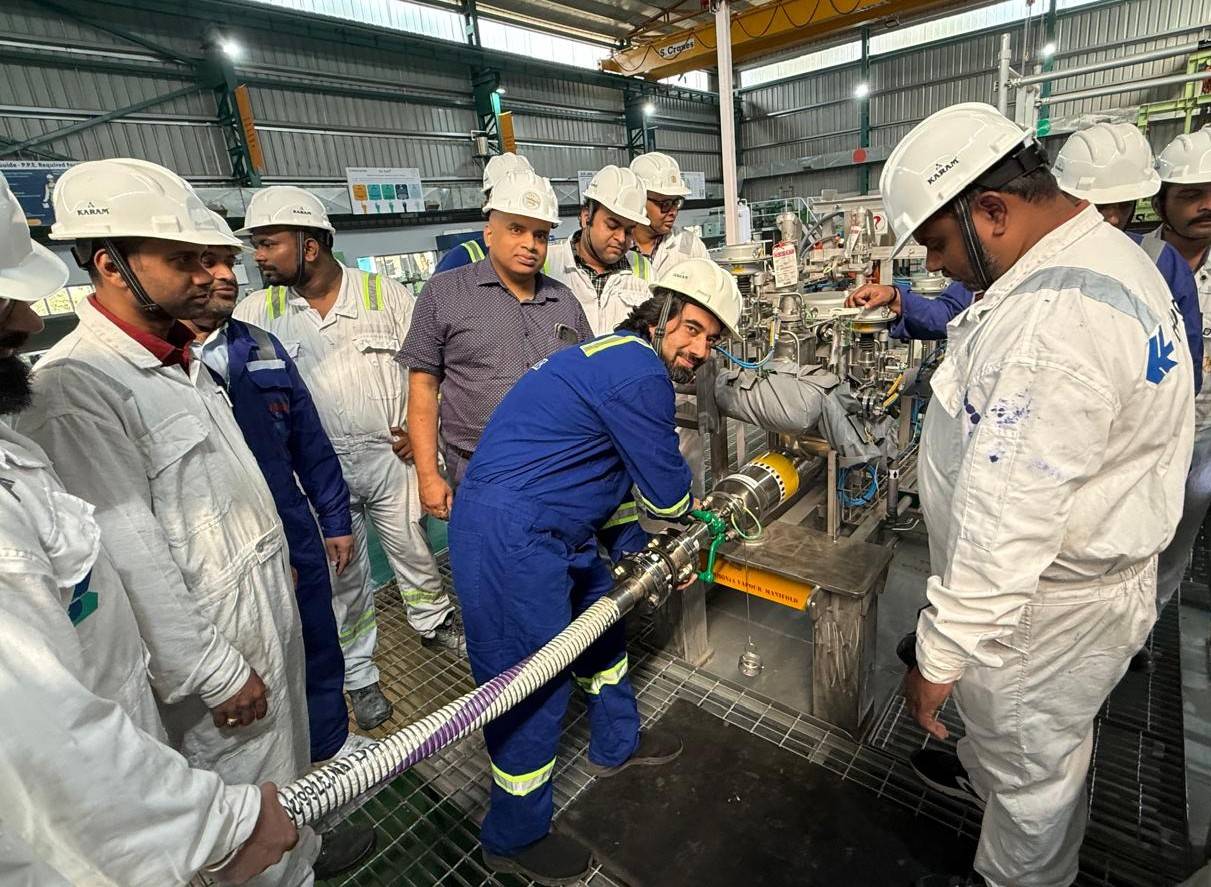
Participants received essential training on ammonia as a marine fuel, focusing on safety, operational readiness, and the unique challenges and opportunities presented by this alternative fuel. The course included both classroom instruction and hands-on experience at the Anglo-Eastern Maritime Academy, where trainees practiced key procedures in a safe, controlled environment.
The training advanced to hands-on experience at the Anglo-Eastern Maritime Academy (AEMA) in Karjat. Here, participants engaged with the Academy’s globally unique LNG/ammonia bunkering skid - a facility designed for practical simulation of bunkering operations. The facility integrates transfer pipelines, safety interlocks, inerting systems, emergency shutdown functionality, gas detection interfaces, and fully operational controls.
The facility has the ability to simulate emergency scenarios and operational variances to ensures trainees acquire the competence and confidence required for future service aboard ammonia-powered vessels.
Aalok Sharma, Group Director of Training at Anglo-Eastern, remarked, “This pilot course is a logical and deliberate step as we prepare to take delivery of our first ammonia-fuelled ship. As we navigate our journey toward the successful adoption of a multi-fuel future in the maritime industry, we move forward with both pride and caution. Our goal is to ensure that we continually learn while we teach, cultivating an environment of growth and innovation. The team has dedicated significant time and resources to upskill, keeping a strong focus on the invaluable feedback from seafarers - those who will be at the forefront of these operations. We as an industry must continue to seek these essential insights, as we refine our approach and enhance the training programs.”