

Kongsberg Maritime to Provide Technology Suite for Solstad, SBM Offshore Vessel
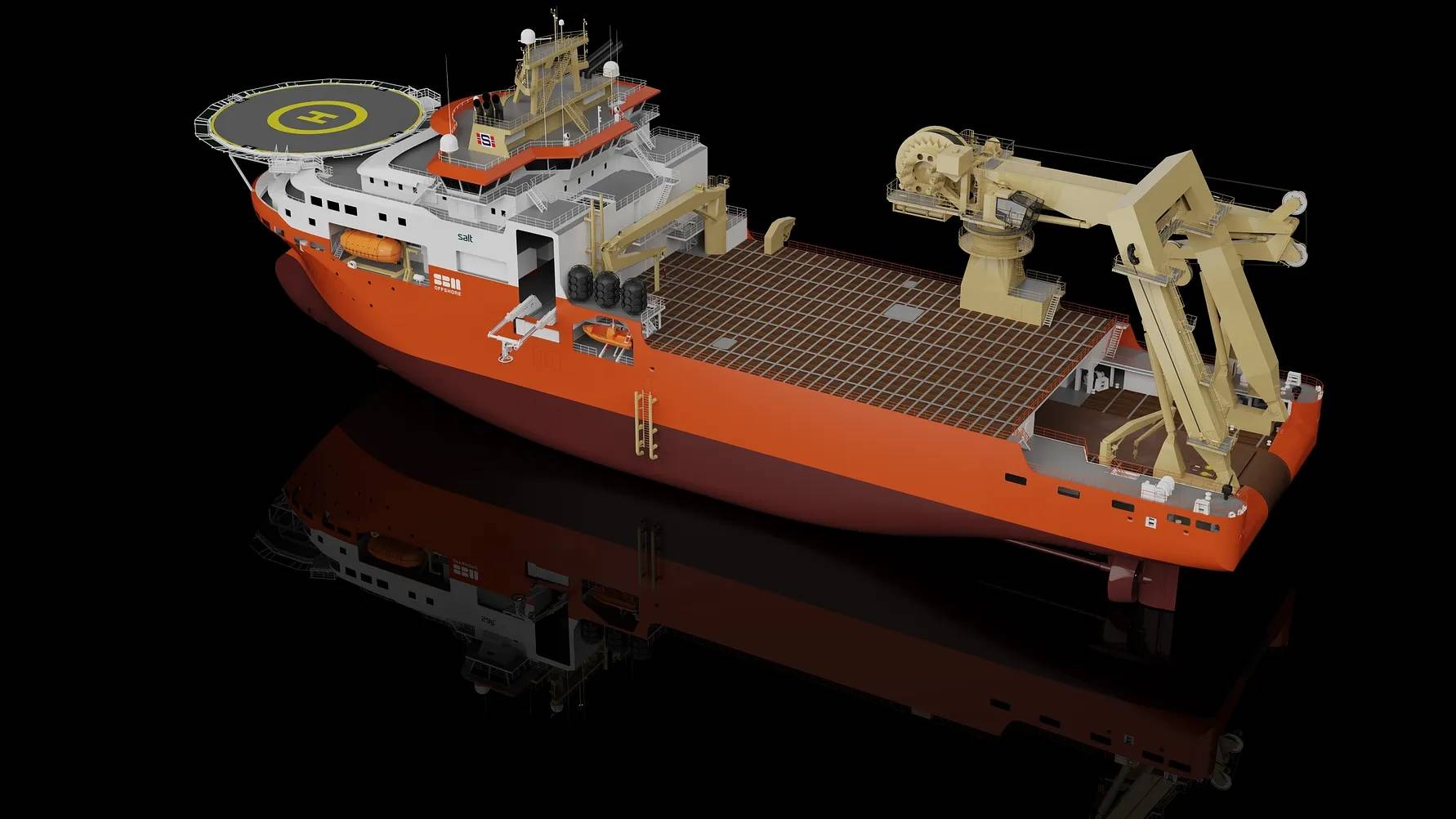
Kongsberg Maritime has secured a contract to deliver a fully integrated suite of technology and equipment for a new multi-purpose deepwater installation and construction vessel that will be owned and operated by Solstad Offshore and SBM Offshore.
The vessel, which will be built in China, represents a new generation of offshore construction assets designed to perform complex installation, subsea construction and heavy-duty offshore operations. With advanced mooring installation and subsea construction capabilities at its core, the vessel is expected to set a new benchmark for performance, operational efficiency and reliability in some of the world's most demanding offshore environments.
A key element of the project is the advanced deck machinery package from Kongsberg Maritime. This includes anchor-handling winches, shark jaws and tow pins designed for chains up to 220 mm, and a newly developed low-tilt ROV launch and recovery system.
Kongsberg Maritime's scope of supply also includes dynamic positioning, thruster control, navigation, bridge and automation systems, together with a comprehensive power and energy package comprising switchboards, generators, propulsion motors and a battery energy storage system. The propulsion configuration will feature twin controllable-pitch propeller (CPP) shaftline propulsion, complemented by azimuth thrusters to enhance bollard pull, as well as rudder systems and a complete thruster package.
The project will also mark the first delivery of anchor-handling winches powered by Kongsberg Maritime's in-house developed permanent magnet motor, the XT140, representing a significant technological milestone.
The winch systems will be fully integrated with the vessel's energy, automation and control systems, enabling coordinated interaction between deck machinery, propulsion and dynamic positioning. This integration will support stable operations during complex anchor-handling tasks while enabling intelligent prioritization of power to mission-critical functions.
The vessel is scheduled for delivery in the first half of 2029.


