
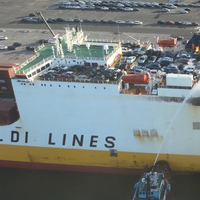
NYK Conducts Crisis-Response Drill on Car Carrier

NYK and NYK Ship management Pte. Ltd. (NYKSM) conducted a drill on October 17 that simulated a response to an accident off the coast of Okinawa Island.The exercise featured a scenario in which a fire broke out in the cargo hold of a car carrier owned and operated by NYK and managed by NYKSM. During firefighting operations, the vessel also collided with a small craft. This drill was part of the "Remember Naka-no-Se" safety promotion campaign and was executed in close cooperation with external stakeholders…
USCG Research Center Warns of Lithium-Ion Fire Hazards at Sea
As maritime industries accelerate toward electrification, the U.S. Coast Guard Research and Development Center (RDC) has issued a warning: lithium-ion batteries—the same technology powering the global shift to hybrid and all-electric vessels—pose a unique and evolving threat when things go wrong. The April 2025 white paper, Lithium Battery Fire Hazards in the Maritime Environment, lays out the risks, firefighting challenges, and post-incident dangers associated with lithium battery fires at sea…
NTSB Issues Safety Alert for Land-Based Firefighters After Multiple Deaths
The National Transportation Safety Board issued a safety alert Wednesday urging greater awareness and training for land-based firefighters who may be called to fight fires aboard vessels in local ports.The safety alert follows several NTSB investigations into deaths and injuries to firefighters. The NTSB found land-based firefighters often lack the necessary training and familiarity with vessel layouts and fire protection systems to effectively fight in-port vessel fires. They…
Training Tips for Ships: Cold Starts and Rare Scenarios - Preparing for the Unlikely at Sea
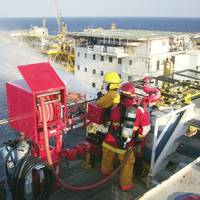
Some emergencies are so rare that they’re easy to overlook during regular training cycles, until they happen. Engine room fires. Rudder failure during storm conditions. Total power loss at sea. These low-frequency, high-impact scenarios are not just the stuff of tabletop exercises; they’re the events that test a crew’s true readiness. Yet because they’re unlikely, they often don’t get the attention they deserve. This month, we explore how to strengthen your crew’s ability to respond to rare but dangerous situations, before they’re staring one down.
IoT Arrives in Shipboard Fire Protection Systems
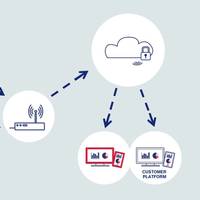
Marioff debuted its Internet of Things (IoT) solution designed for high-pressure water mist fire protection systems, a tech it says enables real-time monitoring, smart alerts, and centralized control.Marioff has been advancing its HI-FOG solution for more thanthree decades, and the new IoT solution builds on this, integrating with existing HI-FOG systems to provide continuous visibility, real-time alerts, and smarter system management.“Our IoT solution marks a significant step forward in fire safety,” says Juha Ilvonen, CEO of Marioff.
NYK Strengthens Fire Prevention With Car Carrier Inspection and Discussion
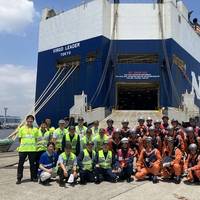
On June 20, NYK arranged an inspection of one of its car carriers for representatives from the Tokyo Fire Department, Yokohama City Fire Bureau, and local cargo-handling companies to examine the car carrier's structure and firefighting equipment, as well as discuss fire-response procedures. The event was attended by over 40 participants.In recent years, there has been a worldwide increase in fire accidents involving car carriers. In response, NYK is strengthening fire-prevention measures by establishing transportation guidelines that accommodate next-generation vehicles (e.g.…
Survitec Tests New Alcohol-Resistant Fire Fighting Foam
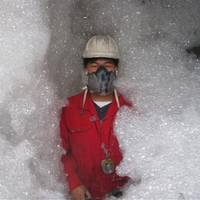
Survitec has successfully completed extensive performance testing of new alcohol-resistant fluorine-free fire fighting foam concentrates.The results validate the compatibility of the new foam concentrates with marine foam mixing systems and demonstrate that a safe transition away from PFAS (Per- and PolyFluoroAlkyl Substances) based products is not only feasible and ready for operational deployment across a range of vessel types, but also technically proven.The latest performance tests are a continuation of extensive due diligence work by Survitec on the new fluorine-free formulae.
Deadline to Upgrade to Fifi Suit Protection to ‘Level 2’ Looms
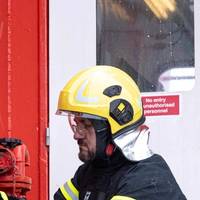
Shipowners and operators of EU vessels must take steps to ensure that all new firefighting suits on board comply with changes to European regulations, which enter into force in June 2025, according to urgent advice from VIKING Life-Saving Equipment.Viking recommends fleet managers undertake a full risk assessment of their firefighting suits to verify compliance with requirements applying under MED regulations (EU) 2024/1975. These are in addition to provisions in effect since August 2024 - that all new firefighting suits must be tested to EN469:2020 standards.From June 2025…
On the Bookshelf: Maritime Firefighting
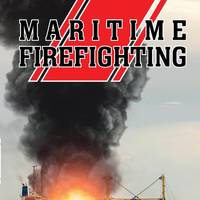
Maritime Firefighting by Captain Emil Muccin, USMS (ret.) and Matthew Bonvento is a comprehensive and modern guide for maritime professionals. It addresses the unique challenges of shipboard firefighting by integrating traditional methods with the latest advancements in equipment and procedures. This book effectively replaces outdated instruction aids by providing up-to-date, actionable knowledge. Using the IMO Model courses of Basic and Advanced Firefighting as a baseline, the authors take a deep dive into subjects that have not been explained in detail in previous books…
Marine Industry Faces 2026 Deadline for Fluorine-free Foam
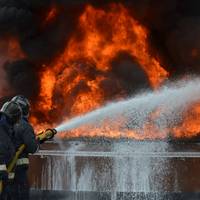
Aqueous film-forming foam (AFFF) has been used to extinguish fires aboard maritime vessels since its introduction in the 1960s. For decades, AFFF was the foam of choice due to its effectiveness and affordability. However, over the last 15 years, its use has come under increased scrutiny due to health concerns related to its fluorinated materials.In 2009, international restrictions were introduced when perfluorooctanoic sulfonic acid (PFOS), a per- and polyfluoroalkyl substance (PFAS)…
Fire Breaks Out on Containership in Port of Colombo
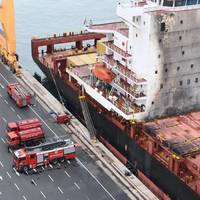
A fire broke out on board a Madeira-registered containership moored at the Port of Colombo in Sri Lanka.The MSC Capetown III was berthed at Jaya Container Terminal (JCT) on Sunday when the fire erupted and eventually escalated to an explosion, the Sri Lanka Ports Authority (SLPA) said. The incident occurred in the 41/43 hatch area, where a fire initiated in the vicinity of 100 under-deck containers and 60 on-deck containers. All operations staff and crews were safely evacuated from the ship…
Study Demonstrates Need for New Fire Safety Rules for Methanol-Fueled Ships
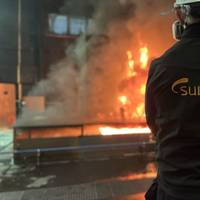
A new fire safety study by survival technology solutions provider Survitec finds that existing fire-fighting methods used to extinguish machinery space spray and pool fires on conventionally fueled vessels are inadequate when dealing with methanol-based fires.This follows extensive comparative fire tests on dual-fuel marine engines using diesel oil and methanol.“Our tests confirm that traditional water mist fire suppression mechanisms do not perform as expected on methanol pool fires and methanol spray fires.
Scanunit Helps Ferry Aurora in first PFAS/PFOS Conversion
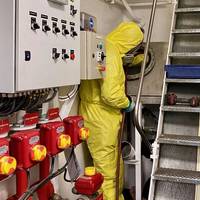
Battery-powered Öresundslinjen ferry notches up an environmental first with turnkey conversion and decontamination of soon to be outlawed PFAS/PFOS fire-fighting foam to an environmentally friendly alternative.Scanunit has carried out what it believes is the world’s first replacement and decontamination of a PFAS/PFOS1 foam firefighting system on a commercial vessel. Aurora, a 1992-built ferry operated by EQT-owned Öresundslinjen (a subsidiary of Molslinjen), was the vessel concerned…
Survitec Saftey System Earns Type Approval
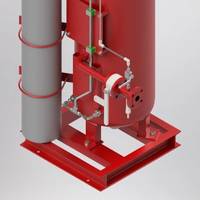
Dry chemical powder solutions have long safeguarded LNG and LPG cargo vessels, but as the industry embraces liquefied gases as a propulsion fuel, the unique requirements for protecting bunkering stations on a wider range of vessels, such as large cruise ships, containerships, and tankers, is becoming increasingly important. In response to the growing demand for advanced fire safety solutions to support the maritime's energy transition, Survitec has reconfigured and enhanced its Dry Chemical Powder (DCP) fire extinguishing system.
Burning Vessel Diverted to Dutch Harbor, Alaska
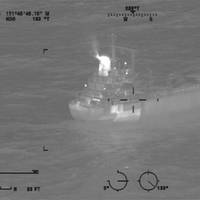
The US Coast Guard is continuing to assess a fire reported on the 410-foot general cargo vessel Genius Star XI off Dutch Harbor, Alaska.The vessel is carrying lithium-ion batteries, and the fire started on Christmas Day in cargo hold No. 1. The crew released carbon dioxide into the hold and sealed it over concerns of an explosion.The Coast Guard then diverted the vessel to Dutch Harbor while an HC-130 airplane from Air Station Kodiak and Coast Guard Cutter Alex Haley (WMEC-39) were dispatched to assist.The Coast Guard confirmed there are no injuries to the 19 crewmembers.
Time is Running Out for some Fi-Fi Foams
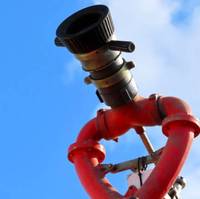
A new IMO resolution will see the phase-out of foam firefighting systems that use fluorinated foams containing perfluoro-octane sulfonic acid (PFOS) as the foam-producing component. The new rules come into effect under a rolling programme beginning in 2026, but Swedish maritime engineering specialist Scanunit believes that a proactive replacement strategy should be put into effect now.Foam firefighting systems on ships typically make use of a family of synthetic chemical compounds known as perfluoroalkyl and polyfluoroalkyl substances (PFAS).
Engine Room Fire Investigation Highlights Due Diligence Failings
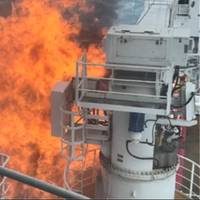
A fire on board a multi-purpose vessel chartered by the Australian Antarctic Division (AAD) while transiting the Southern Ocean highlights the risks and challenges of operating in harsh, remote conditions.On April 5, 2021, the 145 meter MPV Everest was en route from Antarctica to Hobart with 37 crew and 72 Australian Antarctic Division (AAD) staff on board when a fire broke out in its port engine room.The fire was contained and eventually extinguished using the engine room water mist fixed fire-extinguishing system after about 2.5 hours…
Lies, Damn Lies, and Inextinguishable Lore – EV Fires
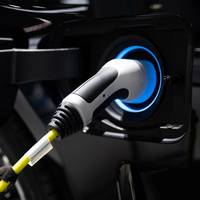
A few weeks ago I was talking to some professional fire fighters and was regaled with EV fire fighting disasters. They told me that EV caught fire all the time, that EV fires were much more dangerous than gasoline fires, and that fire trucks could not carry enough water to put out an EV fire. When I asked if they had fought any EV fires, they told me their information came from reliable sources and then asked me if I would park my Chevy Bolt in my garage. They focused on my Chevy Bolt, since it is widely regarded as a fire hazard.
Brahman Express Returns to Port After Engine Room Fire
The livestock carrier Brahman Express suffered an engine room fire and returned to the Port of Darwin, Australia, on Wednesday.The vessel had approximately 3,600 cattle onboard and was bound for Indonesia when the incident occurred.No injuries to crew and no animal welfare issues have been reported.In a statement to ABC Rural, the Australian Maritime Safety Authority said it understood the fire was extinguished promptly.The livestock are expected to be discharged in Darwin.In May, the livestock carrier Nine Eagle experienced a major engine failure after leaving Darwin with 1,600 cattle onboard and was forced to return to port.
CIC on Fire Safety Starts September 1
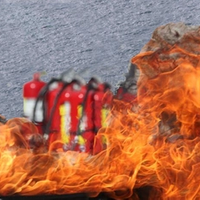
Lloyd’s Register has reminded the industry that the Member Authorities of the Paris and Tokyo Memoranda of Understanding (MoU) on Port State Control (PSC) are launching a joint Concentrated Inspection Campaign (CIC) on fire safety from September 1 to November 30, 2023.The Member Authorities of the Black Sea Memorandum of Understanding on Port State Control and the Member Authorities of the Acuerdo Vina Del Mar 1992 are concurrently also launching a CIC.The purpose of the campaign…
Training Issues Highlighted in LPG Carrier Engine Room Fire
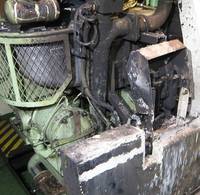
The UK Marine Accident Investigation Branch (MAIB) has published its accident investigation report into the fatal engine room fire on board Moritz Schulte on August 4, 2020, citing training issues.On 4 August 2020, a fire broke out in the engine room of the liquefied petroleum gas/ethylene carrier Moritz Schulte when the recently promoted third engineer opened an auxiliary engine’s pressurised fuel filter allowing marine gas oil to spray onto an adjacent auxiliary engine’s hot…
Panama-flagged Tanker Catches Fire Near Iranian Coast
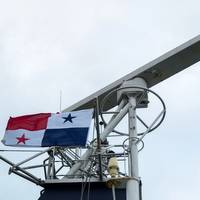
A Panama-flagged tanker called White Pearl has caught fire near Assaluyeh on Iran's Gulf coast, Iranian state media reported on Thursday, adding that all crew members were safe."Twenty-two of the ship's crew have been rescued by Iranian rescue teams after the ship's captain requested assistance from the port authorities," state TV quoted a local ports official as saying. The official said that the tanker, carrying 40,000 tons of liquefied petroleum gas, had experienced "a problem in the engine room due to a fire."Panama's vessel registry…
Fire Hits Grain Silos at French Atlantic Port
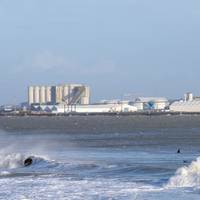
More than 100 firefighters fought a huge blaze at grain silos in the French Atlantic port of La Rochelle on Thursday, disrupting shipping activity at one of France's biggest grain export terminals.The fire started on a conveyor belt at around 8:00 a.m. (0600 GMT) in a grain silo complex operated by SICA Atlantique, the local prefecture said.Some 120 firefighters brought the blaze under control, helped by the use of a 72-metre (236.22 ft) high lift platform to access the conveyor belt above the grain silos…