
Project Freedom Gets Off to a Troubled Start
The U.S. military said on Monday it destroyed six Iranian small boats and intercepted Iranian cruise missiles and drones as Tehran sought to thwart a new U.S. naval effort to open shipping through the Strait of Hormuz.
U.S. President Donald Trump launched the operation, called Project Freedom, on Monday as he sought to wrest control of the critical waterway from Iran, which effectively closed the Strait of Hormuz after the U.S. and Israel started the conflict on February 28.
U.S. Admiral Brad Cooper, the head of Central Command, declined to comment on whether he thought a ceasefire begun on April 8 remained in effect as Iran lashed out in region, including with drone and missile attacks on the UAE on Monday.
But Cooper acknowledged Islamic Revolutionary Guard Corps efforts to "interfere" with Trump's operation.
"The IRGC has launched multiple cruise missiles, drones and small boats at ships we are protecting. We have defeated each and every one of those threats through the clinical application of defensive munitions," he said.
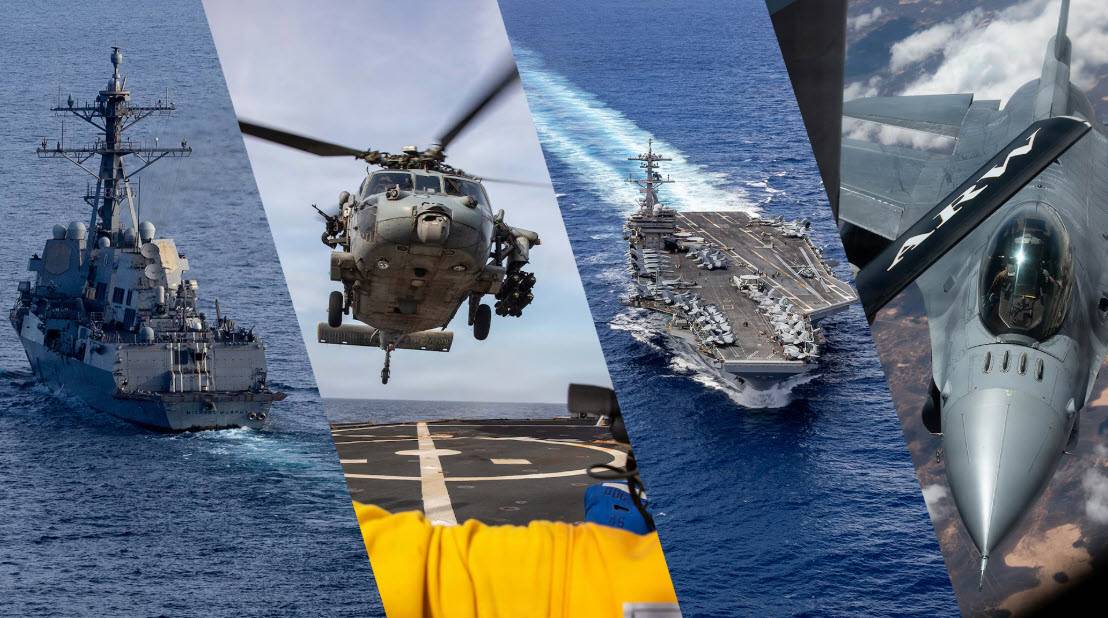
Cooper said he "strongly advised" Iranian forces to remain well clear of U.S. military assets as Washington launches the operation, which he said involved 15,000 U.S. troops, U.S. Navy destroyers, over 100 land- and sea-based aircraft and undersea assets.
"The U.S. commanders who are on the scene have all the authorities necessary to defend their units and to defend commercial shipping," he said.
A South Korean ship was hit by an explosion in the Strait of Hormuz on Monday, but Trump remarked in a social media post that the South Korean ship was not part of the operation and perhaps it should join U.S. efforts to protect ship movements near Iran. Trump estimated the U.S. had sunk seven Iranian fast boats.
The U.S. operation to unblock the Strait of Hormuz involved multiple steps, including first clearing a pathway of Iranian mines. The U.S. then proved the safety of the route earlier on Monday by sending two U.S. flagged commercial ships through the strait.
Iran's Revolutionary Guards said no commercial vessels had crossed the strait in the past few hours, and that U.S. claims to the contrary were false. Iranian state media also denied reports that the U.S. had sunk Iranian vessels.
Cooper said the U.S. operation went beyond a traditional escorting mission. Instead, he said it was a larger, multi-layered defensive arrangement that included ships, helicopters, aircraft and even electronic warfare to defend against Iranian threats.
He said the Iranian fast boats were sunk by U.S. Apache and Seahawk helicopters.
"If you're escorting a ship, you're playing kind of one on one. I think we have a much better defensive arrangement in this process," he said. "We have a much broader defensive package than you would have ever if you were just escorting."
The operation is Trump's latest effort to force an end to the disruption of international energy supplies caused by Iran's blockade of the strait, which carried a fifth of global oil and liquefied natural gas before the war.
Cooper said the U.S. military was encouraging vessels to travel through the passageway despite Iranian threats to use military force that have effectively left craft from 87 countries stranded in the Gulf.
"Over the last 12 hours, we've reached out to dozens of ships and shipping companies to encourage traffic flow through the strait," Cooper said.
"This news has been quite enthusiastically received, and we're already beginning to see movement."
The Iranian threat has left many ships stranded in the Gulf. Some 805 commercial vessels, including fuel and chemical tankers, container ships, auto carriers and bulk ships, have sent an automatic identification system (AIS) signal from within the Gulf during the last 24 hours, according to MarineTraffic data.
Cooper said a U.S. blockade of Iran, which prevents ships from going to Iran or departing Iranian territory, also remained in effect and was exceeding expectations.
MAERSK SHIP THROUGH
Maersk said the Alliance Fairfax, a U.S.-flagged vehicle carrier operated by its Farrell Lines subsidiary, exited the Gulf via the Strait of Hormuz accompanied by U.S. military assets on Monday.
American forces are actively assisting efforts to restore commercial shipping through the Strait of Hormuz, U.S. Central Command (Centcom) said on the social media site X on Monday.
"As a first step, 2 U.S.-flagged merchant vessels have successfully transited through the Strait of Hormuz," Centcom said Monday on X, adding that U.S. Navy guided-missile destroyers are operating in the Gulf under a directive called "Project Freedom."
The Alliance Fairfax is part of the U.S. Maritime Security Program, which provides financial stipends to dozens of U.S.-flagged, private commercial vessels that guarantee transport for the U.S. military during a war or national emergency.
Maersk said the transit of the Alliance Fairfax was completed without incident and that all crew were safe and unharmed.
The Alliance Fairfax was among hundreds of ships stranded in the Gulf with the virtual closure of the Strait of Hormuz in early March.
At least one other U.S.-flagged vessel remains in the Gulf area.
SOUTH KOREAN VESSEL ABLAZE
Seoul said a South Korean-operated ship had an explosion and caught fire on Monday in the Strait of Hormuz, in an incident which U.S. President Donald Trump said was caused by an Iranian attack.
The South Korean foreign ministry said a fire and an explosion occurred on the vessel operated by South Korean shipper HMM 011200.KS. It added that no casualties were reported and authorities were investigating what caused the blaze.
Trump said Iran fired shots at the South Korean cargo ship and some other targets as the U.S. launched an operation seeking to open the Strait of Hormuz to shipping. He urged South Korea to join that effort.
The fire broke out in the engine room of the Panama-flagged cargo ship with 24 crew members, including six Korean nationals, on board, an HMM spokesperson said, adding that the cause of the blaze was unclear and being investigated.
The fire had now been extinguished, surveillance camera footage showed, and it could take several days to tow the vessel to Dubai, the spokesperson said.
A handful of commercial vessels were reported to have been hit and a UAE oil port was ablaze after an Iranian strike as Trump's attempt to use the U.S. Navy to free up shipping provoked the war's biggest escalation since a ceasefire was declared four weeks ago.
"Other than the South Korean Ship, there has been, at this moment, no damage going through the Strait," Trump said in a Truth Social post.
The South Korean government was checking intelligence that the vessel, HMM Namu, may have been attacked, Yonhap News reported, citing government officials.
"Our government will communicate closely with relevant countries regarding this matter and take necessary measures to ensure the safety of our vessels and crew members inside the Strait of Hormuz," South Korea's foreign ministry said in a statement.
Seoul has said 26 South Korean-flagged vessels were stranded there.
The 35,000-ton general cargo vessel was not carrying anything, the HMM spokesperson said.
British maritime risk management group Vanguard said in a note that authorities would look at whether the damage might have been caused by an attack, a drifting sea mine or another external object.
Trump in a post on Truth Social also suggested it could be time for South Korea to join his new effort to help guide stranded ships through the Strait of Hormuz.
South Korea has previously said it would carefully consider Trump's call for countries to deploy navy ships to form a coalition to ensure safe passage through the waterway, while also stressing such a move would require legislative approval.
PASSAGE OF SANCTIONED TANKER
Maritime security company Windward has identified a sanctioned Iranian tanker actively transiting the Strait in apparent violation of the operation's stated criteria.
The vessel, NOOH GAS (IMO 9034690), is currently eastbound through Hormuz. The ship is OFAC-sanctioned under the Iran program and according to Windward’s data, is a designated Dark Fleet vessel of interest with 18 name changes and 13 dark activity events since June 2025.
The vessel is operated by a UAE-based front company and is routing south of Larak Island, a documented evasion pattern used by sanctioned tankers to avoid U.S. interdiction.

BIMCO CAUTIOUS
Jakob Larsen, BIMCO's Chief Safety & Security Officer, remains cautious about Project Freedom because:
• No formalised details or guidance to the shipping industry regarding “Project Freedom” have been announced at this point.
• Without consent from Iran to let commercial ships transit safely through the Strait of Hormuz, it is currently not clear whether the Iranian threat to ships can be degraded or suppressed.
• In view of the Iranian threats against any ship attempting to transit the Strait of Hormuz without coordination with Iran’s military, there is a risk of hostilities breaking out again if “Project Freedom” goes ahead.
• It is unclear whether “Project Freedom” is sustainable in the longer run or whether it will be a limited operation to get some of the trapped ships out.
• The overall security situation for the shipping industry is currently unchanged, and our advice is for all shipowners to continue carrying out thorough risk assessments.
(Reuters and staff)